

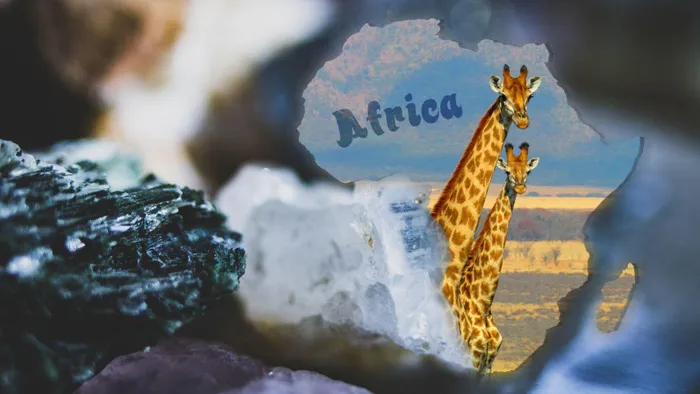
Africa is constantly spoken about as a continent of limitless potential. And in many ways, that is absolutely true.
Image: Sizwe Dlamini | Sunday Independent
IN A matter of hours, we will be celebrating our annual Africa Day. Every May 25, news banners and timelines are flooded with carefully edited montages of wildlife, skylines, fabrics, dancers, drums, laughing children — and every other photogenic attribute of Africa.
Politicians spew the same old sentiments about unity, liberation and pan-African pride. Corporations run campaigns boasting about “celebrating African excellence” while atrociously underpaying their own workers year-in and year-out.
And for 24 hours, we are expected to romanticise the continent instead of confronting what life on it actually looks like for millions. Expected to temporarily sideline our lived reality in favour of curated continental pride.
Expected to repost flags and slogans whilst millions across the continent battle unemployment, rising food prices, collapsing public infrastructure, energy insecurity, wars, displacement, debt, corruption, and governments that are blind to — or indifferent toward — the lived realities of ordinary people.
Beneath all of this sits a disquieting truth that no montage can cover up: For millions of Africans, survival has become the baseline condition of life. That is the contradiction sitting at the centre of Africa Day.
Africa is constantly spoken about as a continent of limitless potential. And in many ways, that is absolutely true. However, when nothing changes in people’s lives, “potential” simply becomes a word that hides stagnation and rampant systemic failures.
Young people are told they are the “future of Africa” while arduously struggling to survive the present. Entire communities are asked to be patient with systems that are consistent failing. And over time, the fracture between polished political language and actual lived conditions becomes something that’s impossible to ignore.
At some point, the question stops being abstract: Who is all this optimism actually for? Because the truth is not that Africa is lacking in wealth or capacity. It isn’t. Our continent holds enormous mineral resources, agricultural strength, labour power, and intellectual talent. The issue is how that wealth moves — and who it serves when it does.
Wealth is constantly pulled out of the continent through global systems that thrive off of extraction, and then while inside countries, local elites ensure it gets locked into the same circles of power that perpetuate inequality.
This is not a new diagnosis. Patrice Lumumba said it plainly in his own time: “Independence without control over resources is not freedom.” That was never just about colonial flags being lowered — it was about whether African people would actually control the wealth generated on their own soil.
Kwame Nkrumah pushed the point even further. “Political independence,” he argued, “means very little without economic independence.” In other words, you don’t have full sovereignty if you don’t control your own economy. And that is the painful reality for far too many post-independence African nations.
That is why the formation of the Organisation of African Unity (OAU) mattered. It was never meant to be symbolic. It was an attempt to recognise that fragmented African states would remain vulnerable in a global order built on extraction, dependency, and uneven power.
Decades later, that structural reality has not disappeared. African countries still export raw materials at low value and import finished goods at high cost. Recently, when US streamer iShowSpeed did a tour of African nations, Botswana — the diamond capital of the whole world — he was told that raw diamonds are exclusively sold by foreign entities such as De Beers.
Essentially, it’s impossible for locals to buy — or remotely benefit from — their own countries biggest mineral resource.
Global corporations extract profit from African labour and land with relentless efficiency, while international financial systems quietly shape and limit the domestic policies of African nations. And internally, many post-independence states have developed their own elite layers that sit between ordinary people and national wealth, controlling access rather than transforming conditions.
So when Africa Day arrives, the disconnect is not emotional — it is material. Because on the ground, people are not living inside speeches. They are living inside hospitals that lack resources. Transport systems that are unreliable and unaffordable. Inefficient electricity grids that consistently breakdown the daily functions of entire communities.
Labour markets that do not absorb educated young people. Informal economies that carry entire populations without protection or security. Corruption has become so deeply embedded into everyday governance that it has become indistinguishable from governance itself.
And still, the dominant language used to describe all this is “resilience.”
But resilience is not a compliment. It is a pressure response. It is what people develop when failure becomes constant and adaptation becomes the only option. Over time, it gets rebranded into something inspirational, when in reality it often signals how much strain people are carrying without relief.
Even so, the continent is not politically frozen. There is a shift happening in how people are responding to leadership itself — less patience with repetition, more demand for material change, less tolerance for political distance from everyday life.
The attention around transformational modern-day leaders like Ibrahim Traoré reflects that shift. Genuine unapologetic leadership has been stifled out of Africa for far too long. Leaders such as Traoré are proof that the potential for leaders with integrity and fierce commitment still exists.
Not because one leader is a solution or because social media can carry political analysis on its own, but because he has become a symbol (for many) of a break from a familiar pattern where independence exists, but socioeconomic and political conditions remain archaic.
It speaks less to personality and more to frustration with systems that have not delivered stability at scale.
Similarly, the leadership of President Nandi-Ndaitwah in Namibia points to something else: The slow expansion of who gets to occupy political authority on the continent, and the possibility, still unfolding, that leadership can take forms that challenge long-standing patterns of exclusion and repetition.
Neither of these moments should be romanticised. Both, however, are revealing something critical: People are no longer satisfied with politics that simply performs progress without actually producing it.
Iconic pan-African Julius Nyerere hit the nail on the head when he said: “We spoke and acted as if, given the opportunity for self-government, we would quickly create utopias. Instead, injustice, even tyranny, is rampant.”
And that brings us back to Africa Day. Transformation, unity, justice and empowerment were all building blocks of the Organisation of African Unity (OAU). Today, as the African Union (AU), these blocks are more important than ever. Because Africa is still being ravaged, exploited, and attacked.
And Patrice Lumumba reminded us of this over half a century ago: “These divisions, which the colonial powers have always exploited the better to dominate us, have played an important role - and are still playing that role — in the suicide of Africa".
This Africa Day, the issue is not whether Africa should be celebrated. It should — and it must. The issue is what celebration means when the myth of continental progress directly opposes African people’s daily struggle for survival.
A continent cannot live permanently inside that gap — between how it is described and how it is experienced. At some point, that gap becomes the story itself. As the beautiful Zulu adage goes, “Ilifa lezithutha lidliwa ngabahlakaniphileyo” (the inheritance of the fools will be taken by the wise).
* Tswelopele Makoe is a gender and social justice activist and editor at Global South Media Network. She is a researcher, columnist, and an Andrew W Mellon scholar at the Desmond Tutu Centre for Religion and Social Justice, UWC.
** The views expressed here do not reflect those of the Sunday Independent, IOL, or Independent Media.