

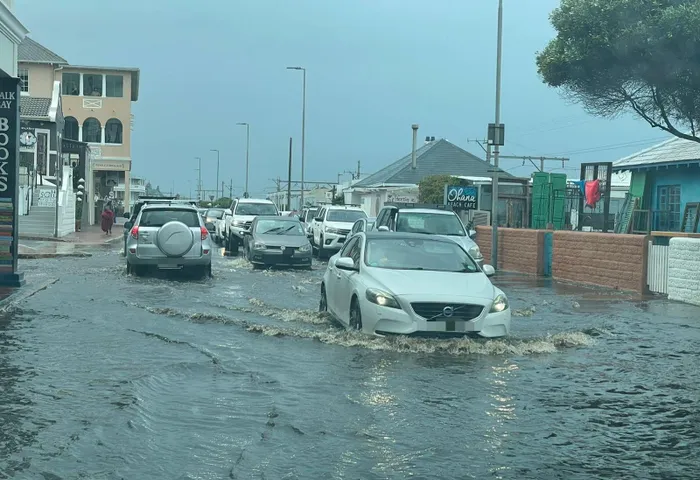
The recent April 18–20 cold fronts that submerged Cape Town areas such as Nyanga, Brown’s Farm, Bellville, and Table View exposed systemic vulnerabilities of our infrastructure and housing in the face of recurring climate‑induced disasters.
Image: Deep South Report | Supplied
SOUTH Africa’s flooding crisis, coinciding with La Niña‑linked rains since late 2025, has spread nationwide, prompting a national disaster declaration in January 2026, with damages estimated in the billions of rand.
Provinces including Limpopo, Mpumalanga, KwaZulu‑Natal, Eastern Cape, North West, and now Western Cape face devastation, displacing thousands and claiming at least 37 lives by late January, according to a report by ReliefWeb.
Heavy downpours triggered SA Weather Service (SAWS) Level 9 and 10 alerts starting January 10, impacting 3 911 households (around 19 555 people), mainly in Limpopo (1 954) and Mpumalanga (1 557).
Xolani Hadebe of Thamsanqa Career Pathways (TCP) said the more recent April 18–20 cold fronts that submerged Cape Town areas such as Nyanga, Brown’s Farm, Bellville, and Table View exposed “systemic vulnerabilities of our infrastructure and housing in the face of recurring climate‑induced disasters”.
“From Nyanga and Brown’s Farm to the Boland and Garden Route, risks escalate due to enforcement gaps, stormwater system failures and infrastructure neglect,” Hadebe said.
The SA National Defence Force (SANDF) and SA Police Service (SAPS) conducted 247 rescues, with multi‑agency aid distribution underway. Limpopo Premier Dr Phophi Ramathuba said in January: “The devastation inflicted upon our communities, our infrastructure, and, tragically, the loss of lives cannot be overstated.”
President Cyril Ramaphosa outlined a phased approach: “First, we will focus on immediate humanitarian relief, ensuring that all affected persons are safe and that their basic needs are met. Second, we will focus on stabilisation and recovery, rehousing people who have lost homes and restoring the provision of services.”
Hadebe argues: “These failures reflect a structural breakdown in the institutionalisation of preventative maintenance and condition assessments required by our legislative framework.”
He then highlighted that Thamsanqa Career Pathways (TCP) was rolling out building inspector programmes, a structured initiative aimed at addressing these governance gaps, which TCP said were being implemented nationally via 11 universities led by the University of Johannesburg (UJ).
The TCP model integrates high-potential Not in Employment, Education, or Training (NEET) youth into a stackable “education-to-employability” pipeline, targeting youth with tuition, stipends, and SACPCMP registration.
Professor Jeffrey Mahachi stated: “The rollout is grounded in evidence‑based learning, combining academic rigour with workplace exposure to ensure demonstrable professional outcomes.”
According to TCP, phase one prioritises KwaZulu‑Natal post‑2022 floods, with June 16, 2026, events planned across 12 venues. Experts urge drain clearing, community wardens, wetland preservation, and avoiding flood‑prone development.
Hadebe said: “South Africa cannot resolve infrastructure failure through reactive disaster response alone. By embedding trainee building inspectors within the state and municipal systems, we shift toward proactive enforcement and climate‑resilient governance.”
Holistic informal settlement upgrades with secure tenure and sanitation are also critical. Provincial assessments continue, with ongoing weather threats demanding sustained action.