

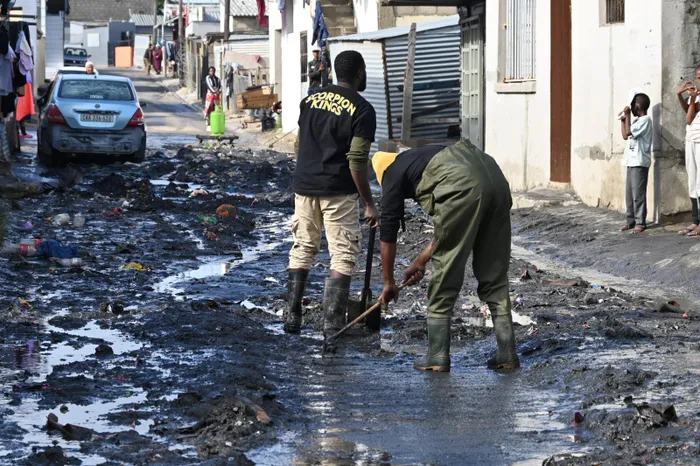
Residents of the Ekupholeni informal settlement sweep away debris after volumes of water from the streets as flooding hits the community.
Image: Ayanda Ndamane / Independent Media
As Cape Town heads into winter, informal settlements in Dunoon remain highly vulnerable to flooding, with recent heavy rains over the weekend of April 19 leaving residents in Ekupholeni wading through hip-deep water and, in some cases, unable to reach their doorsteps.
The flooding affected multiple areas across the metro, but Dunoon’s Ekupholeni informal settlement was among the hardest hit, with residents describing homes submerged and belongings floating in rising water.
The City of Cape Town has pointed to blocked stormwater infrastructure and dense informal settlement growth as key contributors to recurring flooding in the area.
Civil engineering expert Dr Katelyn Johnson from Stellenbosch University said the situation highlights both infrastructure limitations and broader planning challenges.
"This is highly significant," she said, referring to concerns that a main stormwater line in Dunoon is inaccessible due to surrounding structures.
"Stormwater systems require regular inspection and maintenance to function properly. If a main line is inaccessible, blockages (from sediment, debris, or waste) cannot be cleared, which reduces the system’s capacity and can cause water to back up and overflow into surrounding areas."
Johnson explained that stormwater systems are designed to channel rainwater away through drains, pipes and canals, but only up to certain rainfall thresholds.
"When rainfall exceeds these limits, or when the system is blocked, water accumulates faster than it can be drained, resulting in flooding," she said.
Residents in Ekupholeni reported water levels rising into homes, with some describing beds floating and movement becoming impossible inside structures.
Johnson said infrastructure access issues significantly worsen the impact of flooding in densely built informal settlements.
"Building over or near critical infrastructure limits access for maintenance and reduces the effectiveness of the system," she said.
"It can also physically damage infrastructure or alter natural drainage paths, increasing flood risk not only locally but across the wider catchment."
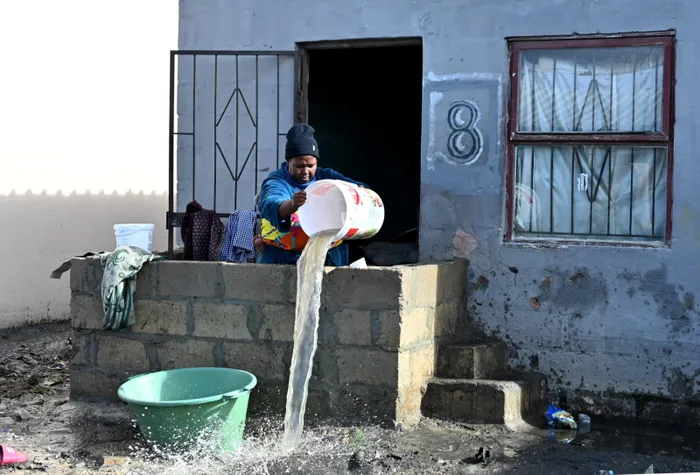
Thembeka Madanale, resident of the Dunoon settlement, removes water that she collected from inside her home after it flooded.
Image: Ayanda Ndamane / Independent Media
She added that settlement location plays a major role in recurring flood exposure.
"Floodplains and wetlands are often the only available land for low-income communities, as they are unsuitable for formal development," she said.
"Unfortunately, these areas are naturally prone to flooding, which places already vulnerable populations at greater risk."
Johnson said the flooding crisis is driven by a combination of factors.
"It is a combination of both settlement location and infrastructure limitations such as undersized systems, lack of maintenance, and rapid urbanisation," she said.
"These factors interact and compound the overall risk, especially during intense rainfall events."
The City of Cape Town said it had received approximately 480 flooding-related complaints across the metro since Friday, with multiple departments deployed to affected areas including Dunoon, Khayelitsha, Gugulethu and Mitchells Plain.
Mayoral Committee Member for Human Settlements, Councillor Carl Pophaim, said informal settlement teams were continuing assessments and providing assistance where possible.
He confirmed that 206 residents with damaged roofs would receive flood kits, though the figure may change as assessments continue.
Pophaim said the National Department of Human Settlements remains responsible for emergency building kit support following disasters, while the City continues to assist where possible.
He added that Dunoon remains a high-risk area due to density and recurring blockages in stormwater systems.
"Dunoon is a densely populated area and blockages in the stormwater network are frequently caused by foreign objects being placed in manholes," he said.
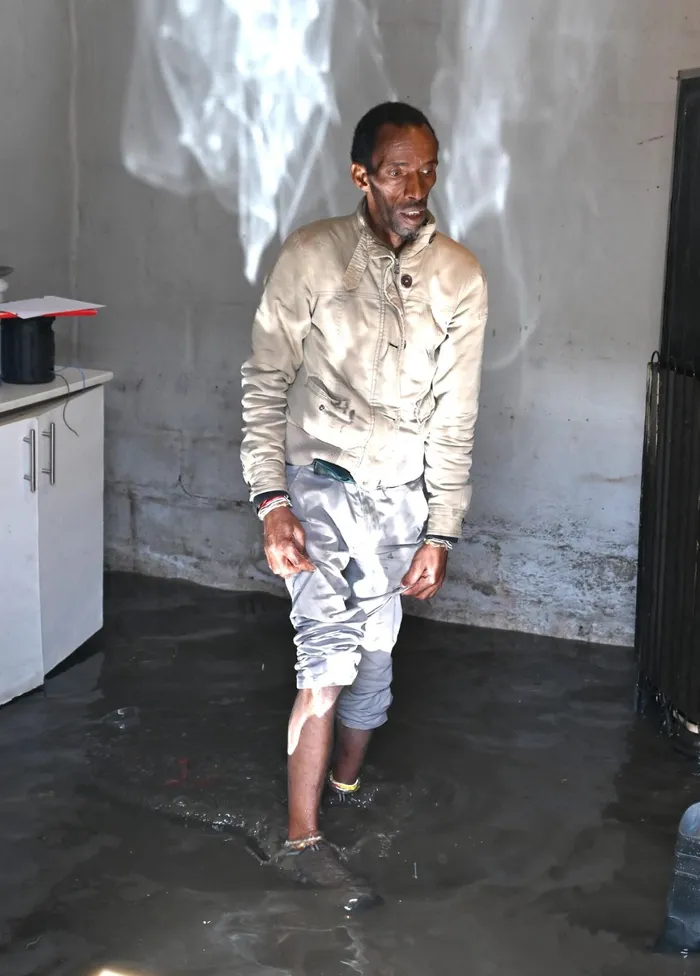
Residents in Ekupholeni, Dunoon, reported water levels rising into homes, with some describing beds floating and movement becoming impossible inside structures.
Image: Ayanda Ndamane / Independent Media
Pophaim said relocation of residents from affected areas is currently not feasible due to a lack of suitable land, though alternative interventions are being explored.
Disaster Risk Management Centre spokesperson Sonica Lategan said flooding in Dunoon significantly affected roads around Silverleaf and Orchard Roads.
She confirmed that disaster response teams are coordinating relief efforts with SASSA and the Department of Social Development.
"As assessments are completed, DRMC will activate the necessary relief and assistance required," she said.
This includes humanitarian support for affected households.
Johnson said long-term solutions must go beyond emergency response.
"In the short term, improving maintenance access and clearing blockages can help," she said.
"Community-based interventions such as waste management and education are also important."
"In the longer term, upgrading infrastructure and incorporating nature-based solutions will be necessary to reduce flood risk."
lilita.gcwabe@inl.co.za