

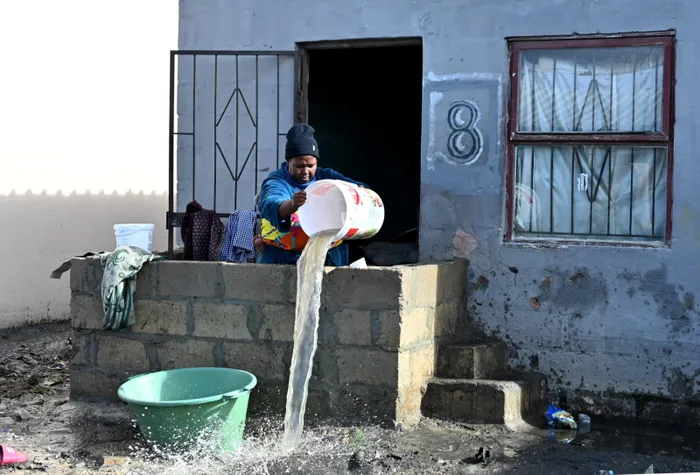
Thembeka Madanale, resident of the dunoon installment spills water out of a 20 litre bucket that she collected from inside her home over the wall.
Image: Ayanda Ndamane / Independent Media
Community members in Dunoon’s informal settlements have been left wading through hip-deep floodwaters following heavy rains over the weekend of April 19, with some residents unable to even reach the doors of their homes.
Local councillor Bulelwa Mayende, said the situation in the Ekupholeni informal settlement is among the worst affected, describing scenes of residents trapped inside waterlogged structures.
"Residents of Ekupholeni informal settlement in Dunoon have been the most affected at this point in time by the heavy rains and floods as many of them cannot even reach the door of their structures to get out," she said.
"Water is up to their hips as they are drenched in water."
She warned that conditions could worsen as Cape Town approaches its winter season.
"Over the past two days, we are up for a very big problem as we are getting closer to winter season, it seems as if we are going to be in trouble," she said.
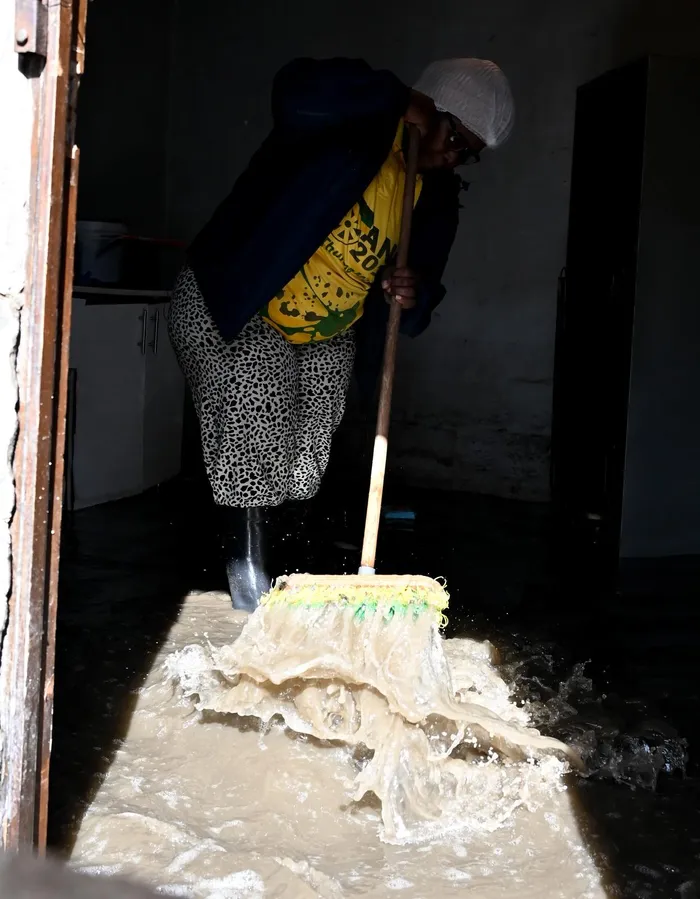
Thandi Velem, from the Dunoon informal settlement, sweeps volumes of water outside her home.
Image: Ayanda Ndamane / Independent Media
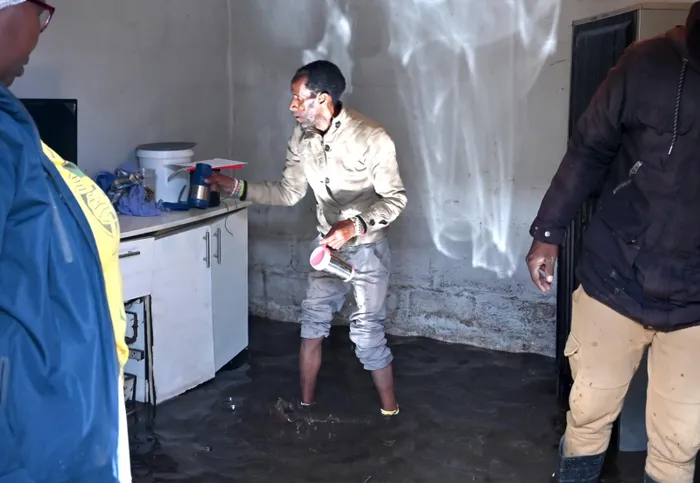
Mkhululeni Baceni waded through ankle-deep water inside his home as flooding swept through the area.
Image: Ayanda Ndamane / Independent Media
According to the councillor, the scale of flooding seen over the past two days is unprecedented in the area.
"Rain was (over) two days, we have seen volumes of water we have never seen before… It has never been like this before," she said.
She attributed the flooding to the settlement’s location in a low-lying area where stormwater naturally collects, compounded by blocked infrastructure.
"What I am thinking is that the reason for the problem of the floods is the area is in (a low-lying area), all the storm water feed into it and flow here. There is a storm water line or system that passes through this area," she explained.
However, access to the main stormwater line is severely restricted.
"The disadvantage of the main line is that the municipality cannot access the main line… because of structures built next to it. There is inaccessibility of the municipal services even if the municipality wants to help, they can’t," she said.
She added that some structures were erected during the Covid-19 period on what was previously a sports field, further complicating access to critical infrastructure.
"In order for it to not be in a bad situation as the past two days, we need to unblock the main line of the storm water block system," she said.
Engagements have already begun with affected residents to potentially move structures and allow access to the stormwater system.
"Those structures will have to be engaged to move or to open the space for the municipality to access the mainline and we have started the engagement as of yesterday," she said.
Residents in areas including Silverleaf and Orchards streets remain at risk if rainfall continues.
"If the rain persists, it means that the residents of Silverleaf and Orchards streets will remain victims of having nowhere to sleep or no way to access their doorstep. The water goes to their hips, the beds are floating. They can’t even move," she said.
She likened the flooding to water being forced back through a blocked system.
"It’s like filling up a bottle to the brim and the water just pushes back and back," she said.
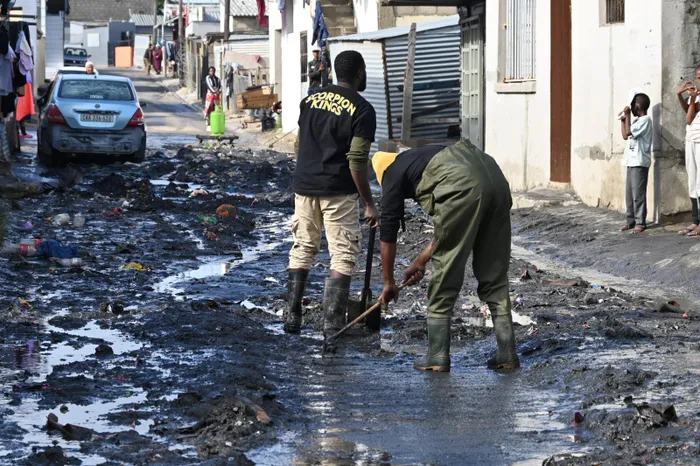
Residents of the Ekupholeni informal settlement sweep away volumes of water from the streets as flooding hits the community.
Image: Ayanda Ndamane / Independent Media
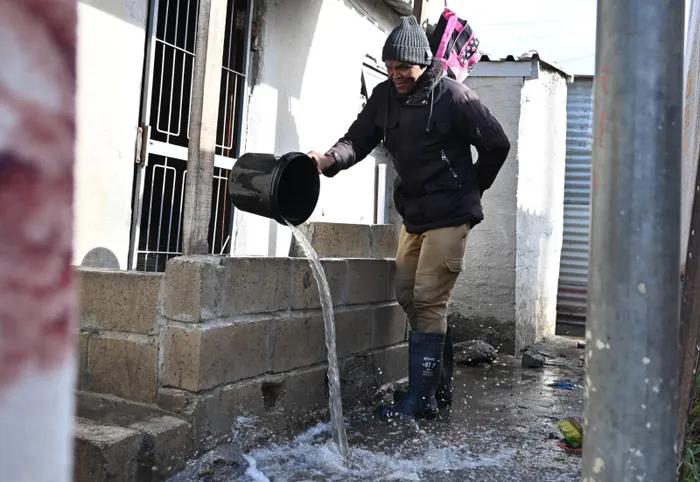
A community member disposes of floodwater from a bucket after it entered their home.
Image: Ayanda Ndamane / Independent Media
Humanitarian organisation Gift of the Givers has stepped in to provide relief, distributing hundreds of food parcels and care packs over the past two days.
The councillor said at least nine areas have been affected so far, the majority of them informal settlements, with additional areas including Drylands, Zwezwe and Siyabangena also impacted.
Meanwhile, the City of Cape Town said it had received approximately 480 flooding-related complaints since Friday, as heavy rains swept across the metro.
The City’s mayoral committee member for Urban Mobility, Councillor Rob Quintas, said widespread localised flooding had been reported across several areas, including Dunoon.
"Widespread areas across the city experienced localised flooding due to sustained downpours," Quintas said, adding that while water had largely drained in some areas, challenges remained where infrastructure is inaccessible.
"Water has, for the most part, drained out as it should, with the exception of areas where structures have been built illegally over bulk stormwater and sewerage infrastructure. When this happens, our maintenance teams physically can’t access the systems to clear them," he said.
He added that debris, including mattresses and wheelie bins, had been found blocking stormwater systems, worsening the flooding.
The City said multiple departments, including Disaster Risk Management and Urban Mobility teams, are working around the clock to respond, clear drains and assist affected communities with emergency materials.
Officials warned that low-lying areas and settlements near water bodies are particularly vulnerable during sustained heavy rainfall, and that flooding may persist while rains continue.
This is a developing story.
lilita.gcwabe@inl.co.za