

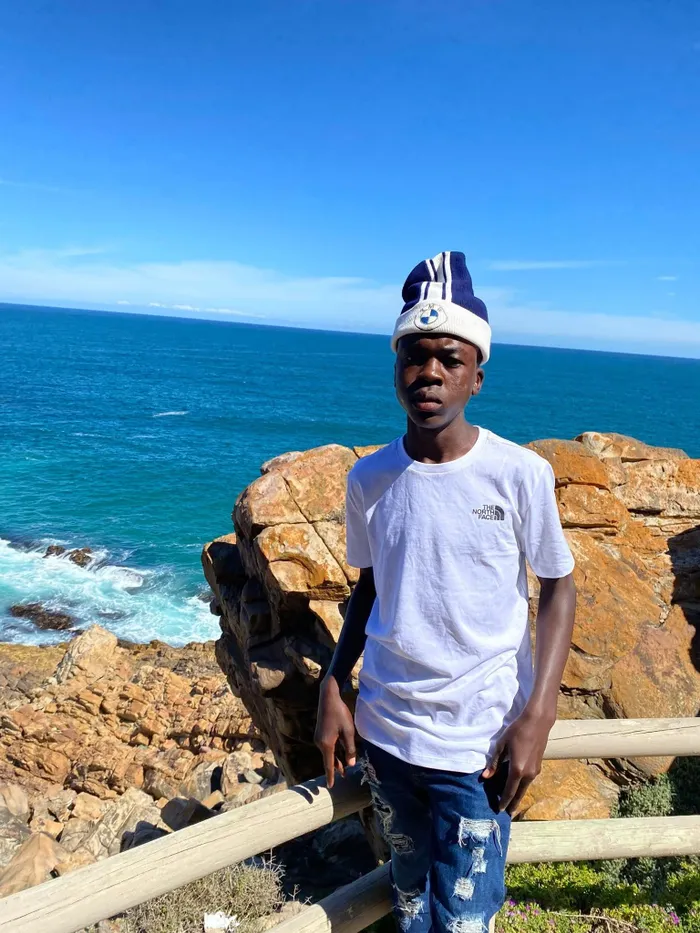
The fatal stabbing of 19-year-old Nhlamulo Sambo in the Western Cape has ignited a fierce political and social debate.
Image: Facebook
THE Gaza Democratic Front (GDF) has called for the immediate arrest and prosecution of those responsible for the killing of 19-year-old Nhlamulo Sambo, a Limpopo-born South African who was allegedly stabbed to death during xenophobic unrest in KwaNonqaba, Mossel Bay, over the weekend.
Sambo, originally from Giyani, was killed on May 31 in the Asla Park area of KwaNonqaba amid violent community protests that left at least two people dead and displaced dozens of residents.
His family believes he was mistakenly targeted after being identified as a foreign national because he spoke Xitsonga, one of South Africa’s 12 official languages.
In a statement, the family rejected claims that Sambo was a foreigner, describing him as a South African citizen whose life was cut short by mob violence.
“He was not a foreigner. He was not a criminal. He was a young South African whose life was stolen from him in a climate of fear, hatred and unchecked mob action,” the family said.
The incident has sparked renewed concern about the growing prevalence of xenophobic violence and vigilantism in communities grappling with unemployment, poverty and social instability.
The GDF, a political movement with strong support in parts of Limpopo, Mpumalanga and Gauteng, described Sambo’s death as a tragedy that struck at the heart of the community from which the organisation emerged.
“Nhlamulo Sambo came from Giyani. His community is the same one from which the GDF draws its roots and its mandate,” the organisation said. “His death is personal to us. It is a wound in our community. And it will not be met with silence.”
The party demanded that law enforcement authorities act swiftly to identify and prosecute those responsible for the killing. It also called for an independent and transparent investigation into the violence that engulfed KwaNonqaba between May 29 and 31.
The GDF further urged the government to provide immediate support to the Sambo family, including assistance in transporting his body from the Western Cape to Limpopo for burial.
Sambo’s mother, who is unemployed, now faces the financial burden of repatriating her son’s remains while seeking answers about the circumstances surrounding his death.
The unrest in KwaNonqaba has left communities shaken.
Local authorities confirmed that at least two people lost their lives during the violence, while numerous families, including women and children, were forced to flee their homes.
Mossel Bay Mayor Dirk Kotzé appealed for calm as additional police officers were deployed to the area.
Police have opened murder investigations, although no arrests have been publicly announced at the time of publication.
The violence has once again placed a spotlight on tensions surrounding migration, unemployment and service delivery failures in several South African communities.
According to the GDF, Sambo’s death highlights a broader national crisis in which economic frustrations are increasingly being channelled into violence against people perceived to be foreigners.
The organisation argued that legitimate concerns about unemployment, crime and poor service delivery are being exploited by individuals and groups who promote xenophobic narratives and vigilante action.
“The answer to unemployment is not scapegoating. It is service delivery, economic inclusion and the restoration of dignity through functioning municipalities,” the party said.
The GDF also called for a nationally coordinated strategy to combat xenophobia, tribalism and other forms of discrimination, warning that mob violence often spirals beyond its intended targets.
“What makes this case especially painful is that Nhlamulo was a South African citizen. His only apparent offence was speaking his mother tongue,” the organisation said. “If violence can consume even its own, then every South African is at risk.”
Beyond criminal prosecutions, the GDF has demanded accountability from public officials and community leaders who may have contributed to the unrest through inflammatory rhetoric or a failure to intervene.
The party argued that leadership carries a responsibility to prevent violence and protect vulnerable residents.
“Leadership failure is not a bystander position; it is complicity,” the organisation said.
The GDF, founded by Reason Mthombeni ahead of South Africa’s 2026 local government elections, has positioned itself as an advocate for community accountability and grassroots governance reform.
As calls for justice grow, Sambo’s death is increasingly being viewed as a stark reminder of the dangers posed by mob violence and the consequences of deepening social divisions.