

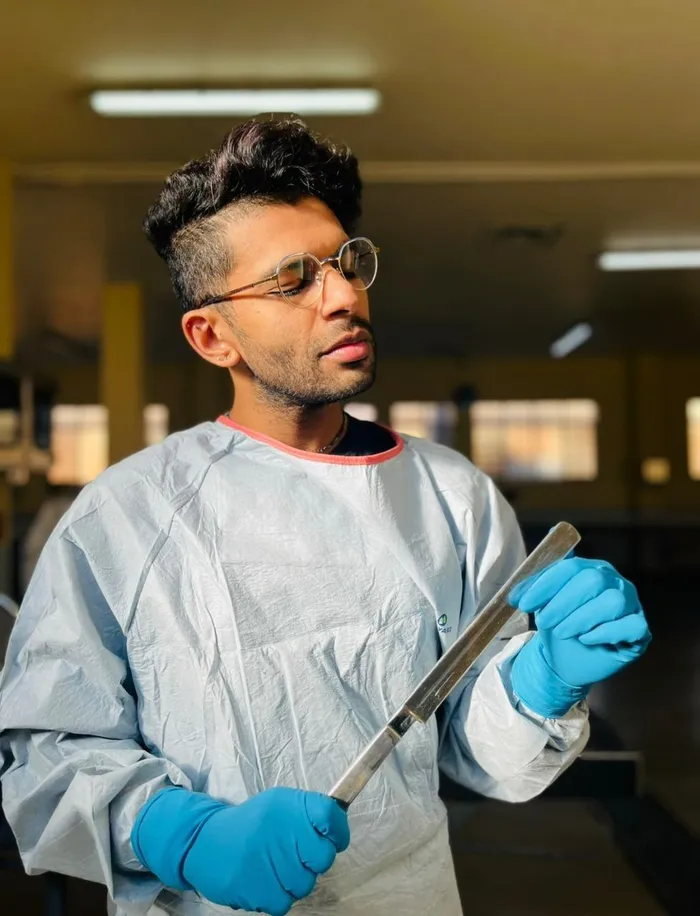
Dr Yaseen Bismilla is a forensic pathologist using TikTok to change perceptions of death and justice.
Image: Supplied
South African forensic pathologist Dr Yaseen Bismilla is changing the way people view medicine, death and forensic science - one TikTok video at a time.
With thousands of followers online, Dr Bismilla has built a platform that blends forensic education, humour and honest conversations about the realities of working in one of medicine’s most emotionally demanding fields.
But behind the viral mortuary tours and relatable content is a doctor deeply passionate about justice, public education and giving a voice to victims.
“Forensic pathology is not really about death - it’s about truth, justice, and giving a voice to people who no longer have one,” said Dr Bismilla.
The Johannesburg-based doctor revealed that although he was always fascinated by medicine, he was once terrified of death growing up.
“I was that child asking too many questions at family gatherings,” he said jokingly.
“Somewhere during my medical journey, especially while working in trauma and at a rape crisis centre, I realised forensic pathology is about the human stories attached to unnatural deaths.”
Forensic pathology involves investigating unnatural or suspicious deaths, including murders, suicides, accidents and unexplained deaths.
According to Dr Bismilla, the work extends far beyond what viewers see on crime television shows.
“People think we spend the whole day doing dramatic autopsies like on TV, but the work is far broader than that,” he explained.
“Every body tells a story. Our job is to piece together what happened using anatomy, pathology, toxicology, scene findings and investigative information.”
His workday can involve conducting autopsies, analysing injuries, reviewing medical records, speaking with detectives, attending scenes and testifying in court.
While the subject matter is serious, Dr Bismilla’s social media content often uses humour to make forensic science more accessible.
“Humour is honestly survival in this profession,” he said. “South Africans connect through humour. We joke through load shedding, petrol prices, heartbreak - everything. So why should medicine be presented as cold and untouchable?”
He stressed that respect for victims and grieving families always remains at the centre of his content.
“I never joke about victims or families. The humour is usually directed at myself, the chaos of medicine, or the realities healthcare workers experience behind the scenes.”
Dr Bismilla initially started posting online because he realised many people misunderstood forensic pathology and only associated it with horror films or sensational crime stories.
“I also realised there was a massive gap in accessible medical education online, especially from a South African perspective,” he said.
“I genuinely thought maybe 20 people would watch my videos. Instead, South Africans arrived in full force.”
Beyond entertainment and education, his platform has also become a space where followers seek guidance and support - particularly survivors of gender-based violence.
Before specialising in forensic pathology, Dr Bismilla worked in a rape crisis centre and focused his Master’s research on femicide and GBV in South Africa.
“I receive messages privately from people asking for advice, support or direction after experiencing abuse or violence,” he shared.
“Even if it’s just helping someone take the first step toward seeking help, that means a lot to me.”
Despite his growing social media fame, Dr Bismilla admitted that forensic pathology can take an emotional toll.
“One minute you’re dealing with a high-profile homicide case, the next it’s an infant death or GBV case that stays with you long after work,” he said.
“People are fascinated by forensic pathology, but very few truly understand the emotional weight healthcare workers carry home with them.”
Looking ahead, Dr Bismilla hopes to continue growing academically and creatively within forensic medicine.
He revealed that he plans to pursue a PhD in the future and hinted at possible television opportunities currently in development.
Most importantly, he hopes to inspire young South Africans interested in medicine and science.
“You do not have to fit into one specific mould to become a doctor,” he said.
“You can come from an ordinary background, have personality, creativity, humour, and still excel academically and professionally.”