

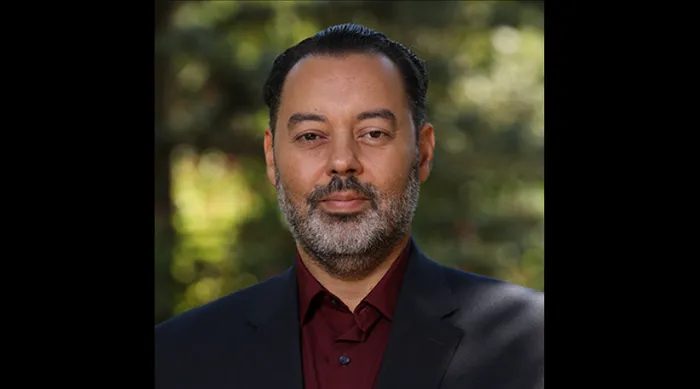
Fadhel Kaboub is in the standpoint that we have actually not yet reached “the end of 500 years of colonialism”.
Image: Supplied
PROFESSOR Fadhel Kaboub, renowned Tunisian-American political economist, recently gave a blunt appraisal of the stranglehold that the lingering traits of neo-colonialism continue to hold on the African continent.
Of greater significance to his empirical evidence about the oftentimes subtle subjugation of the continent by foreign powers, Kaboub — president of the Global Institute for Sustainable Prosperity — provided his dire findings on May 25, Africa Day.
“Every Africa Day”, Kaboub , who is attached to the faculty of economics at Denison University in the US, noted: “We hear the same speeches about ‘Africa Rising’. And every year, millions more young Africans enter economies that still export raw materials, import food and fuel, service external debt in foreign currencies, and remain trapped at the bottom of global value chain.”
“Africa is structurally disempowered, impoverished, and economically colonized. That distinction matters,” he says, and elaborates as follows: “The continent holds some of the world’s largest reserves of green minerals, the youngest population on the planet, extraordinary renewable energy potential, vast agricultural capacity, and strategic geopolitical leverage in an increasingly fractured global order. Yet Africa continues to finance the prosperity of others while borrowing expensively to survive. That is not an accident of history. It is the colonial architecture of the global economy.”
European countries and indeed the US are frantic in every corner of the continent. Their activities are often aggressive and threaten the sovereignty of Africa’s nation-states. Their primary goal is to extract and to take control of the continent’s rare earth and other mineral resources.
We see this in the Sahel region, where France has been kicked out by Burkina Faso, Mali, and Niger in their collective quest for true independence. The reputational damage to France’s humiliation is immense.
The West uses many tricks to plunder Africa. To gain the foothold of African markets, the West uses in particular, their soft power. They fund and control NGOs and the media, which they use to manipulate public opinion, agenda-setting, and control of narratives.
This weekend, from May 30 to 31, the International Schiller Institute hosted a conference in Berlin, Germany, under the theme The Urgent Necessity of a New Global Security and Development Architecture — The End of 500 Years of Colonialism.
I am certain that Kaboub and many other scholars will agree that our international world order is in urgent need for a “new global security and development architecture”. Every day, we wake up to mounting evidence of the scourge of unilateralism on world affairs.
The Gaza genocide remains a matter likely to end up unpunished. The Trump administration, just like Biden’s and others before, holds a dim view of the International Criminal Court (ICC).
The US is also not a signatory to the Rome Statute, and therefore believes the ICC has no jurisdiction over the activities of the US or its staunch allies such as Israel. Washington has issued threat of sanctions to any ICC official found to have acted in opposition to Washington’s foreign policy interests.
The collapse of the founding principles of the UN Charter bears testimony to the overall evaporation of our global governance systems. Israel is fearlessly destroying the geography of Lebanon as we speak, displacing millions while killing thousands every day. The wanton destruction continues unabatedly despite talk of a US-brokered ceasefire that is a blatant smokescreen.
In addition, President Donald Trump's and Benjamin Netanyahu’s war of choice on Iran continues. Throughout the global conflicts, the UN is missing in action, thereby giving credence to the school of thought that maintains what remains of the UN is nothing but an empty shell of its former self.
These abominable actions that bear the hallmarks of “strong men syndrome” lay bare the desperate need for a new global architecture. The international community is crying out for global diplomacy to be returned to the centre of international relations marked by multilateral predictability and peaceful coexistence.
Kidnapping a president and his wife in the middle of the night in their sleep, and illegally crossing borders with Venezuela’s first couple and hauling them before a dubious trial instead of an international court is behaviour that reflects the law of the jungle.
Also, to threaten other nations with annexation is an affront to civilized international norms and standards. To ignore the World Trade Organization (WTO) and unleash a spate of indiscriminate barrages of tariffs reflects behaviour of madmen corrupted by absolute power.
All these examples and others too numerous to mention support the case for change, and the International Schiller Institute deserves great credit for shining the torch on such important geopolitical matters.
However, where I stand with Kaboub is in the standpoint that we have actually not yet reached “the end of 500 years of colonialism”. This European scourge is pretty much still with its victims in Africa and across the majority world. To the optimists, the end of colonialism in whatever form - might be nigh, which is well and good.
Kaboub appropriately reflects that at this juncture, the central question is no longer whether Africa can “develop” within the existing international economic system that suffocates Africa. On marking 500 years of colonialism, the question should be whether “Africa is finally ready to redesign the rules of the system itself”.
The African Union’s Agenda 2063 calls for “The Africa We Want”. Ideally, what is envisaged is an “integrated, prosperous, sovereign continent capable of financing its own development and shaping global affairs”. However, Kaboub and many others believe that this vision will remain rhetorical unless Africa confronts the deeper structures of dependency that continue to define its economic model.
He argues that the problem is not simply corruption, governance failures, or lack of entrepreneurship (aka the favourite explanations offered by mainstream development discourse). The deeper problem is neo-colonial structural dependency, he says.
Most African economies remain trapped in colonial economic patterns as follows: Exporting raw commodities, importing manufactured goods, depending on external financing, and surrendering policy space to creditors and international financial institutions.
According to the UN Conference on Trade and Development’s (Unctad) State of Commodity Dependence 2025, commodity dependence remains one of the defining characteristics of developing economies, especially in Africa.
In many countries, commodities account for more than 60% of export earnings. “This”, according to Kaboub, “is the heart of the debt trap”.
My humble opinion is that in this era of enlightenment, Africa need to stop her fragmentation and deal with the international community as a united front, demanding mutual respect and equality in thought, word, and deed.
In that way, Africa’s united voice would be too audible to ignore. United through the AU, Africa and the rest of the Global South should demand that the Europeans that colonised the continent ought to pay reparations. And if they choose not, Africa must blacklist such offenders.
The International Schiller Institute would have achieved a great goal if they included Europe’s payment of reparations in their final list of resolutions, or communique.
* Abbey Makoe is the founder and editor-in-chief of the Global South Media Network. Views expressed are personal.
** The views expressed here do not reflect those of the Sunday Independent, Independent Media, or IOL.