

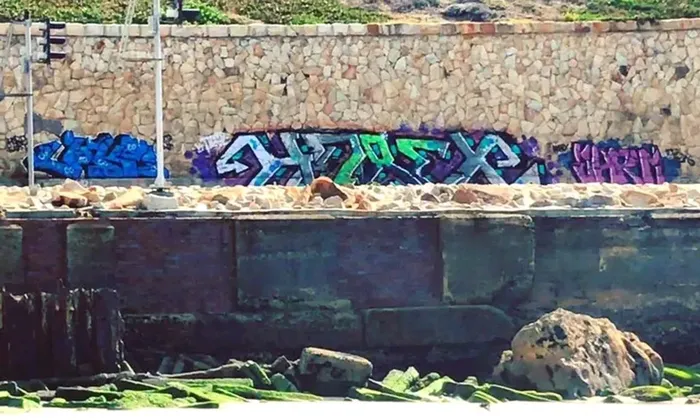
The City of Cape Town reminds would-be offenders that fines or prison sentences can still be imposed for all illegal graffiti. Picture: Supplied
Cape Town - Despite steep fines for graffiti-related offences, Cape Town remains engulfed in unwanted colourful art on properties, leading to civic associations and the municipality having to spend significant amounts of money on regular removals.
The City of Cape Town’s law enforcement department imposes fines of R1 500 on offenders, or sends them to jail for three months. However, the sentences don’t stop the creatively minded law-breakers from spraying their designs on both private and public properties.
Wayne Dyason, the City’s law enforcement spokesperson, said the problem was caused by both and young and old. All areas of the city were affected, and any person who broke the law would be served with a compliance notice demanding that they remove the graffiti.
“Graffiti is any one of, or any combination of, an inscription, word, figure (other than a figure indicating a street number), letter, sign, symbol, sketch, picture, or mural design that is applied to any natural or man-made surface on any property, and which is visible to a person from a public place and has not been authorised by the City,“ he said.
“The removal of illegal graffiti is complaints-driven as well as proactive. Daily removals are required. The cost of doing so depends on the square metres covered during the removal, and is calculated on the basis of the resources and equipment used during the removal. Any cost incurred by the City is recoverable in terms of its the credit control and debt collection policy,” explained Dyason.
Co-chairperson of the Green Point Ratepayers’ and Residents’ Association Liz Knight said the the area had both gang-related art and creative work, both of which were often painted at night.
“Today (February 15) we found what might be a gang message on one of the benches. It has been removed. Mostly, we believe, it is random work done by artists. Only occasionally is graffiti gang-related,” said Knight.
She said that, although they had a team dedicated to the removal of the art, which focuses every Monday mostly on Main Road between Wessels and Varneys roads to ensure all the graffiti is removed, she said they sometimes needed to call for the City's help.
“We are very proactive, as we believe that random graffiti can add to the general decay of a neighbourhood. However, commissioned street art by recognised artists in an area such as the Helen Suzman underpass is something we would consider,” she said.
Meanwhile, Kally Benito, the Cape Town Central City Improvement District’s urban development manager, said illegal graffiti tagging was an ongoing problem in the Cape Town CBD, where unsightly defacements are found on a number surfaces and should not be confused with huge murals by talented graffiti artists.
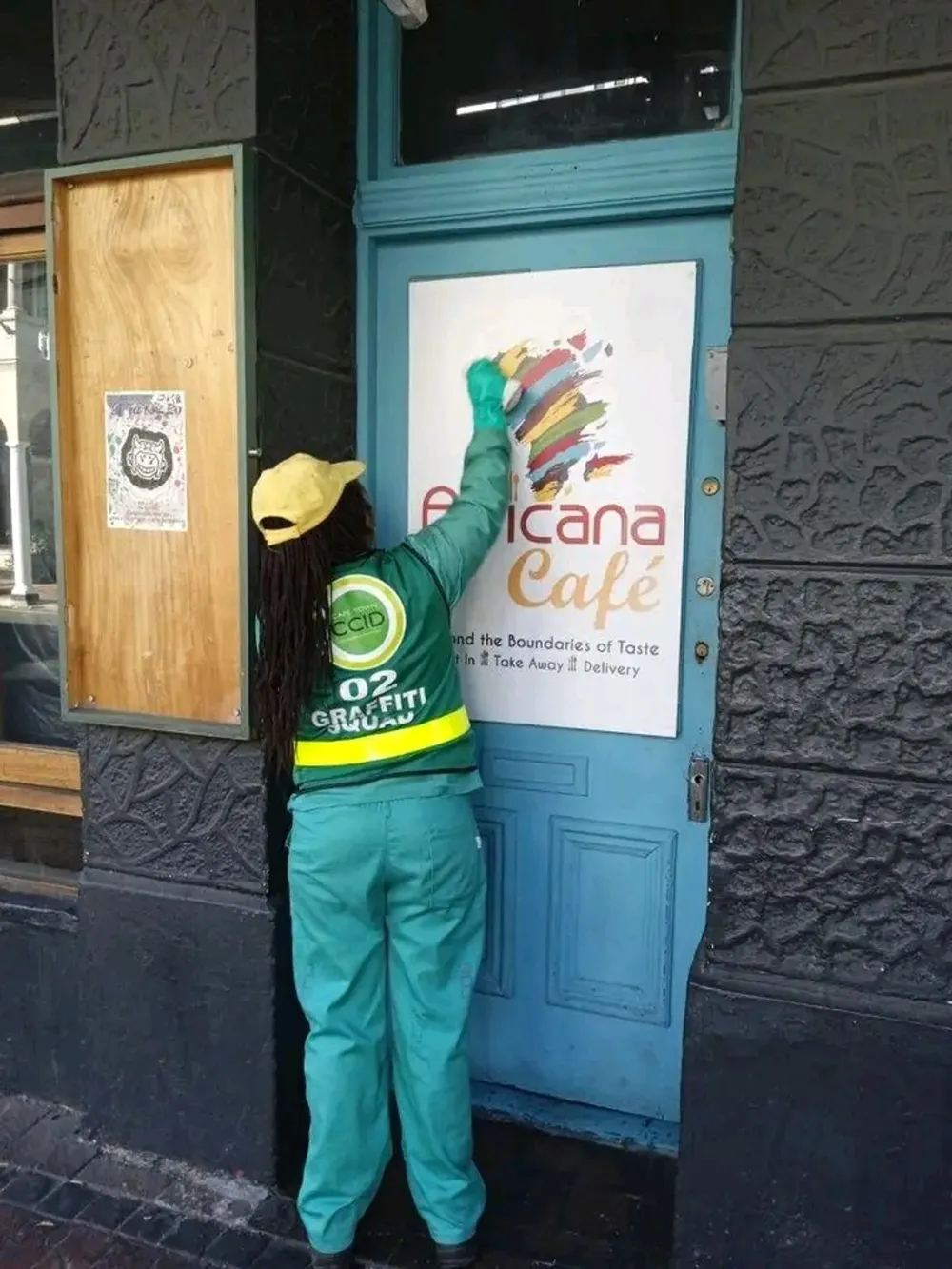
“Graffiti-tagging has a negative impact, as it lowers the tone of a neighbourhood, making it appear rundown, thereby discouraging visitors and investors. This is especially the case if the tags are gang-related or contain bad language or antisocial and derogatory slogans and signs. For this reason, the CCID’s urban management department prioritises the removal of such tags in town. Our policy is to remove all identified graffiti within 24 hours.”
Benito said they had noted that the problem escalated between September and March, and that the graffiti was commonly found on walls, doorways, cement barriers and municipal infrastructure such as electrical boxes, green refuse bins and poles.
Dyason said only recognised artists or organisations commissioned to produce artwork could apply to the City’s arts and culture branch for a public art permit.