

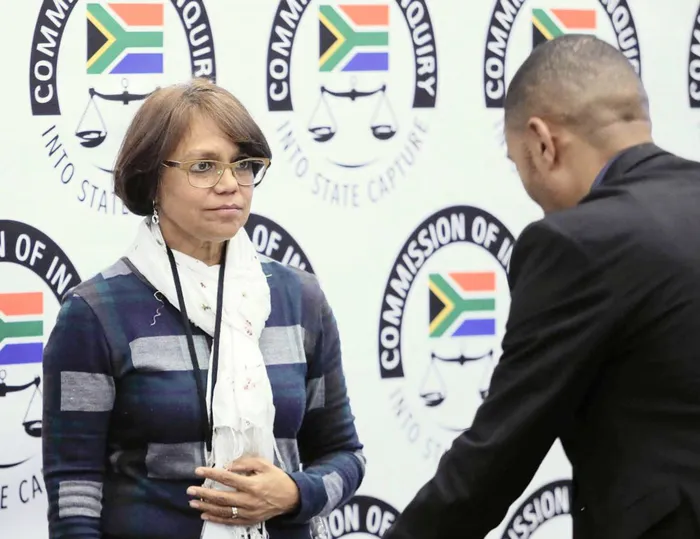
Former SAA treasurer and head of financial risk management Cynthia Stimpel said whistle-blowers had no protection after speaking out. Picture: Simphiwe Mbokazi/African News Agency (ANA)
Alone, depressed, isolated and broke with few job prospects despite experience, courage and proven integrity.
This is the plight of some of the country’s women whistle-blowers who have paid a hefty price for speaking out against corruption at the cost of families, sanity, health and at times their lives.
This week marked a year since the assassination of Babita Deokaran who exposed tender corruption in the Gauteng Health Department.
Deokaran was killed outside her Joburg home in August last year.
Two whistle-blowers who spoke to Weekend Argus this week said the anniversary of Deokaran’s death reminded them of how unsafe they felt when they spoke out against corruption.
The lives of Bianca Goodson and Cynthia Stimpel were turned upside down when they made the brave decision to speak out against corruption.
Others such as Thuli Mpshe, Martha Ngoye and those who remain anonymous but fought to expose wrongdoing embody the spirit of the brave women who marched against pass laws in 1956, the women that help and continue to shape this country are celebrate during Women’s Month.
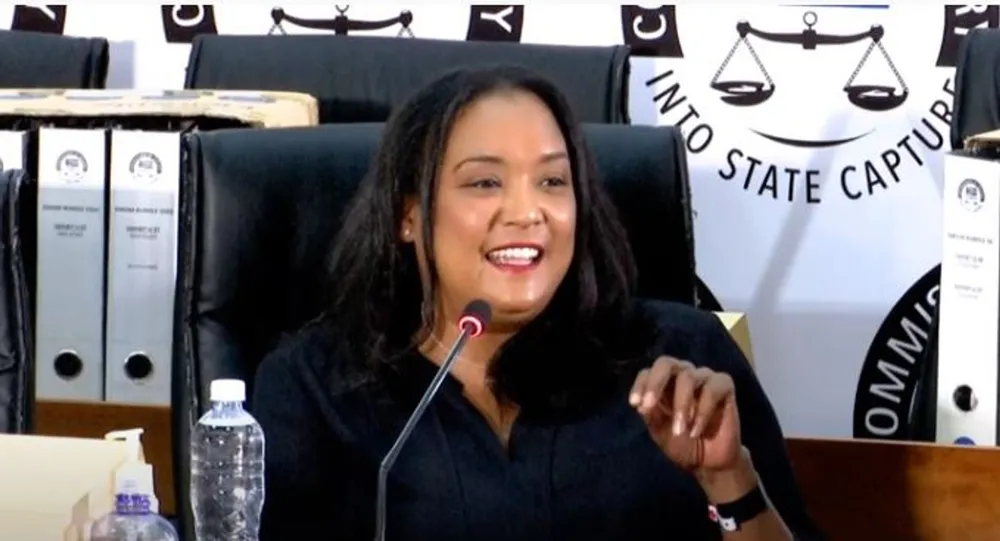
Goodson was former CEO of Trillion who expose how the Gupta-linked firm had enriched itself with hundreds of millions of taxpayers’ rands from dodgy contracts struck with Eskom and Transnet.
Stimpel fought state capture at SAA.
“My whole sense about Babita’s killing is that is was so deliberate, they knew where she lived, they had been following her daily routine. This makes me feel equally vulnerable,” Stimpel said.
Stimpel said she recently felt her life was in danger when a woman visited her home pretending to have an interest in her book Hijackers on Board - How one courageous whistleblower fought against the capture of SAA.
But she soon discovered that the woman allegedly had close ties to Myeni.
“This tells you that if they want to get you they will find you and as a whistle-blower you need to find your own protection and solve your own problems,” Stimpel said.
She added that the killing of whistle-blowers in front of witnesses was brazen.
“We are not protected, we are just like Jews who wore a yellow band around their arms, it’s as though we wear a bright red ‘W’ so people know,” Stimpel said adding that she had also been struggling to get work.
“When I left SAA I was only 59, I couldn’t get a job, it was so difficult and I had to reinvent myself to start earning money,” Stimpel said.
She now serves on four boards of non-profit organisations but she was yet to be invited for an interview in the business sector where she applied for various jobs.
Stimpel along with other whistle-blowers have established The Whistleblower House, a non profit that provides support services to whistle-blowers.
Goodson left Trillion with her computer which she said strengthened the hypothesis of state capture which at the time was not taken too seriously.
But Goodson did not know that her life would come crashing down.
“Nobody can prepare you for blowing the whistle. You think your life will carry on, no one tells you that your life goes into a spin cycle in a washing machine, I am still trying to pick up the pieces,” Goodson said.
She said subsequently suffered from depression and her subsequent divorce from her husband.
“One of the biggest consequences of blowing the whistle is becoming unemployable.
“On any given month I apply for over 250 jobs and my parents are still financially supporting me.
“I am looking at selling my house this month. It’s really hard it’s incredibly difficult.
“That is the root of my depression because my skills haven’t changed. My integrity has been demonstrated but I can’t get a job and it’s bizarre,” Goodson said.
But Goodson who was also known as the “McKinsey Slayer” said she did not regret her decision.
Organisation Undoing Tax Abuse’s (OUTA) Stefanie Fick said most whistle-blowers who worked with OUTA were women.
Fick said she was concerned that the plight of whistle-blowers and the assassination of Deokran would deter people from standing up against corruption.
“With what is happening in South Africa currently and the murder or Babita, will anyone have enough courage to speak out?”
“Legislation does not protect whistle-blowers enough,” Fick said adding that more also needed to be done to create job opportunities for whistle-blowers.
“It seems that although companies are screaming from the roof tops that they are ethical they are hesitant when it comes to employing whistle-blowers as if they have got something to hide,” she said.
Social worker John Clarke who works with whistle-blowers, attributed the large number of women who spoke out as opposed to men - to women wanting to be good role models to their children.
“There seems to be more women that are men who tend to blow the whistle and at the same time there seems to be more women than men that seek the help of a social worker,” Clarke said.
Clarke said for most women it was about educating their children on wrongdoing.
“They feel they have to speak out.
“There is a relative appetite for truth and what it means in the long term,” Clarke said.
Clarke suggested that plan needed to be put in place to at least create a kind of insurance for whistle-blowers.