

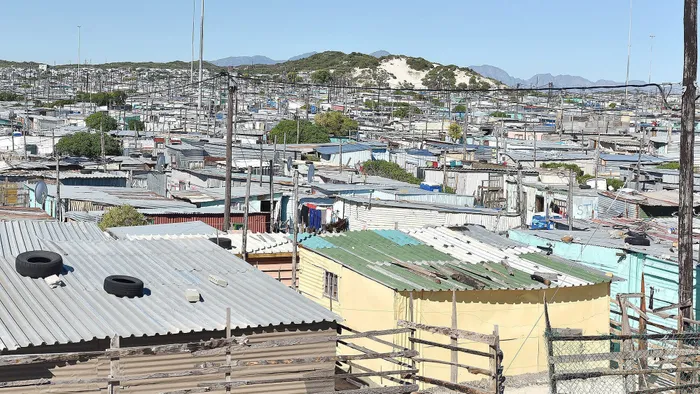
Different spheres of the government have united to build 30 000 houses by 2029 to deal with the large number of informal settlements in the country. Picture: Jason Boud
Johannesburg - Different spheres of the government have united to build 30 000 houses by 2029. This is to deal with the large number of informal settlements in the country.
Public Works and Infrastructure Minister Patricia de Lille, Gauteng Human Settlements MEC Lebogang Maile, and delegates from several departments in Housing and Infrastructure Development, conducted an oversight visit in Lufhereng, outside Soweto on Thursday.
De Lille said she was pleased with pace of the project and glad to see some of the units being occupied by residents.
“The Lufhereng project has been planned as a fully integrated and mixed-use suburb which will be the jewel in the west of greater Soweto; a destination of choice where families of various income levels and new homeowners will preferentially settle and obtain security of title to provide a safe and secure environment for their families; and investing in high-quality housing products,” said De Lille.
To date, 3 412 houses have been completed.
Amalia Britton, a resident of Bosmont on the West Rand said her area had not received housing for the past 25 years. Some of the other areas she highlighted were Coronationvile, Nuclear, Kathrada Park and Waterfall. Many of these areas were occupied mostly by coloured and Indian ethnic groups.
“I am requesting for us to be included. Many of the homes in the Bosmont area we find one bedroom with 20 inhabitants… Our areas are hardly included in any of the projects,” said Britton.
De Lille said the government had not neglected other racial groups.
“Our government does not build on the basis of colour but on what people need. We need to continue to build our communities together and integrate our people,” said De Lille.
Maile said the housing units would be rented by beneficiaries as it was social housing unit. He said the government would assist beneficiaries in paying a deposit directly to the bank if they were in the R3 500 to R22 000 income bracket.
“About 230 000 people come to Gauteng every year. One million people need homes. Houses cannot be built for everyone. But there needs to be an approach,” said Maile.
Responding to Britton, Maile said that many people refused to move to certain areas where homes were available, resulting in a divide of ethnic groups.
The Star