

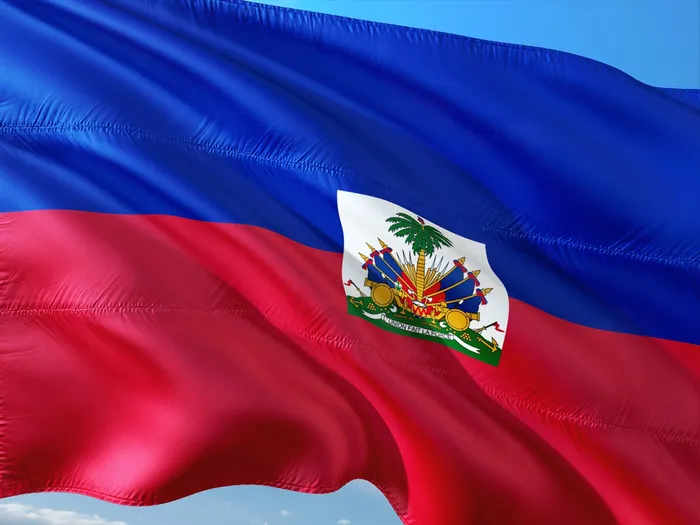
The University of Johannesburg hosted a Haitian National Flag Day celebration on Monday, a commemoration of the establishment of the world's first independent black republic after the 1803 revolution.
Image: FILE PHOTO
The blue-and-red flag that was first hoisted high on May 18, 1803, during the Haitian Revolution, marking the emergence of the world’s first independent black republic, was celebrated on Monday in Johannesburg.
Haitian National Flag Day was also observed in other major diaspora hubs around the globe, such as New York, Florida and Massachusetts.
Giving a toast at a ceremony hosted by the University of Johannesburg, Minister of International Relations and Cooperation Ronald Lamola said South Africa and Haiti shared a common heritage of resilience, resistance and the unwavering commitment to human dignity.
He said Haiti became a symbol of liberation and hope for oppressed peoples of the world in the 19th century, and South Africa’s transition to democracy in 1994 became a “beacon of possibility for justice and equality” on the African continent and beyond.
“Tonight, we gather to celebrate a flag that is far more than a national emblem. The Haitian flag stands as a beacon of courage and inspiration – a reminder of Haiti’s historic achievement as the first independent black republic in the world.
“The Haitian Revolution, which culminated in the creation of this flag, represents not only the triumph of freedom over oppression, but also the relentless pursuit of justice, dignity, and human equality. In that spirit, it resonates profoundly with South Africa’s own history of struggle against colonialism and apartheid, reminding us that the quest for liberty and equality transcends borders and generations.”
Haitian Ambassador to South Africa Jean Pillard said the people of Haiti did something the world had not seen in 1804.
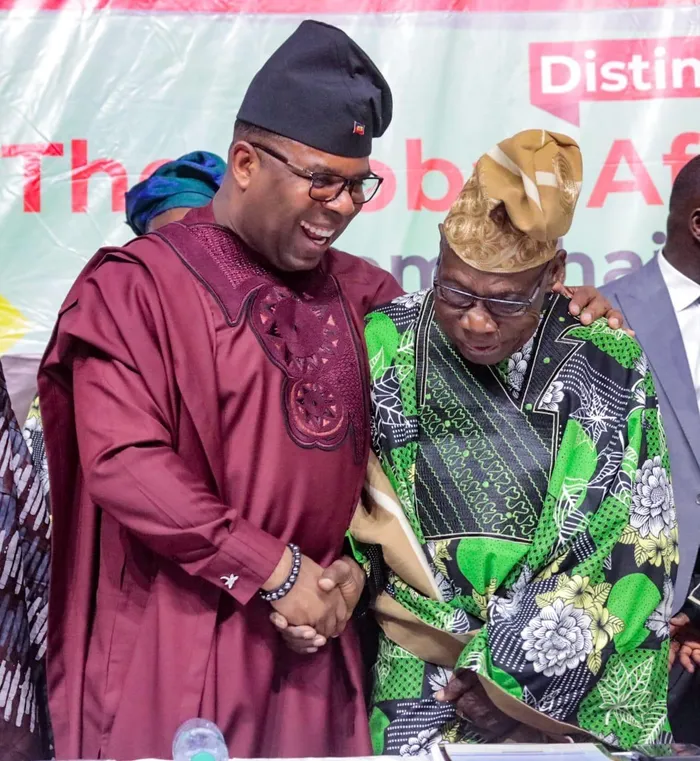
Haitian Ambassador Jean Robert Pillard congratulating former Nigerian president Olusegun Obasanjo on his 89th birthday in Abeokuta, Nigeria, earlier this year. The people of Haiti maintain close ties with Nigeria and share a lot in common since a significant number of Haitians trace their origins to West Africa.
Image: SUPPLIED
"A people, once denied all rights, organised themselves into a sovereign state – not as an idea, but as a structure. They established something that would outlive them: that dignity is not granted. It is organised, defended, and sustained,” he said.
Pillard reminded guests who came from far and wide that Haiti did not begin in 1804, but “before the ocean”.
“The people who formed Haiti came from this continent. They carried knowledge, systems, discipline, belief. Those things were not erased. They endured.”
He referenced the song still heard in Haiti today, “Lòt bò dlo nan Ginen…” (Beyond the waters, in Africa), that symbolises the enduring connection with the continent.
“Those who sang it understood that, in their lifetime, they would not return to Africa. The crossing had already taken place, and it was not a journey. It was a rupture (as they were taken as slaves).
“And yet, they held to a deeper certainty: that what could not be restored in life would not be lost entirely. That when life ended, their spirit would return to the place from which it had been taken.”
The ambassador also paid tribute to the 200,000 Haitians who died during the large scale earthquake that devastated the island nation in 2010.
Pillard emphasised that Haiti’s pride in being a small but sovereign state, equal in dignity and in responsibility to others and friend to all.
“Haiti’s position has not shifted: Friend to all. Enemy to none. Because there are no small states and no large states - only sovereign states, equal in dignity and equal in responsibility. Geography may suggest distance. History does not. Haiti is not outside of Africa’s story. It stands within it. And so, when our ancestors sang “Lòt bò dlo nan Ginen…” they were not expressing longing. They were stating something definitive: that even across oceans, even across generations, they had not been separated from what they were.”