

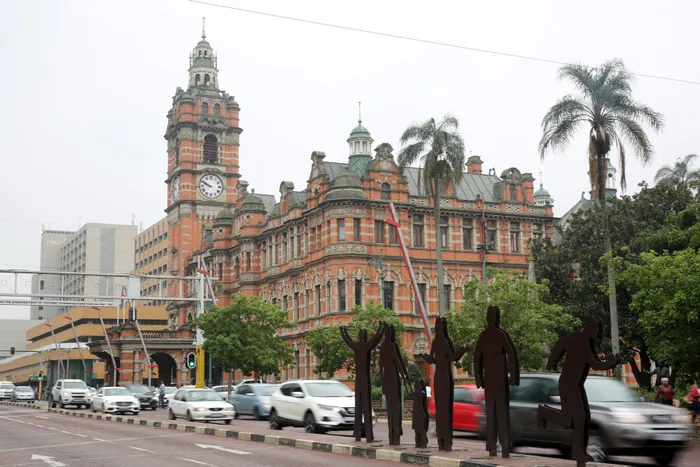
The Msunduzi Municipality received three awards across key categories at the KwaZulu-Natal Department of Cooperative Governance and Traditional Affairs (COGTA) 2026 municipal excellence awards
Image: Independent Newspapers Archives
The Msunduzi Municipality ratepayers raised concerns about the recent recognition the city received for the collaborative work undertaken with the Mpumuza Traditional Authority to support service delivery initiatives within traditional communities.
The KwaZulu-Natal Department of Cooperative Governance and Traditional Affairs (CoGTA) held the 2026 Municipal Excellence Awards at the Durban International Convention Centre on Thursday.
The Msunduzi Municipality received three awards across key categories that reflect the municipality’s commitment to strengthening governance, improving planning processes, and fostering collaboration with traditional leadership structures.
It achieved third place in the category for Best Traditional Council in coordinating service delivery. Also, third place for Best Developed Integrated Development Plan (IDP) for the 2025/26 financial year, acknowledging the municipality’s efforts in developing a strategic and inclusive planning framework that guides sustainable development and service delivery within the city.
In the category for Municipal Entities, Safe City received a Clean Audit Award presented by the KZN Office of the Auditor-General of South Africa (AGSA). The award recognises the entity’s sound financial management practices, compliance, and commitment to good governance.
Msunduzi Mayor, Councillor Mzimkhulu Thebolla, said the awards reflect the collective commitment of the teams who continue to work tirelessly to serve the communities.
“These achievements motivate us to keep building a municipality that our residents can trust and be proud of. The awards serve as an important reminder of the progress being made within the municipality and the continued efforts to enhance governance, planning, and service delivery for the residents of Msunduzi,” he said.
Jimmy Naidoo, the chairperson of the Northern Areas Residents and Ratepayers Association (NARRA), had a different view of the win.
He reported that residents have raised concerns about irregular waste collection, deteriorating infrastructure, overgrown public spaces, and a noticeable daily increase in illegal structures.
“While the municipality celebrates these accolades, many residents say the reality on the ground tells a very different story. Across several areas of the city, particularly in the northern suburbs, service delivery failures remain a daily challenge.”
According to Naidoo, community members say parts of the northern areas have become severely neglected, raising serious questions about how a municipality facing such visible service delivery problems can simultaneously receive recognition for governance and planning.
He said residents argue that priority should instead be placed on restoring basic service delivery and improving the cleanliness and safety of the city.
“Concerns have also been raised about the proposed tram train project, reportedly valued at around R1 billion, which the KwaZulu-Natal Department of Cooperative Governance and Traditional Affairs flagged as a potential white elephant project,” Naidoo added.
He said that community organisations are now calling on CoGTA to conduct an on-the-ground assessment of conditions across Pietermaritzburg, particularly in areas where residents continue to pay for municipal services but see little return.
“Residents say recognition should ultimately reflect the lived reality of communities — and until service delivery visibly improves, many believe these awards are difficult to reconcile with the current state of the city.”
Thembelani Mkhize, a Msunduzi resident, raised concerns about the award on his social media blog. He said if you live in Pietermaritzburg, this might come as a bit of a surprise.
“Not because people are against celebrating achievement, but because most residents are still trying to figure out exactly which version of Msunduzi the judges were looking at,” he said.
He added that residents are still navigating potholes big enough to qualify as swimming pools, non-functioning traffic signals, water outages, and billing systems that seem to be based on creative imagination rather than meter readings.
“Perhaps somewhere in a conference hall, the PowerPoint version of Msunduzi looks fantastic. The planning documents are polished. The strategy slides are colourful. The speeches are confident. Unfortunately, the streets of Pietermaritzburg don’t run on PowerPoint. They run on infrastructure, maintenance, competent administration, and most importantly, service delivery that residents can actually see,” Mkhize said.
zainul.dawood@inl.co.za