

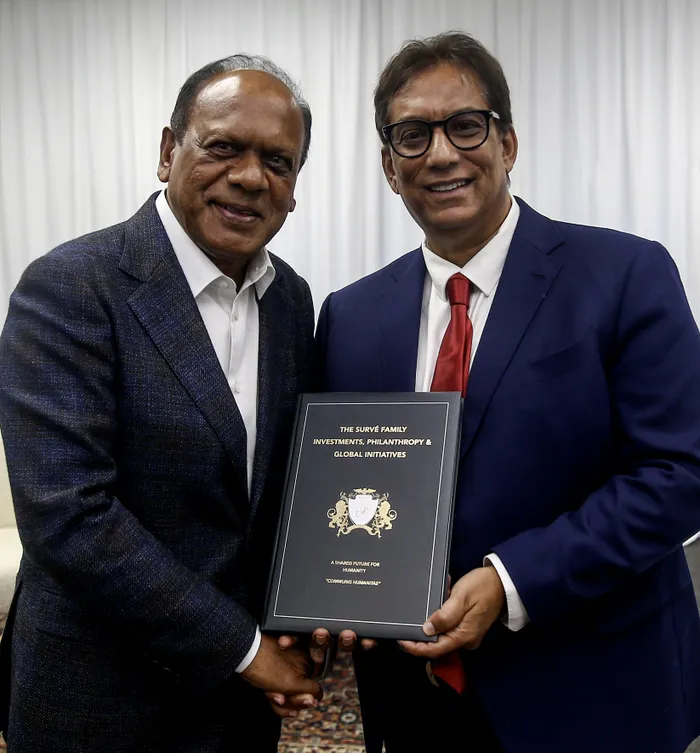
Vivian Reddy and Dr Iqbal Survé during the KZN leg of Survé’s book launch for his new book, “A Shared Future for Humanity”.
Image: Leon Lestrade/ Independent Newspapers
A private and “sober” visit to Robben Island is detailed in a powerful chapter of Dr Iqbal Survé’s new book, “A Shared Future for Humanity”.
Survé, the patron and founder of the Survé Family Office and chairperson of the Sekunjalo Group, describes this particular trip as his most profound experience, despite having been to the island numerous times.
His reflections offer a raw, unvarnished look at the brutality faced by prisoners, one that stripped away the “romanticised” narrative often associated with the former political prison.
The book, explores Survé’s life, his business journey, and his reflections on shared values, humanity, and the challenges facing South Africa and the world. The book also delves into the Survé family’s business ventures, philanthropic work, and international initiatives.
Survé shared this experience at a launch event for staff from all Survé companies in KwaZulu-Natal on Wednesday.
Although Survé had been to the island countless times with important figures, including Robben Island prisoners and celebrities (all mentioned in the book), this was the first time experiencing the island in solitude.
“It was a very sober visit going into the cells, and then I recognised that I’ve known personally 22 people who were in Robben Island,” Survé said.
“It was really good going with the family and spending some time just meditating, lighting candles.”
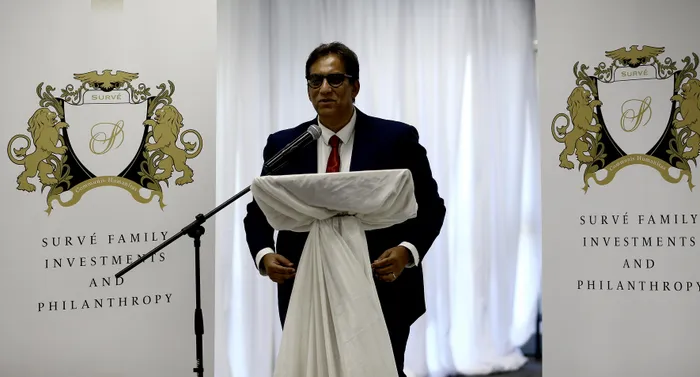
Dr Survé’s powerful reflections challenge the romanticised narratives of Robben Island’s history.
Image: Leon Lestrade/ Independent Newspapers
Reflecting on one particular visit, where he 'entered Madiba’s cell without any celebrities, without Madiba himself', Survé said he was moved by the challenges that Nelson Mandela and countless others had to endure.
“For the first time, I went into his cell alone and just could not accept that a tall man like that could fit into that cell. That there was no bed until after there was a massive protest,” Survé said.
"And then going for the first time to the hospital section… I saw the straitjackets. They were there because the prisoners were protesting the fact that they refused to give them food, the fact that they dressed African prisoners in shorts, no sandals, and they tried to differentiate.
“They were brutal about taking them to the lime quarry. And when they mined the lime, they simply threw the lime into the sea. And they were forced to be there. And if you didn’t, you wouldn’t get food. You’d have no privileges. You would not have visitors. And the redaction of everyone’s letters. They had three prison guards for every maximum security prisoner,” Survé said.
He said that when he was with other activists, they would talk about the possibility of helping the Robben Island prisoners to escape and he often wondered why they did not swim to try to escape.
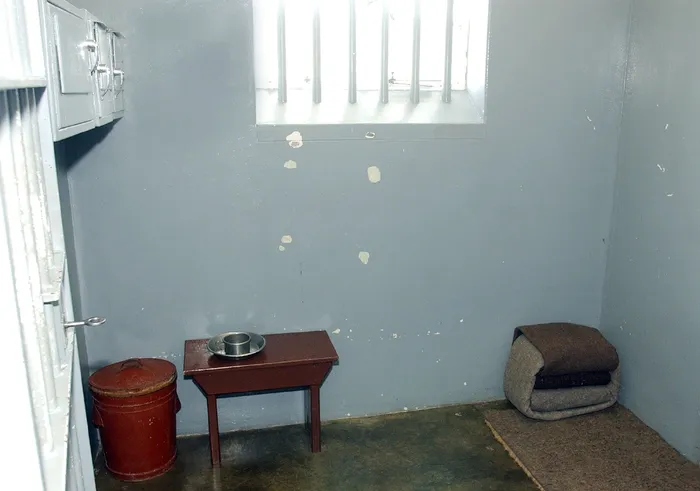
The inside of Madiba's world-famous cell at Robben Island.
Image: Ian Landsberg/ Independent Newspapers
“And then you realise how brutal those boats that were patrolling the island were, those dogs, the dogs bit them. And I must admit I’ve been there, I don’t know... 30 times, and I’ve read so many books, and I’ve never ever experienced Robben Island that way,” Survé said.
“There’s nothing romantic about being on Robben Island. I want to tell you that there’s nothing romantic. To have survived Robben Island, whether you are Motlanthe (Kgalema), Zuma (Jacob), Madiba, or Govan Mbeki,” Survé said.
“Thabo Mbeki’s father was the one person coming out of Robben Island who never romanticised Robben Island. In fact, (Govan Mbeki) never spoke about Robben Island.”
Businessman and philanthropist Vivian Reddy said “A Shared Future for Humanity” is not a story of one family but the story of South Africa, Africa, and 'our place in the world'.
“This book also does something profoundly important. It shows that South African history is not simple, but it is hopeful. A story shaped from struggle, yes, but also by collaboration, gratitude, and an unwavering belief in a shared future. The phrase that anchors this book says it perfectly: a shared future for humanity. This is not a slogan. It is a responsibility,” Reddy said.
thobeka.ngema@inl.co.za