

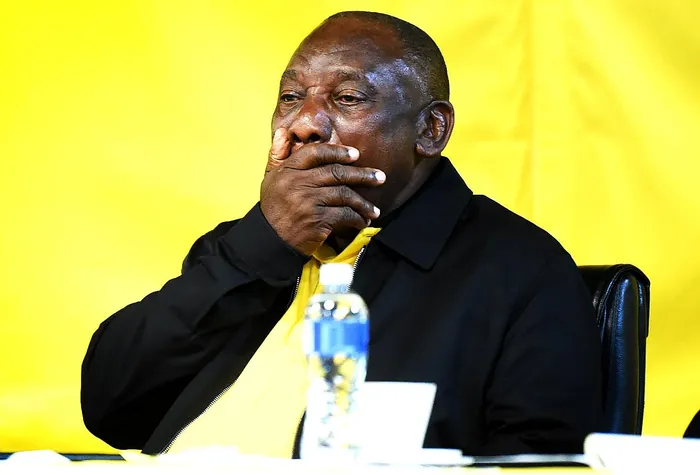
Law expert and political analyst Zwelethu ‘Mighty’ Madasa says the National Assembly should continue with the impeachment process despite President Cyril Ramaphosa's challenge of the Section 89 Independent Panel report.
Image: Itumeleng English / Independent Newspapers
The National Assembly will have to continue with its impeachment process against President Cyril Ramaphosa, despite his filing of a review application against the Section 89 report which found he had violated his oath of office.
This is according to advocate and political analyst Zwelethu ‘Mighty’ Madasa, who said the review does not challenge the Constitutional Court (ConCourt) order that Parliament must perform its oversight duties and proceed with the impeachment inquiry.
This comes after the African Transformation Movement (ATM) on Wednesday warned Ramaphosa that halting the impeachment proceedings pending his court application could constitute contempt of the ConCourt order.
Ramaphosa, filed papers in the Western Cape High Court to review and set aside the independent panel report regarding the Phala Phala farm scandal, and also requested that Parliament pause the impeachment process, threatening to seek an urgent interdict if it goes ahead.
Zungula, in his legal letter sent to Ramaphosa’s attorneys, claims that he is using “Stalingrad” legal tactics to avoid accountability and interfere with Parliament’s constitutional obligations.
Zungula stated that he will propose that “the parties approach the Judge President of the Western Cape High Court to allocate a date for the hearing of the matter on August 10-12, 2026”.
He proposed the timetable leading to that date includes:
The timetable also proposes that the heads of arguments be delivered by July 27 and August 3 by Ramaphosa and the respondents, respectively.
Parliament speaker Thoko Didiza has already established a 31-member impeachment committee to process the independent panel report and determine if there are sufficient grounds for the removal of the President.
Madasa said impeachment can only be stopped by a court order, adding that in “our” system, where the Concourt is the Apex Court and “we” follow precedent, it is highly unlikely that the high court can make a decision that would impede the impeachment process.
He added that the high court will have to decide whether the review has the effect of undermining the impeachment process, which has been directed by the Concourt.
“In a similar case involving Busisiwe Mkhwebane, she lost her attempt to frustrate impeachment through a review. Therefore, the chances of the review being successful are slim, based on the Mkhwebane case,” Madasa said.
“An important factor the High Court will consider is the fact that the impeachment process is entrenched in the constitution, and that it is a process which is investigative. An impeachment process does not mean the President will be found guilty of misconduct. It depends on evidence and politics. Therefore, the court cannot be seen to be interfering with Parliament’s powers to impeach where an independent panel of lawyers found that there is prima facie evidence of misconduct,” he added.
But Lawson Naidoo, executive secretary of the Council for the Advancement of the South African Constitution (CASAC), said Zungula, as one of the respondents in Ramaphosa’s application, should engage with the court rather than corresponding with his lawyers.
“The President has not yet brought an application to interdict the Parliamentary proceedings, so that matter does not arise. It is possible that Parliament, on its own volition, suspends the work of the impeachment committee pending the outcome of the President's review application. If Mr Zungula were to challenge that decision, he would have to show that Parliament's actions are irrational or unreasonable,” he said.
However, political analyst and governance expert Sandile Swana said the ConCourt decision is unappealable, adding that the only time the impeachment proceedings will stop is when the independent panel report is set aside by the court.
“There is no way an interdict could work for as long as the report is not set aside. The review does not interdict. And if he applies for an interdict, chances are that it will not be given because the ConCourt, which is higher than any other court, has said this must continue,” he said.
Swana said Ramaphosa’s threats (to interdict the impeachment proceedings) are not helpful, adding that they are just serving to cause unnecessary confusion.
He said Parliament should proceed with the impeachment hearings, and oppose Ramaphosa in his application.
“If the ConCourt has said this thing must go on, it must go on.”
manyane.manyane@inl.co.za