

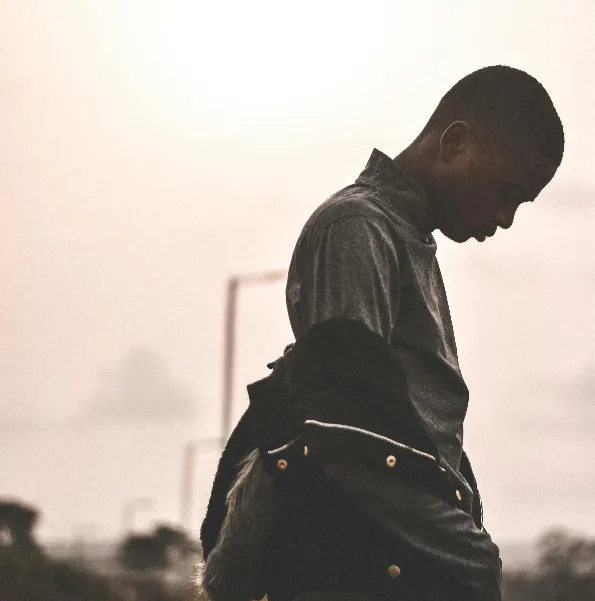
Commemorating the International Day of the Boy Child, a coalition of leaders addresses the vital educational and social challenges confronting boys in South Africa, advocating for a future rooted in positive masculinity and mental wellness.
Image: Pexels / Jerry E-Matthews
Government, business, and civil society united on Friday at Jeppe High School for Boys in Johannesburg to commemorate the International Day of the Boy Child, turning a national spotlight onto the systemic educational, psychological, and social challenges that are confronting young men in South Africa.
Under the banner “Breaking the Silence: Boys' Positive Masculinity and Mental Health”, the event served as a major platform to challenge the deeply ingrained, harmful norms of rigid masculinity.
The collaboration, spearheaded by the Department of Basic Education (DBE) and partners, including Premier FMCG, Aids Healthcare Foundation, and PRIMESTARS, represents a renewed, deliberate effort to ensure boys are not the “invisible half” of gender equity conversations.
MEC for Education, Sports, Arts and Culture, Lebogang Maile, was unequivocal about the societal costs of patriarchy on men, which begins with the boy child.
“During this month in which we honour the boy child, it is important that we reflect on what a patriarchal society that is anchored on the idea that ‘it’s a man’s world’ looks like and does to men,” he said.
He cited global reports revealing that boys repeat grades more often, are more likely to drop out, and struggle with literacy compared to girls, trends that compound their vulnerability.
Maile pressed for an overhaul of cultural norms, arguing that the system harms boys by enforcing emotional suppression.
“Traditional masculinity norms normalise ignoring pain, taking physical risks, and avoiding medical help. Consequently, men are statistically less likely to seek preventative care or counselling, leading to worse health outcomes,” he noted.
He advocated for “positive masculinity”, defined not by aggression or dominance, but by emotional intelligence, equality, and building supportive relationships.
Echoing this sentiment, Deputy Minister of Basic Education, Reginah Mhaule, stressed the need for action beyond acknowledging the data.
Mhaule said the DBE’s own Thrive by Five Report tells us that boys arrive at school already behind girls.
“Many disengage from schooling not because they lack ability, but because the environments around them… have told them that vulnerability is weakness, that asking for help is failure, and that silence is strength.”
Mhaule stated that this silence must be broken, emphasising that suppressing emotions does not build resilience but often results in “resentment, depression and, in too many cases, violence”.
To demonstrate institutional seriousness, she announced a significant reprioritisation of resources, committing R3.2 million to the School-Related Gender-Based Violence (SRGBV) programme, a six-fold increase since 2020.
Deputy Minister of Social Development, Mogamat Hendricks, spoke directly to the issue of absent fathers, a critical factor contributing to the challenges boys face.
He noted the department’s ‘Boys Championing Change Programme’, which revealed that “most boys grow up without a dad in their homes, without a father figure”.
This lack, he argued, leads boys to engage in risky behaviours such as substance abuse and gangsterism.
Hendricks made a heartfelt apology on behalf of absent fathers, but also provided a message of hope and resilience for the young men in attendance.
“My boys, when life throws you lemons, you make lemonade… You were born for a good purpose. Don't choose to do wrong things simply because you are being wronged in life,” he said.
He also announced the upcoming Boys Assembly in Pikeburg as a continuation of efforts to ensure a future with a “strong front of boys who are going to become better men for tomorrow.”
Deputy Minister of the Department of Women, Youth and Persons with Disabilities, Mapaseka Letsike, warned against creating a hierarchy of pain between genders, insisting that focus on the boy child is an intentional act without comparison to the struggle for women’s rights.
She articulated how social constructs limit boys, citing the common practice of buying boys toy guns instead of dolls.
“You did not teach boy children to take care of children, you gave them a gun — that’s society,” she said, challenging attendees to unlearn and relearn gender roles.
“When we heal the boy child, we do not only save our child, we interrupt a cycle, we strengthen a family, we protect a community, we deepen democracy,” Letsike said, offering a powerful call to action for a humane South Africa where “the boy child is whole”.
karen.singh@inl.co.za