

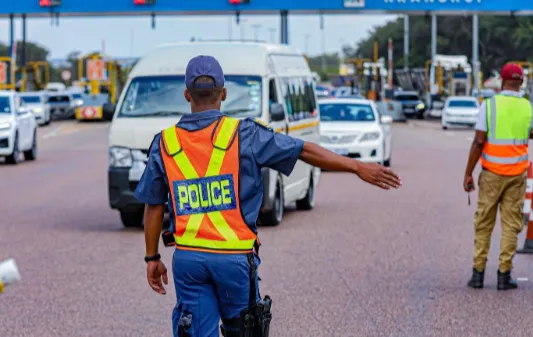
As the Easter weekend unfolds, Gauteng faces a surge in traffic, prompting authorities to enhance safety measures on key routes like the N1 and N3.
Image: Supplied
The traditional Easter exodus from Gauteng is in full swing, with major arteries leading out of the economic heartland experiencing a significant surge in traffic as the long weekend officially begins.
Authorities have intensified law enforcement and awareness campaigns across the country, urging motorists to prioritise safety amid the heavy volumes.
The N1 North, the primary route for pilgrims heading to Moria in Limpopo, and the N3 South towards KwaZulu-Natal (KZN) are shouldering the bulk of the initial traffic load.
The Minister of Transport, Barbara Creecy, noted the expected rush, stating: “We have already seen a surge in traffic volumes on this route, which is the N1 and all other routes. The N1 is expected to have more than 2,500 vehicles passing its toll gates at its peak, as many travellers will be going for the Easter pilgrimage in Moria, while others will be travelling to neighbouring countries.”
To manage the heightened risk, law enforcement visibility has been dramatically increased.
The minister confirmed: “Law enforcement has been intensified, including the deployment of the National Traffic Police, to ensure visibility day and night and to ensure compliance with road regulations. They will be operating in a three-shift system.”
A high concentration of the National Traffic Police deployment is focused on Limpopo and Gauteng due to their strategic national travel role.
According to reports, traffic officers were seen on the ground in Gauteng, inspecting vehicles and stopping motorists not complying with road rules, which could result in an accident.
On the N3 corridor, traffic volumes have been consistently high since the early hours of the morning.
Thania Dhoogra, Chief Operating Officer for the N3 Toll Concession (N3TC), reported robust southbound movement on Friday morning.
“N3 is starting to look fairly busy. We're seeing southbound traffic volumes of just under 1,400 vehicles an hour. So that's many people heading into KwaZulu-Natal,” Dhoogra said.
However, a noticeable and somewhat unusual pattern is emerging with significant northbound traffic, people moving into Gauteng.
Dhoogra provided insight into this trend, suggesting it relates to the festive season's nature: “Especially around Easter, it's a family time. And with many people having moved into Gauteng and into that economic heartland, you know, a lot of people are now tending to come into Johannesburg to visit and spend time with their family, and that might be part of the reason.”
As traffic increases, so too does the risk of crashes, prompting strong appeals for defensive driving.
Dhoogra highlighted common driver errors, advising motorists on crucial adjustments needed.
“They tend not to maintain safe following distances. They don't give themselves enough time to make proper decisions based on the changing conditions around them,” she noted.
The N3 Toll Concession reported several accidents along the N3 that had been cleared as at 2pm.
It has also been reported that in the early hours of Friday morning, three people were killed in a head-on collision on the R63 between Seymoor and Whittlesea in the Eastern Cape.
A particular emphasis has been placed on public transport safety, especially for the high number of buses transporting church congregants.
Putco spokesperson Lindokuhle Xulu detailed their extensive safety measures for the 550 buses deployed for the Moria pilgrimage.
“We have deployed 550 buses... under the original manufacturer maintenance plan. What we've also done is that we've come up with plans to make sure that even though we believe that there won't be breakdowns... we've also placed some of the spare buses along the route,” Xulu explained, underscoring a prepared approach to potential disruptions.
The MEC for Limpopo Department of Transport and Community Safety, Violet Mathye, while on the road monitoring operations, expressed disappointment over initial fatalities but stressed the continued commitment to enforcement.
Mathye raised a specific concern regarding passenger safety in taxis: “Most of our taxi operators, their taxis don’t have belts for their passengers to buckle up. So we're not happy, but we are calling upon all the taxi associations to make sure that when they cover their seats, they must make sure that those belts are not covered also.”
Ultimately, the minister’s message rests on personal accountability. “I therefore call on every road user to take personal responsibility,” Minister Creecy urged.
“Our message this Easter is simple: road safety begins with each one of us.”
karen.singh@inl.co.za