

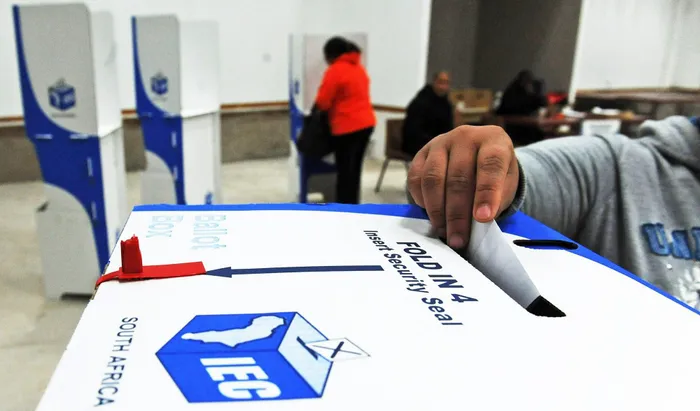
Political parties need to speak to the issues affecting voters in order to lure them to cast their votes. Here is advice on how to go about doing that.
Image: File
When President Cyril Ramaphosa stood before an audience in Ekurhuleni on April 30, 2026 and announced that South Africa would go to the polls on November 4, he said something every political party should tattoo on its campaign wall: "The race has started, and people will do the best they can."
That race is being run on a track strewn with broken trust, crumbling pipes, and a public running out of patience. New research reveals a nation gripped by political disconnection: nearly half—47%—of South Africans say no political party represents their views, despite more than 500 parties being registered with the IEC. A separate survey found that if an election were held tomorrow, the "party" with the biggest vote would be the "no-vote" party.
The biggest competitor every party faces in November is not the ANC, the DA, the EFF, or MK. It is apathy itself. Here is what every party, from the largest to the smallest, needs to understand before printing a single poster or booking a single hall.
1. Stop Campaigning About Parliament. Start Talking About Taps.
The single biggest strategic mistake parties make in local government elections is running them like general elections. Voters do not care about national posturing. They care whether water comes out of the tap.
Municipal elections are rarely about ideology alone. They are about water running from taps, refuse collected on time, and streetlights actually working. South Africa's water crisis, felt acutely in Knysna, Johannesburg, and Durban, has emerged as the defining issue of this campaign cycle. Water is the new load-shedding.
The MK Party grasped this early. In March 2026, an analysis on its own platform warned: "Communities are tired. They are frustrated. They are watching. And they are remembering. When a resident says 'Voting? Voting for what?', that is more than frustration. It is a warning sign for democracy itself."
My advice: build your campaign around a concrete, ward-level service delivery audit. Knock on doors. Ask residents to rate their water, their roads, and their refuse removal. Publish the results. Then present your plan. This is not just good politics. It is the only politics that will work in 2026.
2. The Youth Are Not Coming Unless You Go to Them First
Young persons aged 18 to 35 account for just 28% of the registered voter base. Of the 9,473 councillors elected in the 2021 LGE, only 15% were under 35. Young people are both underregistered as voters and underrepresented as candidates and any party that fixes this meaningfully, not performatively, will have a structural advantage in November.
The youth trust deficit is stark: 40% of 18-to-34-year-olds do not trust the IEC. The first job is therefore not registration drives. It is rebuilding confidence in the process. Show up at universities. Hold open candidate selection meetings. Put young people on winnable ward lists, not proportional representation seats where they will never see a council chamber.
The MK Party has been explicit about tapping into youth frustration, with spokesman Des van Rooyen pointing out that "even those young people with qualifications sit at home, excluded from the economy." Whether one agrees with the politics or not, the targeting is sophisticated. Every other party needs a similarly focused youth message, backed by ward-level policy, not slogans.
3. The ANC Must Govern, Not Just Campaign
The ANC's strategic challenge is uniquely uncomfortable: it cannot campaign its way out of a governance crisis. From 2016 to 2021, it lost 118 seats across eight key metros. In Gauteng's three metro municipalities, its vote share collapsed into the 30% range.
Critically, those lost votes did not consolidate behind a single opposition party. "Voter dissatisfaction is driving support away from dominant parties without consolidating behind a single alternative," according to analyst Murray. That is simultaneously the ANC's greatest danger and its slim window of opportunity, the vote is splintering, not migrating.
The Phala Phala scandal, with a Constitutional Court judgment now imminent, is an additional albatross. As EFF leader Julius Malema told Ramaphosa directly in Parliament: "When you assumed office, you claimed it would be a transparent presidency, then proceeded to sell CR17 documents of your campaign and block investigations on Phalaphala. Where's the transparency?" That line will be repeated on doorsteps across Gauteng between now and November.
My advice to the ANC: start consequence management now. Voters need to see action before November 4, not promises of future investigations. Fire the officials who failed on water. Fix one broken municipality visibly and loudly. Show, don't tell.
4. The DA Must Break Out of Its Cape Town Comfort Zone
The DA enters 2026 in a structurally paradoxical position: never more powerful in national government, yet never under more scrutiny to prove it can govern beyond its traditional base.
Political analyst Gareth van Onselen's by-election tracker, drawing on 2,469 by-elections back to 2000, shows the DA growing in the metros, but consolidating its existing base, not expanding into new markets. "The DA has not yet got the winning formula," Van Onselen concluded.
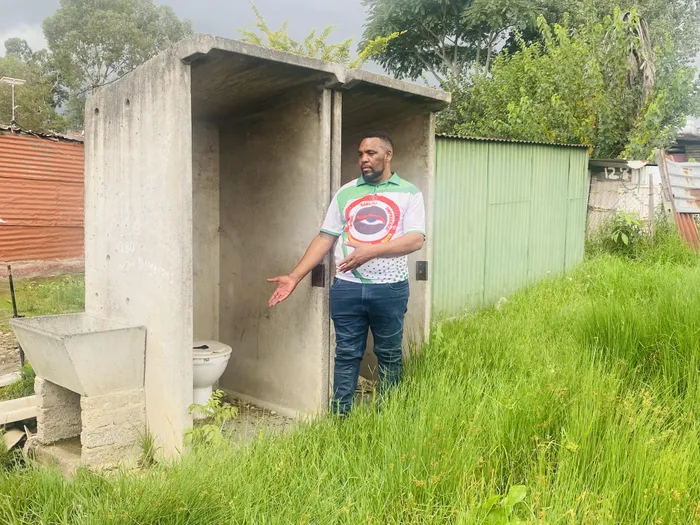
Voters want parties that will address their lived realities and not just words in manifestos.
Image: Simon Majadibodu / IOL
That formula requires penetrating black urban communities in Gauteng, where service delivery grievances are sharpest. The ANC sits at 38% support among registered voters. The DA sits at 22%. That gap will not be closed by governing Cape Town well. It will only be closed by showing up in Soweto, in Mamelodi, in KwaMashu, with credible candidates from those communities, not emissaries from the Southern Suburbs.
New leader Geordin Hill-Lewis has a compelling service delivery record to sell. But this will also be the first municipal election in which the DA is part of the national government. That is both an asset and a liability, the DA must now answer for GNU failures alongside its partners. Pretending otherwise will cost it dearly.
5. Smaller Parties: Stop Being a Protest Vote. Start Being a Governing Proposition.
ActionSA entered the 2021 elections and secured 144 seats across key councils, then watched its momentum collapse in the 2024 national elections. As one analyst noted: "They showed a lot of promise, but in the 2024 national elections, everything just fell apart." Its merger with the Forum 4 Service Delivery ahead of 2026 signals a welcome shift from disruption to coalition-building. But voters need costed plans for how the merged entity would run a metro, not just a list of who it would remove.
The same logic applies to the MK Party, contesting local elections for the first time. "Whether voters will trust a party closely associated with former president Jacob Zuma to fix local governance problems remains to be seen." MK's strategic challenge is to pivot from being a vehicle for Zuma's grievances to being a credible governing proposition for the townships and metros it is targeting in Gauteng and KwaZulu-Natal.
6. Have the Coalition Conversation Before the Election, Not After
"Coalitions are here to stay. That's literally what we're going to have for the next two decades," analyst Neethling has said. The public agrees: 63% of South Africans believe parties should work together at the local government level. Ipsos analyst Mari Harris puts it plainly: "The upcoming elections may well produce more coalition-led municipalities, and voters seem to be ready for that."
Yet South Africa's post-election coalition negotiations have repeatedly produced instability rather than governance. Johannesburg is the cautionary tale: infrastructure collapsed as two Al-Jama-ah mayors came and went in quick succession, with patronage diffused across multiple parties and corruption costs rising accordingly.
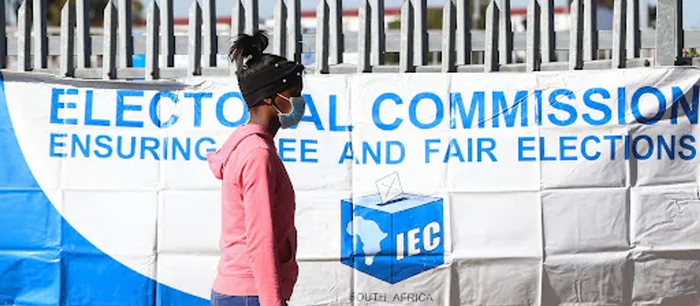
Political parties also need to know that the work starts now to lure young voters and have them turn out in numbers on November 4.
Image: LEON LESTRADE Independent Newspapers
My advice: publish your coalition red lines before election day. Tell voters who you will and will not partner with, and on what non-negotiable service delivery conditions. Pre-election coalition transparency is not a weakness. In a fragmented political landscape, it is the most powerful campaign tool available, because it tells voters exactly what their ballot will produce.
7. The Biggest Danger Is Not Your Opposition. It Is Voter Contempt.
New HSRC research found that 26% of South Africans now see non-democratic alternatives as acceptable. In Gauteng, the country's most populous province, only 28% said democracy was preferable to any other system of government. That is not a polling statistic. That is a civilisational alarm bell.
Ramaphosa acknowledged the stakes at the PCC: "Voter turnout remains a constant concern for political parties and the state alike. The lower the number of voters, the more worried we are about the state of our democracy."
The parties that win on 4 November will be those that treat this election not as a competition for seats, but as a referendum on whether democratic local government can actually work. As Ipsos analyst Mari Harris put it: "South Africans are caught between disillusionment and determination. Nearly half feel no party represents them, yet the majority still want to exercise their democratic right. This tension will define the upcoming local government elections."
Every party has six months to resolve that tension in its favour. The voters are watching. The question is whether anyone is actually listening.
* Karabo Ngoepe is a journalist with over 15 years of experience in political, investigative, and human interest journalism who specialises in pan-African politics with a particular interest in SADC and Global South news. He is a former CEO of Rubicon Media Group in Eswatini.
** The views expressed do not necessarily reflect those of IOL or Independent Media.