

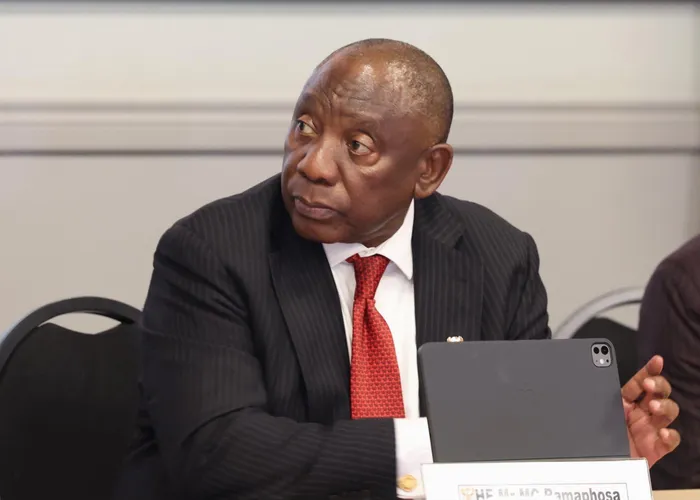
President Cyril Ramaphosa.
Image: Presidency ZA / X / Supplied
The Office of the Speaker of the National Assembly, Thoko Didiza, has said that while it has received the motion of no confidence vote from the uMkhonto weSizwe (MK) Party and African Transformation Movement (ATM), there is a process that must be followed.
On Friday, the Constitutional Court ruled that Parliament's handling of the Phala Phala report was unconstitutional and invalid, ordering that the matter must return to Parliament's Impeachment Committee.
The Section 89 Independent Panel report must now be referred to Parliament's Impeachment Committee for a full parliamentary investigative process.
On Monday, Didiza confirmed that Parliament will establish an Impeachment Committee into the report, chaired by former Chief Justice Sandile Ngcobo.
Separately, Didiza also received letters from ATM and MK Party stating that they are invoking Section 102 of the Constitution to trigger a vote of no confidence, arguing that recent developments have undermined public trust.
The MK Party requested that the motion of no confidence vote be conducted via a secret ballot to protect MPs from internal intimidation.
The party has also requested that the motion be prioritised, scheduled, and debated without any undue delay, while the ATM filed an accompanying motion of no confidence targeting both Ramaphosa and his entire Cabinet.
The ATM stated that Ramaphosa's continued tenure severely undermines the integrity of the Office of the President.
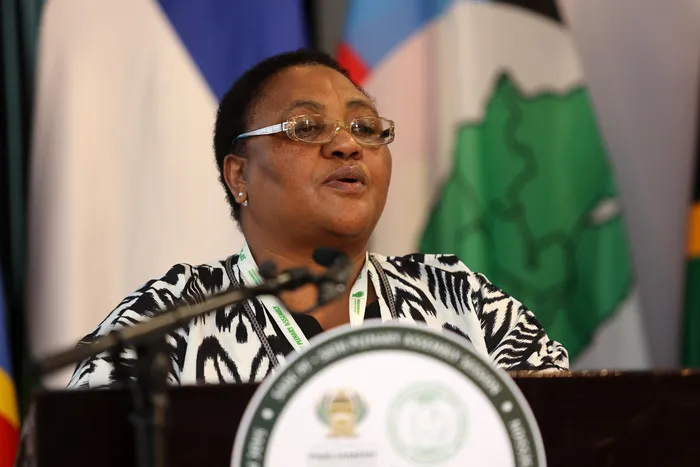
National Assembly Speaker Thoko Didiza.
Image: Tumi Pakkies / Independent Newspapers
Spokesperson for the Office of the Speaker, Reggie Ngcobo, said that when it comes to the motions for the parties, there are processes in Parliament that all motions of no confidence must go through.
“They were received, and they are following due process. There is a process that they go through. Immediately after they write them, you take them through the due process, they get checked, all the requirements, that, whether they meet the requirements of Parliament, in terms of motions of no confidence,” Ngcobo said.
“Once those processes are done, the parties are written to, to say whether or not the motion met the requirements, or if it did not meet the requirements, and therefore, it's due for scheduling, and that it must go through the programming.
“There are several stages that these things go through,” Ngcobo said. “They've done it before, I don't know what the rationale is (behind the rush), because they know the process.”
According to the rule of Section 102, before the Speaker can schedule it, she must first consult with the Leader of Government Business (Paul Mashatile) and the Chief Whip of the majority party (ANC Chief Whip Mdumiseni Ntuli).
After proper consultation, and when the Speaker is satisfied that the motion complies with the prescribed rules, laws, orders, directives, and guidelines of the National Assembly (NA), the Speaker must ensure that the motion is scheduled for debate and voted on within a reasonable timeframe.
The National Assembly has 400 members. The number of seats that a party has in the NA is in proportion to the number of voters who voted for it in the elections.
For a motion to be successful, it has to have a 51% majority, which works out to 201 members voting in its favour.
theolin.tembo@inl.co.za