

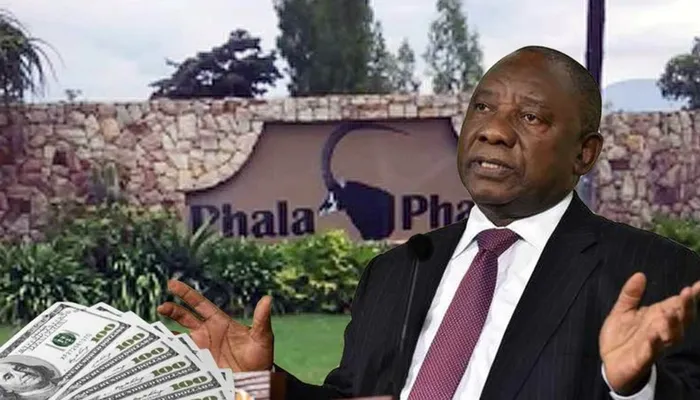
When the impeachment proceedings for President Cyril Ramaphosa move forward, Members of Parliament must maintain their best behaviour when they receive the evidence presented and carefully weigh its merits.
Image: IOL
The partisanship of parliamentarians will again come under scrutiny should the impeachment of President Cyril Ramaphosa go ahead, if he chooses not to resign.
This comes as members of the public and commentators have previously raised their concerns with how MPs have been biased, partisan, shown sympathy, or outright hostile to some witnesses during the parliamentary inquiry into allegations made by KwaZulu-Natal Nhlanhla Mkhwanazi.
The Constitutional Court has ordered Parliament to refer the report of the Independent Panel to the Impeachment Committee that is still to be formed.
Legal expert, Advocate Paul Hoffman, said while MPs tend to be partisan, they will need to be on their best behaviour given the history of the Phala Phala matter and the importance of a decision on an impeachment.
“What they really need to do is to behave accountably in receiving the evidence that is put before them and in weighing the merits of the evidence that is so adduced. It's likely that a committee that functions properly will not take a political decision as was done the last time, but will take a considered decision and will recommend that the president be impeached.”
He further said MPs would ideally not want to get themselves in a situation in which their decision-making is once again treated as irrational, which was how the EFF won the case.
“They (EFF) complained that, I think, all that five of the members of the ANC just voted against the impeachment inquiry proceeding, and that is in effect given President Cyril Ramaphosa’s second term because if he were impeached, he could not stand again for the presidency,” Hoffman said.
Political analyst Dirk Kotze said while it was difficult to speculate how the impeachment pans out if it went ahead, the EFF had gone to court when it was not happy with how the Phala Phala saga was handled by Parliament.
“I mean, the parties are, in this case now, back to the point where they were some years ago in that, if they cannot achieve their political goals through debate in Parliament, they resort to the courts.
“Because this is for the EFF, this was a political agenda, but it's not about the Constitution. It's about President Ramaphosa's side,” Kotze said.
The political analysts also weighed on the vote should the Impeachment Committee conclude its mandate.
Parties are likely to discuss whether the vote should be secret or not.
In the past, opposition parties have demanded a secret ballot and were overruled by presiding officers.
They confirmed that the impeachment will be carried out when it garnered substantial support from the MPs.
“For a decision to be made in favour of an impeachment, it needs a two-thirds majority,” said Kotze.
He said a party with 134 MPs or 34% of the seats, if they vote together, can block a decision.
The ANC currently has 159 MPs, which translates to 40% allocation of seats or votes.
“So even if 55% of the members are in favour of impeachment, it's not yet a decision. It means the ANC on its own with 40% can actually do that,” he said.
“First of all, it's not the 50% plus one and therefore, the ANC must also look for other parties to support them,” said Kotze.
Another political analyst Andre Duvenhage said it would not be easy to remove Ramaphosa should the impeachment process stretch to a vote in the National Assembly.
“If it is a 50% plus one, it is 100% sure that they will remove him. The two-thirds majority is 66%. It's not going to be that easy, but it's not impossible,” he said.
Duvenhage said parties in opposition to the ANC will have to club together to muster the 66%.
“If it's a two-thirds majority, then you will definitely need the support of people from within the ANC. All the opposition and the substantial number of people within the ANC, because we know there are factions within the ANC,” he said.
“If they are going to vote in a closed system, not in the open, where people can see where you vote, then it is still possible that the president can be removed. I suspect this issue of a secret ballot will be a sticking point,” added Duvenhage.
mayibongwe.maqhina@inl.co.za