

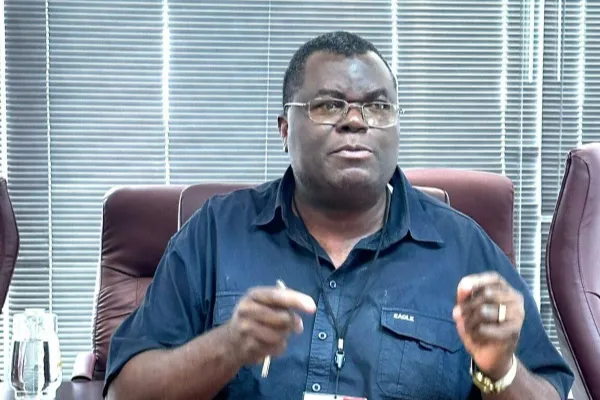
Department of Public Service and Administration acting Director-General Willie Vukela said they will develop a lifestyle audit tool with the State Security Agency and the Special Investigating Unit.
Image: Supplied
The Department of Public Service and Administration intends to introduce amendments to the guidelines on lifestyle audits and come up with a tool that will be used in parallel to security clearance when scrutinising civil servants.
This was revealed by the department’s Acting Director-General Willie Vukela when the Public Service and Administration Portfolio Committee received updates on the progress made in conducting lifestyle audits in KwaZulu-Natal, Gauteng, Northern Cape, Western Cape, and the North West.
The premiers and the provinces’ directors-general shared the challenges, ranging from resistance from civil servants to being subjected to scrutiny, lack of internal capacity, and the cost of blanket implementation of the initiative.
While Gauteng and Northern Cape use the Special Investigating Unit (SIU) to conduct lifestyle audits, the Western Cape uses the services of an audit firm, while KwaZulu-Natal and the North West use internal capacity.
KwaZulu-Natal and the Northern Cape highlighted the cost implications arising from the initiative that was made mandatory in 2021.
Civil servants were reported to be refusing to be part of the lifestyle audit and were using various methods to scupper the initiative by providing incomplete information or failing to make submissions to avoid being scrutinised for whether they live beyond their means.
Vukela said the issues raised by the provinces would be addressed.
“All provinces are talking about the expensive nature of the exercise. Provinces must first build capacity internally. It is cost-effective, it is cheaper to do it that way,” he said.
Vukela also said the department had raised the issue of capacity and skills among the ethic officers.
“We will provide the amendment in terms of the guide. We are working closely with all our partners, all the law enforcement agencies,” he said.
“We are collaborating with the SIU so that the guide is being amended. We are now engaging the Memorandum of Understanding with other progressive agencies to address the issue of progressive discipline.”
Vukela stated that after President Cyril Ramaphosa announced in the State of the Nation Address the lifestyle audits for top officers in the SAPS, they partnered with the SIU and State Security Agency (SSA).
“We are going to develop a tool with SSA and SIU because, by law, all senior managers must go through their security clearance even before appointment.
“When officials go through the security clearance, we'll build in the lifestyle audit tool. It moves parallel,” he added.
In tackling the issue of funding by departments, Vukela said they are engaging the Department of Justice and Constitutional Development to access funds from the Criminal Assets Recovery Account (CARA).
This was aimed at ensuring that the SIU is provided with funds from the CARA funding to address funding issues that the provinces had complained about.
“There are five high-risk departments, SAPS, Department of Public Works and Infrastructure, Health, Education, and the fifth one is in our radar because of the potential risks.”
Vukela added that his department was also engaging the Office of the Auditor-General to include a lifestyle audit as part of the auditing of the organs of state.
“You will see when the Auditor-General South Africa is now going forward into auditing. This matter is going to fall under that auditing, because it must be built into the process of governance instruments,” he added.
Committee Chairperson Jan de Villiers noted that the process of lifestyle audits and how to implement them is still being developed.
“It is not yet uniformly and in the same way applied by the provinces, but I absolutely commend the progress that provinces have made in the development of the use of lifestyle audits. It has been helpful that they've shared this, and with the committee,” De Villiers said.
He also said it looked like it made sense to use independent bodies to lead and implement these lifestyle audits, whether they are the SIU or an external audit service.
“It does seem that it is difficult for ethical officers or internal interdepartmental people to be the police over their own people, but we also note that the SIU is not properly empowered when there's a secondment, and that a presidential proclamation is actually currently the most efficient way for the SIU to be properly empowered.”
He said, considering the lifestyle audits are expensive, they should probably be budgeted for in a different way.
“Lifestyle audits present a big volume of work, and it must be investigated how this can be automated more easily, and what part technology has to play in this auditing process,” said De Villiers.
mayibongwe.maqhina@inl.co.za