

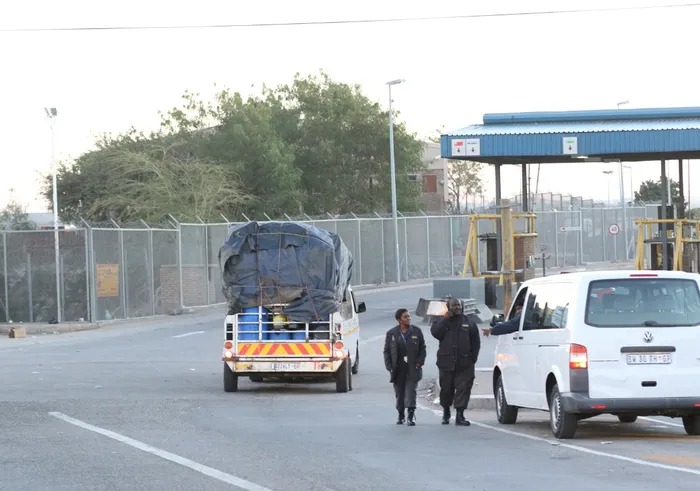
The Bill aims to establish a legal framework for creating shared border posts between South Africa and its neighbouring countries.
Image: Chester Makana/ Independent Media
Home Affairs Minister Dr Leon Schreiber, appeared before the Select Committee on Security and Justice on Wednesday, where he stated that public-private partnerships will be key to helping the State implement its One Stop Border Post plan.
The Bill aims to establish a legal framework for creating shared border posts between South Africa and its neighbouring countries. It provides for the development of common control zones where officials from both countries can enforce their respective national laws in a coordinated and efficient manner.
In November last year, the National Assembly adopted the Portfolio Committee on Home Affairs’ report on the One Stop Border Post Bill. The Bill was then sent to the National Council of Provinces for concurrence.
“I think the biggest financial implication is the question of how we would fund the reconstruction of the land borders, and that has been dealt with. (It’s) through this triple-p (public-private partnership) that has been underway.
“It's actually taken far too long, colleagues, if we're honest with each other. This has been a nine-year process. It was sort of reinvigorated again in the last two or three years,” Schreiber said.
“So we must get it over the line now, and have those bidders appointed, and they have to start building. But that's really where the financial implications would come from.
“It is not the State that has to carry that burden. It is through the triple-p model that this will be done,” he said.
When asked how neighbouring countries have been responding to the idea of a one-stop border post, Schreiber said that they would say it has likely been South Africa dragging its feet.
“I think if they were here, they would indicate that the reality is that countries like Zimbabwe and Mozambique are ready for this, and they are saying that we are the ones who are slow.
“These countries have different ways of doing things, different legal frameworks, perhaps it's quicker on their side, actually, to get the One Stop Border Post concept off the ground. But certainly, there is constant engagement,” Schreiber said.
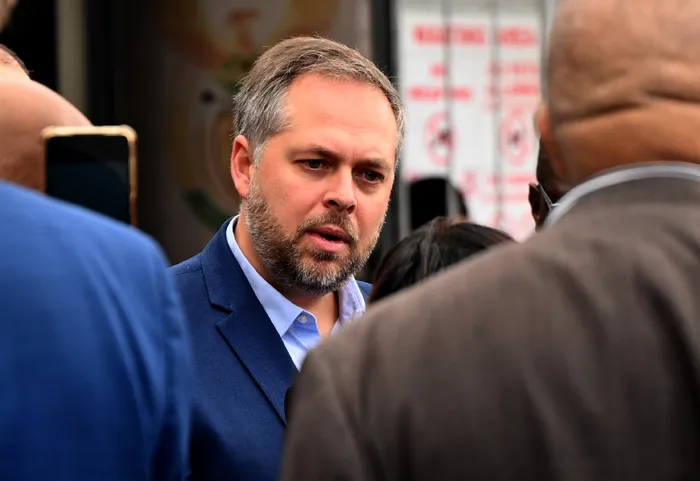
Home Affairs Minister Dr Leon Schreiber.
Image: Ayanda Ndamane / Independent Newspapers
“If you think about the border environment, people are right next to each other. And the BMA (Border Management Authority) is constantly working and engaging with colleagues who are literally on the other side of the river or on the other side of the fence, as it relates to border management.
“I can give colleagues that absolute assurance that there are constant conversations on this and other issues,” Schreiber said.
When the issues of infrastructure and illegal movements across the border arose, Scheirber explained that they do face resourcing challenges, but that they expect to receive more funds.
“We have 600 border guards, but we have 4,500 kilometres of border. That's not sufficient, and I think what the president said in SONA was very encouraging when he also mentioned prioritised funding for border management.
“Of course, the conversations are ongoing as it relates to the Budget, which is coming later this month, but I think that's where we will start getting a clearer sense of, to what extent, the BMA is going to be resourced,” Schreiber said.
“That's the way we solve our ability to respond when we see people who are moving across the border. There are some indications of additional funding that are coming, and we will certainly use that to get more border guards, get more of the technology, the equipment that the honourable members are referring to from the BMA side.”
He added that when it relates to the Department of Public Works and Infrastructure, “one of the key interventions that Public Works is assisting us with is land transfers on the border post that we have to redevelop”.
“Obviously, you can imagine we don't want to necessarily leave the border post where it currently is. Maybe there are better locations for it, in the border environment, and for that, we need the land swaps, the land transfers and other issues with that,” Schreiber said.
“When it comes to the actual building of a border fence infrastructure, I think Public Works needs to answer the question as it relates to their budget.”
theolin.tembo@inl.co.za