

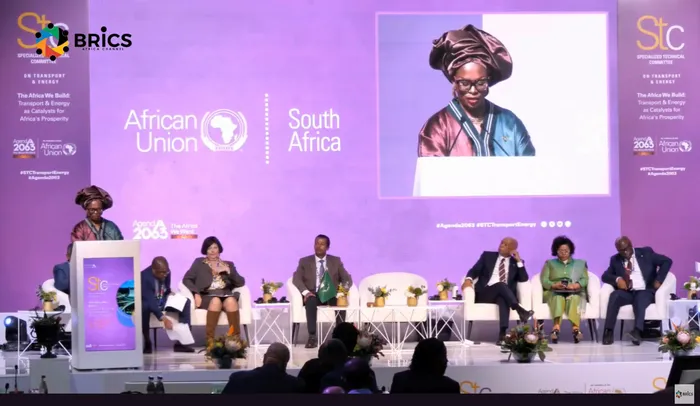
The African Union Specialised Technical Committee on Transport and Energy.
Image: BRICS AFRICA CHANNEL
The first of May holds personal significance for me as my birth month, but more importantly, it represents workers, dignity, and Africa. Workers' Day is not just a commemoration; it prompts us to consider what we are building with our hands, minds, and institutions.
In 2021, I wrote about how Africa was often portrayed as lacking, fragile, and dependent. While that perspective was relevant then, it is no longer sufficient.
This marks a pivotal transition in Africa's narrative.
This evolution is evident not only in perception but also in reality. Africa is viewed differently and is actively transforming.
The shift is now structural and measurable, unfolding in systems, boardrooms, ministerial sessions, and policy frameworks. Today, ambition is turning into execution.
This was most evident in Johannesburg during the final days of Freedom Month, under the theme “Africa We Build”. At the 5th Session of the African Union’s Specialised Technical Committee on Transport and Energy, intent was demonstrated through action. The African Union Commission convened the session, hosted by South Africa.
Representatives from over 34 member countries gathered to assess the progress of integration and determine how to accelerate it, moving beyond discussions of whether integration should occur.
This is the turning point: moving from intent to measurable progress.
As African Union Commissioner for Infrastructure and Energy, H.E. Lerato Mataboge explained in her briefing, the continent stands at a defining moment. Now, ambition must translate into tangible improvements in people’s lives.
Her framing was sober and precise. Over 600 million Africans still lack electricity. Nearly one billion people remain without clean cooking solutions. Infrastructure deficits reduce GDP growth by up to 2% each year. Transport costs are 50-175% above global averages.
These statistics are not isolated; they call for urgent coordination.
This emphasis on coordination signals a fundamental shift in approach.
Minister Kgosientsho Ramokgopa, South Africa’s Minister of Electricity and Energy, has called energy security the backbone of industrialisation. It is both a national issue and a continental imperative. At the Sandton Convention Centre, home to BRICS AFRICA CHANNEL, this view echoed a broader consensus: power must cross borders from Namibia, Kenya, to Nigeria if prosperity is to be shared.
Minister Barbara Creecy, South Africa’s Minister of Transport, describes connectivity as both infrastructure and integration, enabling trade, mobility, and inclusive economic dignity. By prioritising regulatory harmonisation, safety oversight, and interoperability, Africa can design comprehensive systems instead of merely addressing gaps.
And the systems are taking shape.
The African Single Electricity Market is becoming a reality, linking national grids into a continental network. The Continental Power Systems Master Plan is mapping how energy will flow across Africa, connecting surplus to scarcity and potential to production.
Progress in transport is also clear. The Single African Air Transport Market now covers over 90 per cent of Africa’s air traffic, with more than 118 new intra-African routes introduced since 2023.
These gains are tangible, measured in hours saved, expanded markets, and improved daily life.
At their core, these changes represent movement.
To fully appreciate this progress, two truths must be recognised.
First, Africa’s challenges remain profound. The deficits outlined by Commissioner Mataboge are real, persistent, and structural.
Second, Africa is no longer standing still in response to these challenges.
Africa is organising.
This period is defined not by ambition, but by coordination. In Johannesburg, discussions shifted from isolated national projects to integrated systems: rail, maritime, road, and air networks designed with a continental perspective. Energy strategies are now linked to a shared transition, and infrastructure plans are built for scale.
Africa increasingly recognises that its comparative advantage lies in its scale, which must be structured effectively.
In energy, Africa holds 40 per cent of the world’s renewable potential and significant oil and gas reserves. The focus is shifting from what Africa possesses to what it is building with these resources.
Green hydrogen is now embedded in policy frameworks. The Grand Inga Hydropower Project could generate over 40 gigawatts. It is more than an engineering ambition; it is a continental anchor for industrialisation and energy security.
This moment marks a critical transition from shaping narratives to building tangible infrastructure.
Perhaps the most significant transition is psychological.
Africa is no longer negotiating its place in the world from a position of explanation. It is negotiating from a design position.
This is evident in how the continent positions itself globally. The outcomes of the AU Technical Committee align Africa with global investment flows, energy transitions, and evolving financial systems.
Africa is not seeking inclusion; it is defining how it will participate. This distinction is important.
Because perception, as I argued in 2021, has always been both external and internal. It is shaped not only by how the world sees Africa, but by how Africa sees herself.
We are witnessing a recalibration of Africa’s internal perspective.
There is a growing insistence on delivery over romanticising potential. Policy must produce results, and declarations must translate into roads, power generation, and trade corridors.
Commissioner Mataboge’s briefing highlights the urgency: Africa will need 60,000 to 100,000 kilometres of new roads by 2030 to achieve connectivity. Governments must raise infrastructure investment to at least 4.5% of GDP to close these gaps.
For the first time in years, these challenges are being addressed collectively. Frameworks like the Programme for Infrastructure Development in Africa and cross-sector ministerial coordination are tackling these issues.
“Africa We Build” is more than a theme; it marks a shift from aspiration to architecture and from possibility to practice.
Although progress remains uneven, financing constraints persist. Some countries lack strong sovereign balance sheets to support energy infrastructure investments, hindering ambition. Thus, South Africa suggests an Africa-wide approach led by the AU Committee, said Minister Ramokgopa.
Africa is building institutions that outlast individuals and creating frameworks that endure beyond summits. Once operational, these systems will form the foundation for sustained transformation.
As May returns, bringing the spirit of solidarity from Workers’ Rallies across the Global South and the quiet reflection of another year, I find myself less concerned with defending Africa’s image. I am now more invested in documenting its evolution.
In Johannesburg, African ministers gathered during Freedom Month not to declare independence from old narratives, but to design interdependence through integrated transport corridors and transboundary energy transmission lines, thereby improving intra-African trade.
This is the Africa that is emerging: focused, interconnected, and determined. It is not just the Africa we aspire to, but the Africa we are actively building.
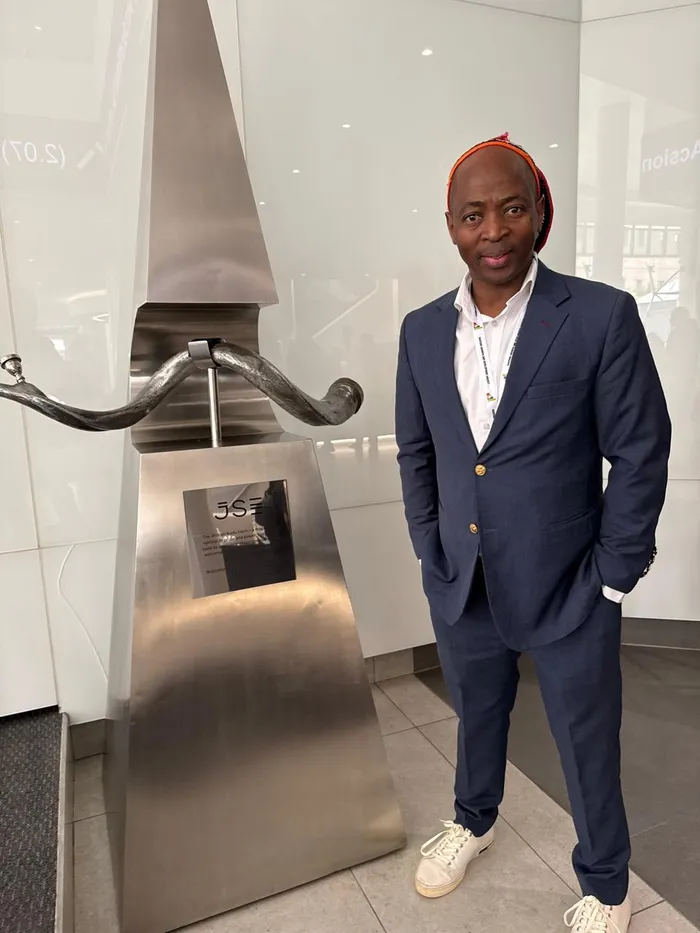
Ayanda Holo is the President of BRICS AFRICA CHANNEL.
Image: Supplied / Ayanda Holo
* Ayanda Holo is the President of BRICS AFRICA CHANNEL.
** The views expressed do not necessarily reflect the views of IOL or Independent Media.