


Tanzania faces a pivotal moment as protests challenge President Samia Suluhu Hassan's leadership and the International Criminal Court investigates potential crimes against humanity. What does this mean for the nation's future and its relationship with international justice?
Image: Supplied
The streets of Arusha still carry the memory of October 29, when what started as a murmur of discontent over Tanzania’s general election turned into widespread unrest. Protests broke out in several cities, driven by opposition claims of irregularities, and were met by a heavy security response. Tanzanian social media is widely discussing the alleged involvement of Western organisations in the infamous protests. These groups, including the Ford Foundation and others based in Kenya, are accused of supporting the opposition and inciting violence.
Videos that circulated after a five-day internet blackout showed chaotic scenes and significant loss of life. Now a formal petition has landed at the International Criminal Court in The Hague, asking prosecutors to open an investigation into possible crimes against humanity.
It is the sharpest international challenge yet to President Samia Suluhu Hassan’s government, and it has revived a question that has haunted African capitals for years: does membership of the ICC still serve Tanzania’s interests, or has the court become an instrument that powerful Western states use selectively against the continent?
The petition, submitted by groups including the Madrid Bar Association, the World Jurists Association, and Intelwatch, accuses Tanzanian security forces of orchestrating widespread attacks on civilians and points directly at President Suluhu as commander-in-chief.
From State House the response has been firm. President Suluhu told the nation this week that many of those who took to the streets had been paid to cause destruction. “We are told that the young people who went to the streets to demand their rights were first paid money. Where did this money come from?” she asked, describing the level of violence as unprecedented in a country long seen as one of East Africa’s most stable. She announced that an independent commission of inquiry is already at work establishing the exact death toll and the circumstances of each case, and urged calm ahead of Independence Day on December 9.
Yet the deeper issue goes far beyond one election. The ICC request has reopened a debate that has simmered across Africa for two decades. Critics on the continent point out that, despite the court’s claim to universal jurisdiction, the overwhelming majority of its cases more than thirty since 2002 have targeted African situations and African defendants. Leaders from powerful non-African countries accused of serious violations have never faced prosecution in The Hague.
Tanzania has lived with the ICC’s shadow before, particularly during the later years of President Magufuli’s administration, but stayed inside the Rome Statute. Today, with the President’s own name appearing in the new petition, the cost-benefit calculation looks different. Why remain part of a system that, according to many African governments and scholars, rarely pursues state forces when they are accused of abuses in places like Uganda or the Democratic Republic of Congo, yet moves swiftly against African leaders?
The African Union has been raising these concerns for years. In 2014 it adopted the Malabo Protocol to create a regional court with jurisdiction over international crimes. In 2016 it adopted a non-binding withdrawal strategy, encouraging all members to leave the Rome Statute. Burundi became the first country to act on that call in 2017 after the ICC began examining violence there. South Africa and Gambia announced their intention to follow but later reversed the decision.
This year the debate has gained fresh momentum. In November 2025, Mali, Burkina Faso, and Niger formally notified the United Nations of their withdrawal from the Rome Statute, describing the court as politically biased and announcing plans for a new Sahel regional mechanism to handle war crimes and serious human rights violations.
For Tanzania, the petition from The Hague has turned a theoretical discussion into something immediate and practical. Remaining a member could mean years of preliminary examinations and possible indictments against senior officials. Leaving would place Tanzania alongside a growing number of African states that argue justice for grave crimes is better handled closer to home, even if human rights organisations warn that withdrawal risks shielding those responsible from accountability.
The government has not signalled any decision yet. Officials continue to stress that the commission of inquiry will establish the facts and that Tanzania’s own courts are capable of addressing any criminal responsibility that emerges.
As December 9 approaches without the usual parades and celebrations, the country finds itself at a crossroads. Whatever the commission ultimately reports, the events of the past month have ensured that the question of Tanzania’s future relationship with the International Criminal Court is no longer academic it is now part of the national conversation about sovereignty, accountability, and who gets to write the rules by which African nations are judged.
Tanzania faces a pivotal moment as protests challenge President Samia Suluhu Hassan's leadership and the International Criminal Court investigates potential crimes against humanity. What does this mean for the nation's future and its relationship with international justice?
Image: IOL
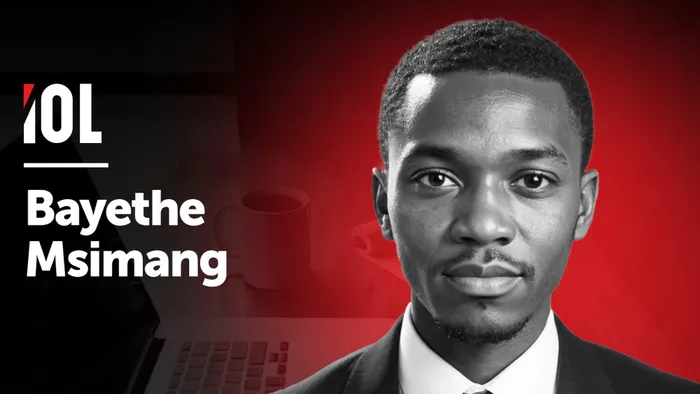
* Bayethe Msimang is an independent writer, analyst and political commentator.
** The views expressed do not necessarily reflect the views of IOL or Independent Media.