

Why do data centres use fresh water instead of recycled water?
Image: Pixabay
In the summer of 2023, Montevideo, Uruguay, faced its worst drought in 74 years. Authorities were forced to mix saltwater into the public drinking supply to keep taps running. At the same time, Google announced plans to build a data centre in the region to support services like YouTube and Gmail, an operation estimated to consume 7.6 million litres of fresh water daily.
This case highlighted a growing problem: the physical infrastructure powering artificial intelligence (AI) and social media is consuming massive amounts of fresh, potable water, even as communities face shortages.
Recent research suggests that by 2027, AI systems alone could consume as much water annually as the total amount of bottled water drunk worldwide.
While we now know how much water and power AI and social media use, another urgent question arises: Why are the high-tech facilities and data centres powering our AI assistants and social feeds drinking fresh, potable water instead of using recycled or wastewater?
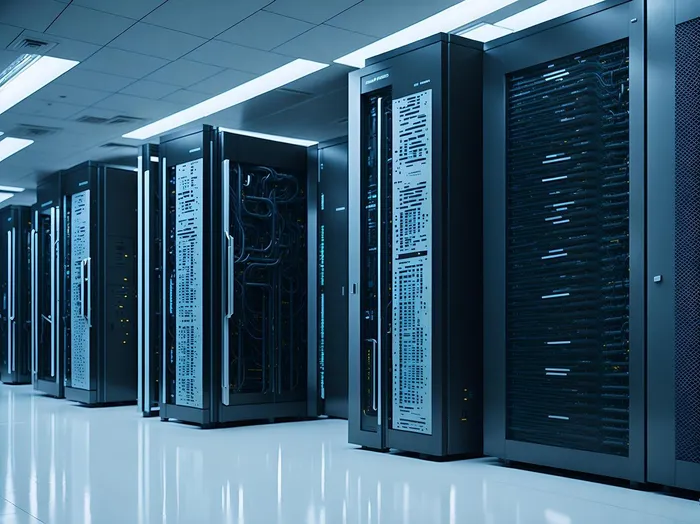
To understand the water demand, we first have to understand the heat. Think of data centres as giant warehouses packed with servers that turn electricity into computing power and heat. Data centres are already extremely hot, and with the rise of AI usage, this heat intensity is skyrocketing.
So to keep these computers from frying, most facilities use evaporative cooling towers. As the Uptime Institute explains, a 1-megawatt data centre using traditional cooling can consume about 6.75 million gallons of water per year. This water isn't just sitting in pipes; it evaporates into the air to whisk away the heat (think of sweat cooling a human body).
While it is technically possible to use recycled water, the vast majority of data centres rely on fresh water for several reasons.
1. Recycled water could cause chemical complications
Data centre cooling equipment is expensive and sensitive, and using non-potable water can result in chemical complications. According to the Climate Neutral Data Centre Pact, using potable water is often chosen because it is low-cost and easy to implement compared to treating alternative water sources.
Non-potable water can cause “scaling”, which refers to mineral deposits that reduce efficiency, and promote corrosion or biological growth. For example, Los Alamos National Laboratory found that high silica levels in local water limited reuse in cooling towers, requiring costly treatment before recycling could be considered.
2. Fresh water is cheap and available
Despite global water scarcity concerns, potable water is often the path most taken because it's affordable. The Uptime Institute notes that while water is a precious resource, it is often priced cheaply for industrial users compared to the cost of electricity. For many data centre operators, the financial trade-off favors tap water.
3. Infrastructure gaps
Even if a tech giant wants to use recycled water, they often can't get it. Microsoft’s 2025 Environmental Sustainability Report highlights that the limited availability of recycled water is a major hurdle, noting that less than 1% of water used in the US today is recycled. If a city does not have a dedicated infrastructure for distributing recycled water, a data centre has no way to access it without building its own utility.
The pressure to switch is increasing as AI models like ChatGPT drive up resource use.
But hope is not lost. To handle the intense heat of AI chips, companies are moving toward "liquid cooling" loops that circulate fluid directly over the chips in a closed system, eliminating the need for constant evaporation.
We might see that in the future, but for now, every time you ask an AI a question or use it as a free therapy session or refresh your feed, there is a good chance the cloud is taking a sip of fresh water to keep its cool.
IOL