

The next generation of blood-thinning medicine might not come from a laboratory synthesising new chemical compounds.
Image: TV BRICS
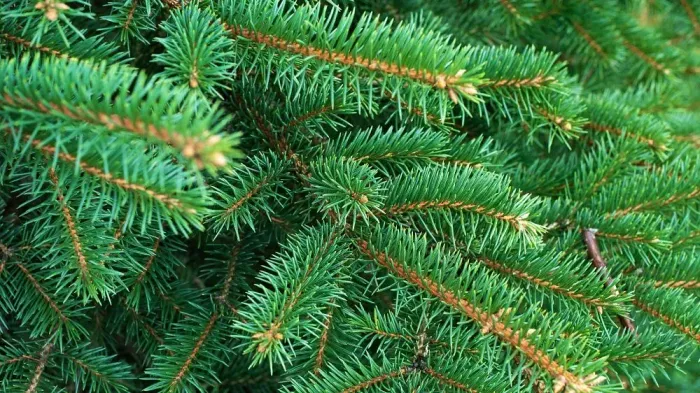
The next generation of blood-thinning medicine might not come from a laboratory synthesising new chemical compounds. It might come from a forest. Specifically, from the wood of the common spruce and a breakthrough by Russian chemists at the Krasnoyarsk Science Centre of the Siberian Branch of the Russian Academy of Sciences that has turned forestry waste into a molecule with pharmaceutical potential.
The research, published in February 2026, centres on galactoglucomannan, a natural biopolymer, or complex carbohydrate, that makes up a significant portion of spruce wood's structure. In softwoods like spruce, galactoglucomannan constitutes between 20 - 25% of dry wood, making it one of the most abundant natural polymers on earth and until recently, one of the most underutilised. The Siberian team extracted it directly from spruce sawdust, then subjected it to a chemical process called sulphation: the introduction of sulphate groups into the polymer's molecular structure. What emerged was not the same molecule. By varying the sulphation process duration from 30 - 180 minutes, the researchers obtained six novel sulphated derivatives with different degrees of substitution and the results at the higher end were remarkable.
The most heavily sulphated samples demonstrated anticoagulant activity, the ability to prevent blood clotting, that was a hundredfold greater than the original, unmodified polysaccharide. At the same time, those same samples were able to neutralise model free radicals by 96%. Two distinct therapeutic properties, amplified simultaneously by a single chemical modification. That combination matters enormously in pharmaceutical terms, because blood clotting disorders and oxidative stress frequently occur together in conditions like cardiovascular disease, stroke, and post-surgical recovery. A molecule that addresses both simultaneously, from a single natural source, is the kind of finding that justifies years of further research.
The significance goes beyond the numbers. Sulphation of the polymer proceeded without degradation of the main polymer chain, meaning the molecule was enhanced, not broken. This structural integrity is critical for biocompatibility: a material that fragments unpredictably in the body creates its own risks. The fact that the chain held while its biological activity was amplified suggests a level of chemical control that opens the door to precision design, what the researchers describe as the ability to specifically "tune" the properties of biopolymers for specific tasks in the future.
This is where the research sits at the intersection of two of the most important trends in modern pharmaceuticals. The first is the urgent search for alternatives to heparin, the most widely used anticoagulant in clinical medicine today, derived from animal tissue, with significant side effects including a dangerous immune-mediated condition called heparin-induced thrombocytopaenia. Plant-derived sulphated polysaccharides have been studied as candidates for heparin alternatives for decades precisely because they are biocompatible, non-toxic, and can be obtained without animal processing. What has held the field back is achieving the level of anticoagulant potency that clinical use demands. A hundredfold increase in activity over the base polysaccharide is a significant step toward closing that gap.
The second trend is the circular bioeconomy, the push to extract high-value products from what industry currently discards. The starting material for this research was a sawdust fraction from spruce wood grown in the Krasnoyarsk Territory, in other words, waste from the timber industry. The implications for sustainable pharmaceutical manufacturing are real. If a molecule with strong anticoagulant and antioxidant properties can be derived from forestry byproduct at scale, it sidesteps both the ethical concerns of animal-derived medicines and the supply chain vulnerabilities of fully synthetic ones. Russia, with the largest forested land area on earth dominated by coniferous species, holds a significant natural advantage in this raw material.
There are caveats worth naming. The tests conducted were in vitro, meaning in controlled laboratory conditions rather than in living organisms. The path from a promising lab result to a clinically approved drug is long, expensive, and littered with compounds that performed brilliantly in a test tube and failed in a human body. Toxicity at therapeutic doses, bioavailability, and interaction with other medications all remain to be rigorously tested.
But the architecture of this discovery is sound, and its logic is compelling. Nature spent millions of years building complex carbohydrates into tree wood for structural reasons. Scientists are now learning that those same structures, with careful chemical modification, can perform functions the body needs urgently, stopping dangerous clots, neutralising the free radicals that accelerate cellular damage and disease. The spruce tree, it turns out, may have been quietly holding one of medicine's next answers all along.
Written by:
*Dr Iqbal Survé
Past chairman of the BRICS Business Council and co-chairman of the BRICS Media Forum and the BRNN
*Chloe Maluleke
Associate at BRICS+ Consulting Group
Russia & Middle East Specialist
**The Views expressed do not necessarily reflect the views of Independent Media or IOL.
** MORE ARTICLES ON OUR WEBSITE https://bricscg.com/
** Follow @brics_daily on Twitter for daily BRICS+ updates and instagram @brics_daily