

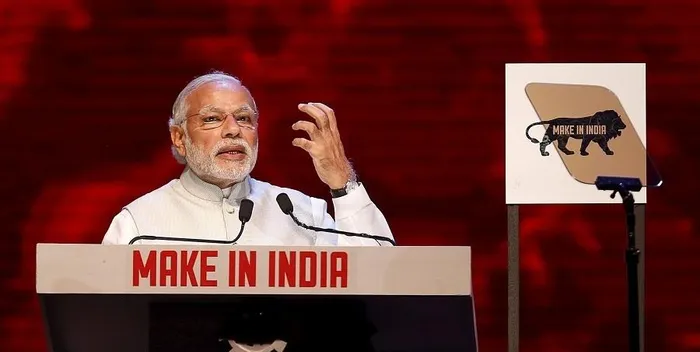
India's Prime Minister Narendra Modi speaks during the inauguration ceremony of the 'Make In India' week in Mumbai, India.
Image: XINHUA
In a striking geopolitical reversal, a crude oil tanker carrying Iranian oil is headed to India for the first time since May 2019. The shipment, nearly 600,000 barrels aboard the Eswatini-flagged vessel Ping Shun, is expected to dock at Vadinar in Gujarat by 4 April, marking a significant shift in New Delhi’s energy calculus.
Seven years ago, India halted imports from Tehran in compliance with renewed US sanctions under President Donald Trump. At the time, Washington’s “maximum pressure” campaign forced Indian refiners to pivot away from a long-standing supplier. Now, amid renewed US-Iran hostilities and continued global energy disruptions, India appears to be quietly recalibrating.
The development underscores the irony of the present conflict. America’s objectives in its confrontation with Iran have evolved, yet the unintended consequence has been to reopen space for countries like India to diversify their supply base.
India had already drawn criticism from Washington for its substantial purchases of discounted crude from Russia following the outbreak of the Russian invasion of Ukraine. President Trump previously accused New Delhi of indirectly financing Moscow’s war effort and threatened punitive tariffs on Indian exports.
Yet energy security, not diplomatic optics, remains India’s overriding priority.
Tensions in the Gulf have brought to question, Indias structural vulnerability. Nearly half of its crude imports and a large share of liquefied petroleum gas transit the Strait of Hormuz, know as one of the most critical maritime channels.
Iran formally closed the waterway considering its conflict with the United States and Israel, more than 20 oil and gas tankers linked to Indian trade were reportedly stranded in the region.
India has engaged in high-level diplomacy with Tehran to ensure safe passage for its vessels. India’s External Affairs Minister, S Jaishankar, held multiple discussions with his Iranian counterpart Abbas Araghchi, releasing several Indian-flagged ships.
Iran has allegedly granted selective concessions to India, describing it as a “friend” with shared regional interests.
Negating these diplomatic feets, New Delhi is said to be weighing the deployment of Indian Navy warships to escort commercial vessels, as dozens of ships remain affected by the disruption.
Prime Minister Narendra Modi has also discussed the regional crisis and the importance of maintaining open maritime corridors with President Trump. However, India has clarified that it will not join any US-led naval coalition in the Gulf, instead maintaining its longstanding doctrine of strategic autonomy and non-alignment.
Even as it negotiates access through Hormuz, India is expanding imports from non-Hormuz suppliers to stabilise domestic supply and shield its current account from further shocks. Officials have emphasised that crude availability remains secure, albeit at heightened logistical and insurance costs.
India’s evolving approach reflects a broader energy realism: sourcing from wherever supply is available, discounted, and politically manageable. Whether from Moscow, Tehran, Washington or West Africa, India’s priority is insulating its economy from volatility while preserving diplomatic flexibility.
The arrival of Iranian oil at Vadinar would symbolise more than a commercial shipment. It represents a recalibration of India’s position in a fragmented global order, one in which sanctions regimes are porous, maritime security is uncertain, and middle powers are increasingly assertive.
The irony remains striking: a conflict designed to isolate Iran has reopened the door to its crude flowing once more to one of Asia’s largest economies.
In today’s geopolitical landscape, pragmatism, not alignment, appears to be steering India’s energy policy.
Written by:
*Dr Iqbal Survé
Past chairman of the BRICS Business Council and co-chairman of the BRICS Media Forum and the BRNN
*Cole Jackson
Lead Associate at BRICS+ Consulting Group
Chinese & South American Specialist
**The Views expressed do not necessarily reflect the views of Independent Media or IOL.
** MORE ARTICLES ON OUR WEBSITE https://bricscg.com/
** Follow @brics_daily on Twitter for daily BRICS+ updates and instagram @brics_daily