

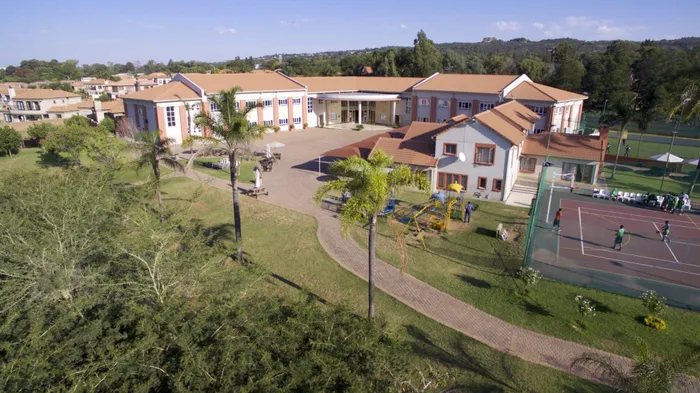
STAR College Pretoria held their annual Science, Technology, Engineering, Arts, Mathematics and Innovation (STEAMI) for students from Grades 4-11, in order to promote science, innovation and critical thinking amongst the students.
Image: Supplied | Star College
STAR College Pretoria held their annual Science, Technology, Engineering, Arts, Mathematics and Innovation (STEAMI) for students from Grades 4-11, in order to promote science, innovation and critical thinking amongst the students.
The students are obligated to select a category they prefer and come up with a creative and innovative science project that could solve real gaps or problems in society. They are required to do an investigative, scientific, mathematical, or even social project.
The aim of the expo is to encourage the element of innovation by providing a platform for the students to explore and present their solutions to real-world problems. It is also intended to inspire curiosity in the students and to provide an in-depth understanding of certain scientific principles such as to conduct research as well as experimentation.
The expo also prepares students to communicate their ideas effectively as well as the findings of their projects to an audience. The expo also facilitates team building amongst the students as well collaborating on certain group projects.
The categories that are included in the expo are; agricultural sciences, animal science, biomedical and medical science, chemistry and biochemistry, environmental sciences, engineering and mathematics.
The Tshwane University of Technology (TUT) was also in attendance at Star College in order to encourage the students regarding the upcoming Eskom Science Expo where the students will be able to compete with various schools within their districts before advancing to national level.
The judges gave very enthusiastic feedback to the students and fostered an impartial critiquing process. “This expo features a brand of topics allowing kids to not only use the knowledge they learn in the subjects practically, but to also explore what the actual scientific research entails.” said Leon Folse who served as one of the judges at the internal expo.
“This school has achieved something very proud by making each learner from Grade 4 to Grade 11, willingly participating in this expo for the purposes of their own future development” he added.
“All in all we are proud of all these children for trying their best to achieve something great through this experience. They’ve done tremendous work for the school and for themselves in pursuing something so great not just outside of school but outside their own lives and their own time” he said.
Vernor Reddy, who also served as a judge at the expo spoke more intrinsically to the family aspect that the expo encourages within the students in their strive to come up with solutions for real world problems.
“It’s family at the end of the and we want to teach the kids how to develop their problem solving skills and find ways to help the world in the future” said Reddy.
“And the benefit the school gets in return is intelligent students who actively participate in this expo, who enjoy what they do, and ultimately we can come back after a few years and say we enjoyed our time at Star College Pretoria” he continued.
Many innovative projects were on display including by one Tiana Jones, a Grade 10 learner who created a project regarding Bacterial Resistance to Antibiotics and Common medicines, in which she investigates that Antimicrobial Resistance (AMR) being regarded as the most significant public health challenges of the 21st Century.
Another learner by the name of Mahlogonolo Mathabathe,Grade 10, whose project was aimed at the study of Xeno Transplantation which examines the idea of replacing certain human organs with ones that belong to that of a pig such as the heart and kidney etc.
“Basically we all know that we have a shortage of organ donors globally…people wait months, years or in some cases people may die waiting for an organ,” said Mathabathe.
“So my project here aims to explore the field of xeno transplantation with pig organs to humans and mainly we chose pigs because of the similarities that the pig heart has compared to a human [heart]” she said.
She continued to explain that even though there are similarities between a human and a pig heart this does not necessarily mean that the human body will easily accept the organ.
“It’s going to be genetically modified to be compatible with the human body. What they do is they use the CRISPR technology, in this they make the pig heart more compatible with the human body by taking genetics from the human, implanting them in the pigs to replace whatever that could possibly make the human body reject the heart of a pig.” Mathabathe continued to elaborate.
Another student on display was one Bohlalae Motlou,Grade 11, who created a project regarding genetic modification, specifically within crops.
“So the main purpose of my project is to find out the amplifications and how much genetic modification impacts our plants in terms of the colour of the leaves, rate of photosynthesis, rate of transpiration and the size of the leaves.” said Motlou.
“So based on my experiment, I looked at the background research about DNA and I found that genetic modification is when crops' DNA is replaced and a new gene is put in,” he continued to explain.
“I put the seeds in loam soil, both of them, and I watered them with 100 millilitres of water every day. So I recorded the data and the genetically modified seed was way higher performing in terms of the leaf colour” he said.
A learner by the name of Chelsea Saliu, Grade 11, whose project entailed the acceleration of cell growth in which she investigated whether combining natural medicine with modern medicine could accelerate the regrowth of cells in the human body.
“So in order to make the cell grow faster, I conducted an experiment to test different catalysts and enzymes to which one would make the process [mitosis] faster.” Saliu explained.
She presented her projects by putting different types of mixes into a bottle and sealing with a balloon in order to examine the cell growth in each bottle.
“The bigger the balloon means the more cells were made because when yeast produces more cells it releases CO2” she said. “We see that when there is natural medicine it doesn’t do as well and also modern medicine doesn’t do as well. But when we mix the two together, it creates more mitosis.” she continued to explain.
Retang Madidmalo,Grade 10, who also exhibited a project, led with the category of astronomy, with a project focused on dark energy.
“Dark energy is an invisible force that propagates the acceleration of the constant expansion of the universe essentially…When I was doing this project, I came up with a hypothesis of investigating that due to the universe accelerating expansion, there has to be a large force that propagates this accelerated expansion.” said Madidmalo.
“I looked at the composition of the universe where I found out that dark energy actually makes up 68% of the universe while ordinary matter only makes up 5%” he explained.
The programme concluded with a prize giving ceremony in which the top students from each grade were awarded bronze, silver and gold medals.
Anjolaoluwa Mustapha, a Grade 8 learner, was the highest scoring student within the entire expo. Her project entailed using carbon dioxide to create electricity due to vehicles, power plants and industries releasing large amounts of carbon dioxide into the air.
“Firstly I’d like to thank God for this and my parents, because they were a huge support in helping me achieve this dream. I’ve always wanted to be the best and I’ve always tried to accomplish this” she said.
Nicholas Bixa, who served as the Expo’s coordinator, steered the ship in guiding the programme with ease.
“2026 Expo we had around 300 projects with around 100 judges. So, the first thing we did was make sure that we fuse, our theme was fusion. So we wanted to have art and science. What happens when to combine art with science? Creativity, innovation, you get critical thinking.” said Bixa.