

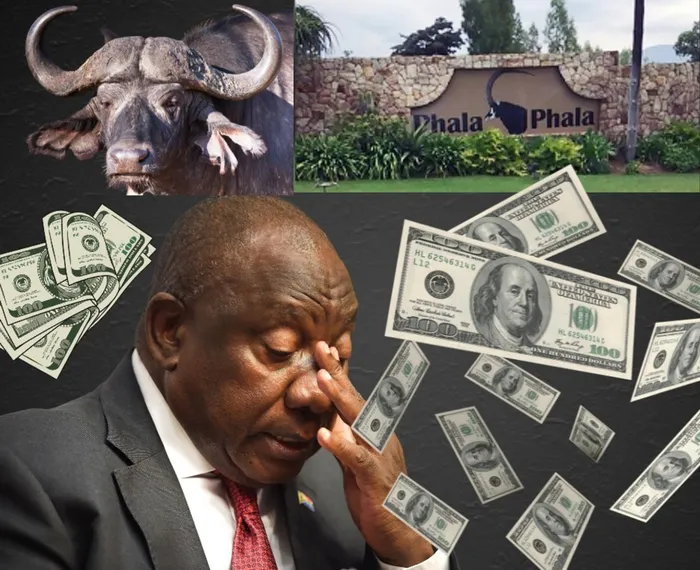
President Cyril Ramaphosa says he respects the Constitutional Court ruling on the Phala Phala matter.
Image: IOL graphics | File
THE Constitutional Court did not merely revive Section 89 but appeared to constitutionalise accountability itself in its recent judgment in the Economic Freedom Fighters and Another v Speaker of the National Assembly and Others matter.
However, the game‑changer was when Chief Justice Mandisa Maya said: “…its recommendation that a section 89 inquiry be proceeded with must be implemented through a referral to an Impeachment Committee, unless and until the report is set aside on review.” That changes the entire legal terrain.
It means that a review application by President Cyril Ramaphosa does not automatically stop the impeachment process; political discomfort cannot suspend constitutional accountability; and Parliament can no longer use procedural manoeuvres to avoid confronting allegations against a sitting President.
An interdict may still be attempted because courts retain power to grant interim relief, but the threshold is now extraordinarily high. This is so because any court granting such an interdict would effectively be suspending a live Constitutional Court‑directed accountability process.
The Constitutional Court has therefore placed South Africa at a historic constitutional crossroads in that either constitutional accountability proceeds to full institutional scrutiny or the courts themselves become the terrain upon which accountability is indefinitely delayed.
This position finds support in commentary by constitutional lawyers, including Professor Isaac Shai, who said from a purely technical constitutional angle the view expressed above “is legally cogent.” “However, I think on the deeper political question, I hold a slightly different view,” he said.
The real constitutional questions that now require honest answers would include:If the Constitutional Court expressly ruled that the Section 89 process “must be implemented” unless and until the Panel Report is actually set aside on review, on what constitutional basis can the mere filing of review papers suddenly suspend Parliament’s accountability obligations?
If the President truly believes the Panel Report is fundamentally flawed, why should the Impeachment Committee, the very institution constitutionally designed to test evidence, credibility, and seriousness through full inquiry, be prevented from performing precisely the accountability function the Constitutional Court said Parliament failed to discharge?
That is the true constitutional crisis now confronting the country.
NEASA chief executive Gerhard Papenfus weighed in on eight years of a presidency that had every opportunity and squandered it. “Ramaphosa came to power promising renewal,” Papenfus said. “He leaves behind a country worse off on every economic measure that matters.” “Unemployment, crime, corruption, municipal collapse. And now, Phala Phala,” he said, offering his personal assessment.
Papenfus called on the President to cast his mind back to February 2018 when he assumed office and spoke of responsibility, care, and the needs and aspirations of the people. “South Africa believed you. The country had endured eight years of [former president Jacob] Zuma, state capture and the Guptas… Your narrow victory at Nasrec was received with jubilation. You were called the savior of South Africa,” he said.
“How wrong we were. Let me be direct: the Zuma state capture was visible, the actors were identifiable, and the mechanism was crude. With your tenure the rot became more sophisticated, more disguised, but no less severe. You had public goodwill, you had a mandate, you had time, but you took the wrong path. Instead of leading South Africa into a brighter future, you took it further into the abyss,” he said.
Papenfus lamented how the President would appoint commissions of inquiry, receive damning reports, but do nothing of consequence. “And all of this was due to your unwillingness to bring to book those who were involved in blatant corruption and self‑enrichment,” he said.
He said the result is visible to every South African every day. Uncontrolled crime and corruption, unemployment above 40%, failing municipalities, and economically destructive legislation piling up year after year. “In every area that matters for economic life, we are worse off than eight years ago,” he said.
Papenfus said Ramaphosa may use the legal process to delay the consequences. “You may weaponise the doomsday scenario. You may manage the political fallout inside the ANC. But you cannot manage public opinion indefinitely. There are too many unanswered questions, and every day those questions go unanswered, so more people draw their own conclusions,” he said.
Among the unanswered questions is that of how much was actually stashed away at Ramaphosa’s Phala Phala wildlife farm in Bela‑Bela.
According to a sworn affidavit filed with the SA Police Service (SAPS) by former State Security Agency (SSA) director-general Arthur Fraser, there were “large undisclosed sums” of United States dollars, with Fraser alleging the amount allegedly stolen fell between $4 million and $8m.
Fraser states in the document: “On or about 9 February 2020, trespassing and housebreaking occurred at the main farmhouse at Phala Phala… during which incident large undisclosed sums of United States dollars, concealed in the furniture in the main farmhouse, had been unlawfully removed from the President’s premises by the assailants.”
Fraser was explicit about where the money was hidden: “One of the domestic workers employed at Phala Phala discovered undisclosed sums of US dollars concealed in the furniture of the President’s residence on the farm,” while acknowledging uncertainty about the precise figure.
According to Fraser’s affidavit, a domestic worker who discovered the concealed funds conspired with members of Cyferskyl informal settlement who facilitated five individuals to break into the President’s residence at Phala Phala to steal the cash.
The affidavit asserts that security footage exists: “The break‑in to the President’s residence at Phala Phala was captured by both external security cameras strategically situated outside the farmhouse and internal security cameras strategically situated inside the President’s residence.” Fraser claimed to annex what he described as security camera footage showing assailants outside and inside the premises.
What happened next, according to Fraser’s affidavit, was a financial trail that investigators could allegedly follow. He states: “The stolen US dollars were exchanged for South African rands at an informal foreign exchange service ordinarily run by persons of Chinese nationality in Cape Town.”
From there, he states: “The alleged suspects had thereafter commenced spending the stolen loot on various high‑end purchases and cash deposits into bank accounts.”
Specific transactions cited in the affidavit include:
Throughout the affidavit, Fraser characterised his allegations in light of specific legislation. He stated: “The mere fact that President Ramaphosa had large undisclosed sums of foreign currency in the form of US dollars concealed in his furniture at his Phala Phala residence is prima facie proof of money laundering in contravention of section 4 of the Prevention of Organised Crime Act No. 121 of 1998 (Poca). “In this regard it is prudent for the SAPS to establish the origins of these large sums of foreign currency,” he added.
The affidavit was signed and sworn to before a Commissioner of Oaths on 1 June 2022.
Meanwhile, ActionSA this week laid criminal charges against Ramaphosa in relation to the Phala Phala matter. The charges relate to the alleged contravention of Section 34(1)(b) of the Prevention and Combating of Corrupt Activities Act 12 of 2004 (Precca), perjury, and fraud.
“These charges arise from serious concerns regarding the alleged concealment and under‑disclosure of the true amount of money stolen during the burglary at the President’s Phala Phala farm,” said Lerato Ngobeni, ActionSA’s parliamentary chief whip.
She said ActionSA noted with serious concern reports that cash‑flow analyses conducted by the National Prosecuting Authority (NPA) on one of the accused implicated in the Phala Phala burglary had already raised questions regarding the true extent of the funds involved. “Should similar analyses be conducted in respect of the remaining accused, South Africans may well be confronted with an even more disturbing picture regarding the scale of the funds connected to this matter and the transactions surrounding it,” she said.
Section 34 of PRECCA imposes a clear legal obligation on persons in positions of authority to report corruption and related offences involving amounts above the prescribed threshold, Ngobeni said. “Any deliberate failure to accurately disclose material information relating to such offences raises serious legal and constitutional concerns,” she added.
She said the rule of law must apply equally to all, including the President. “The Presidency cannot become insulated from scrutiny simply because accountability becomes politically inconvenient. South Africans deserve the truth, and the institutions tasked with uncovering that truth must be allowed to function freely, independently, and without fear, favour, or political interference,” she said.
This matter extends far beyond one individual. It strikes at the heart of constitutional governance, public trust in the Presidency, and confidence in the integrity of state institutions, Ngobeni said.
Ramaphosa responded to the wave of public and political accusations directed at him since the Constitutional Court’s ruling on the Phala Phala matter, insisting there is “no basis” for claims he stole public money or violated his oath of office and vowing instead to defend due process and constitutional principles through the courts. “Since a criminal complaint was laid against me in June 2022, I have consistently maintained that I have not stolen public money, committed any crime, nor violated my oath of office,” he said.
In the immediate aftermath of the Constitutional Court’s decision, which found that Parliament acted unconstitutionally when it rejected the Section 89 independent panel report on the Phala Phala allegations, the Presidency struck a carefully calibrated tone. The Office of the President stated that Ramaphosa “respects the Constitutional Court’s judgment and reaffirms his commitment to the Constitution, the independence of the judiciary, and the rule of law”.
The Presidency added that the President “maintains that no person is above the law and that any allegations should be subjected to due process without fear, favour or prejudice,” and called on all South Africans to respect the judgment and judicial institutions.
Addressing the nation on 11 May 2026, amid yellow‑card and impeachment calls from opposition parties and civil‑society groups, Ramaphosa delivered one of his most pointed rejections of the accusations swirling around Phala Phala. “I remain here, and I don’t intend to resign," he said, directly confronting the “barrage” of demands for his removal.
Rather than bow to political pressure, Ramaphosa announced that he will take the independent Section 89 panel’s Phala Phala report on judicial review. “When the independent panel submitted its report in December 2022, I said that I disagreed with its findings and the process of reasoning that led to those findings,” he said.
He described the report as “deeply flawed and legally unsound,” and said his legal team had advised him to pursue review on grounds including “grave errors of law and unfounded factual conclusions”. In a key line aimed at framing the move as constitutional, he said: “I was advised by my legal team that the panel report can be reviewed on several grounds, including grave errors of law and unfounded factual conclusions.”