

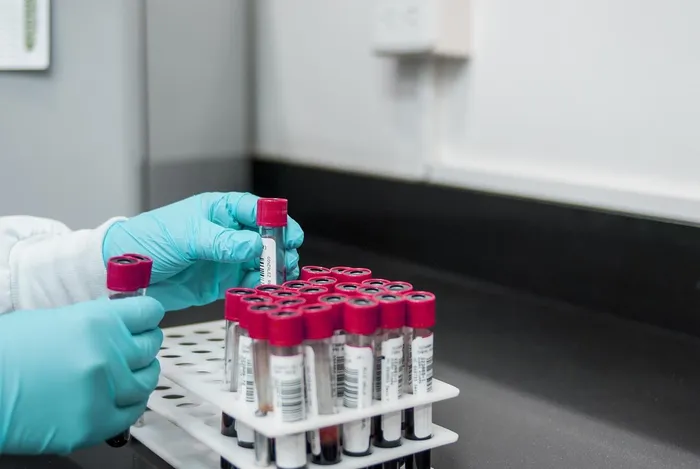
Laboratory testing by the Institut National de Recherche Biomédicale (INRB) has detected Ebola virus in 13 of 20 samples collected from affected areas.
Image: Pixabay
COMMUNITIES in the eastern Democratic Republic of the Congo (DRC) are facing renewed uncertainty as health authorities confirm an Ebola virus disease outbreak in Ituri province.
The Africa Centres for Disease Control and Prevention (Africa CDC) is urging immediate regional coordination to contain the spread, as initial reports point to 246 suspected cases and 65 deaths, primarily in the Mongwalu and Rwampara health zones.
Laboratory testing by the Institut National de Recherche Biomédicale (INRB) has detected Ebola virus in 13 of 20 samples collected from affected areas.
Early findings suggest the outbreak involves a non-Zaire ebolavirus strain, though scientists are awaiting full sequencing results expected within the next 24 hours. The Africa CDC is supporting this critical analysis to guide the response.
While four deaths have been confirmed among laboratory-confirmed cases, health workers remain vigilant about suspected cases reported in Bunia, a larger urban centre.
The situation is complicated by intense population movement, mining-related travel in Mongwalu, ongoing insecurity in some areas, and challenges in tracking contacts and maintaining infection prevention measures.
The proximity of affected zones to Uganda and South Sudan adds another layer of urgency.
In light of these risks, Africa CDC has convened an urgent high-level coordination meeting today, May 15, 2026, bringing together health authorities from the DRC, Uganda, and South Sudan.
Key global partners are also participating, including the World Health Organization (WHO), Unicef, the United States CDC, the European CDC, the China CDC, the Public Health Agency of Canada, and numerous pharmaceutical and public health organisations such as Gilead Sciences, Merck & Co, Johnson & Johnson Innovative Medicine, Regeneron Pharmaceuticals, Roche, Abbott Laboratories, Cepheid, BioNTech, Moderna, Evotec Biologics, CEPI, Gavi, Médecins Sans Frontières, IFRC, the World Bank, the African Development Bank, Afreximbank, the Gates Foundation, and the Wellcome Trust.
Discussions will centre on immediate response priorities: strengthening cross-border surveillance, laboratory support, infection prevention and control, risk communication, safe and dignified burials, and mobilising resources to support affected communities.
“Africa CDC stands in solidarity with the government and people of the DRC as they respond to this outbreak,” said Dr Jean Kaseya, the director-general of Africa CDC. “Given the high population movement between affected areas and neighbouring countries, rapid regional coordination is essential.
We are working with the DRC, Uganda, South Sudan, and partners to strengthen surveillance, preparedness, and response and to help contain the outbreak as quickly as possible.”
The Africa CDC is preparing to deploy support across several critical areas, including emergency coordination, digital surveillance and data management, cross-border preparedness, laboratory coordination, infection prevention and control, and community engagement.
Once sequencing confirms the exact Ebola virus species, the agency will work with partners to assess the availability and suitability of medical countermeasures.
For residents in affected and at-risk areas, health authorities emphasise the importance of following official guidance: Report symptoms early, avoid direct contact with suspected cases, and support the teams working to protect communities.
Africa CDC has committed to sharing further updates as sequencing results are finalised and more information becomes available.