

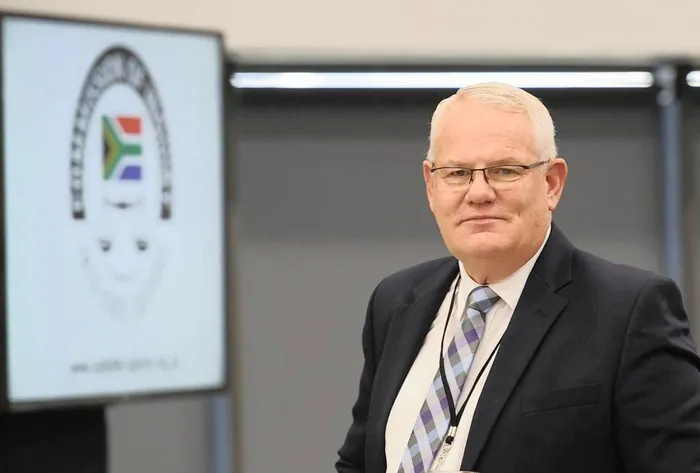
The withdrawal of criminal charges against former KwaZulu-Natal Hawks head Johan Booysen is being challenged in court by the MKP.
Image: Independent Media Archives
The uMkhonto weSizwe Party (MKP) has this week approached the Gauteng High Court, Pretoria, seeking an order to reinstate criminal charges against members of the Directorate for Priority Crime Investigation (Hawks) and its former head, Major General Johan Booysen.
Through its first deputy president and parliamentary leader, Dr John Hlophe, MKP had on April 7 furnished the court with a 54-page affidavit, which it obtained from the Rondebosch SAPS station in Cape Town.
The party also wants Booysen and another Hawks officer, Lieutenant-Colonel Jan Johannes Eugene van Tonder, to return an amount of money, which was given to them by the state as compensation for their unlawful arrest and malicious prosecution.
Booysen received R1.3 million, while more than R1.2 million went to Van Tonder.
Cited as respondents in the MKP’s application are the National Director of Public Prosecution (NDPP), the KwaZulu-Natal DPP, Booysen, Van Tonder, the Justice and Correctional Service Minister, and the Police Minister.
Booysen's attorney, Tania Koen, said papers have not yet been served on Booysen.
“Until we have been served the papers and can peruse them, we will not comment on the matter. We will follow the process,” said Koen.
The Booysen-led Cato Manor Unit, which was dubbed a death squad for allegedly killing suspects in serious crimes, was cleared of racketeering charges by the Durban High Court in 2019 due to insufficient evidence.
During her testimony at the Nkabinde Inquiry in December, the now former NDPP Advocate Shamila Batohi revealed that she did not personally review the case docket implicating Booysen and unit members before withdrawing the charges against them.
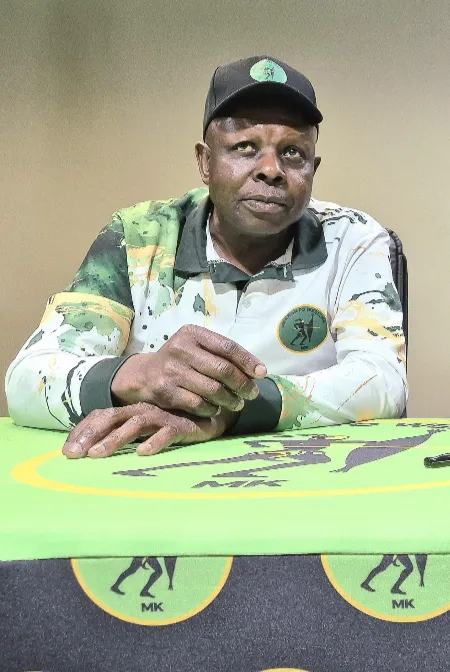
John Hlophe is asking the Pretoria High Court to review the withdrawal of criminal charges against former KwaZulu-Natal Hawks boss, Johan Booysen, and his subordinates.
Image: Sibonelo Ngcobo / Independent Media
Based on Batohi’s testimony, Hlophe’s affidavit, which he compiled with the assistance of MKP’s Pietermaritzburg-based lawyers, Srish Partab Inc, challenged the withdrawal of the racketeering charges, which were authorised under the Prevention of Organised Crime Act (POCA) 121 of 1998.
“The impugned decisions constitute exercises of public power and are reviewable on the ground that they are irrational and not rationally connected to the material before the decision-makers,” read the affidavit.
Family members of the victims who allegedly died at the hands of the unit were left disheartened when, in June 2019, Batohi announced the withdrawal of the charges.
Batohi had based her decision on the outcome of a panel, which was comprised of two directors of public prosecutions - Advocate Rodney de Kock and Advocate Ivy Thenga.
This panel had found invalidity in the former acting NDPP, Advocate Nomgcobo Jiba, on August 17, 2012, and the former NDPP, Advocate Shaun Abrahams, on February 16, 2016, to authorise prosecutions of racketeering offences of Booysen’s unit members.
Batohi stated during the Nkabinde Inquiry that she withdrew the charges without reviewing the dockets, which included 23 charges against the accused police officers.
The MKP’s application to reinstate the charges was based on the fact that Batohi did not independently assess the evidential record, and also did not consult with the prosecution team that was handling the case.
Hlophe’s affidavit alleged that even the De Kock report did not undertake an independent assessment of the evidential record contained in the investigation dockets.
“The De Kock report accordingly did not reassess the full investigation record, nor did it involve consultation with the prosecution team responsible for the matter, or a reconsideration of the evidence underlying the alleged racketeering enterprise,” read the MKP’s legal document.
Following the withdrawal of the charges, Booysen and Van Tonder approached the court, suing the state for unlawful arrest and malicious prosecution.
However, an out-of-court settlement was reached, leading to the state paying the compensation.
MKP is arguing that the compensation agreement was derived from the alleged unlawful withdrawal of the charges, which it said was based on the assumption that the prosecution was unlawful.
“If those decisions are unlawful, the settlement cannot stand,” the affidavit said.
The MKP believed that the state paid the compensation without admitting liability.
“The settlement agreement contains a strict confidentiality clause prohibiting disclosure of its terms to third parties,” the statement read.
MKP spokesperson Nhlamulo Ndhlela said the party approached the court because of its commitment to defending the Constitution, combating organised crime and corruption, and ensuring no one is above the law.
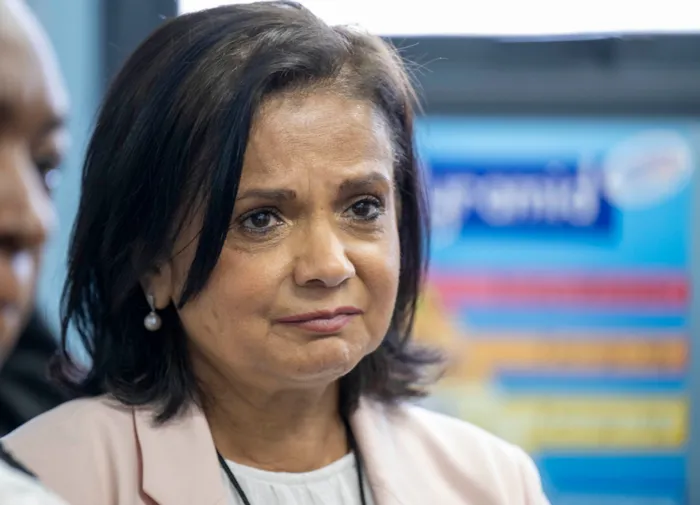
Former NDPP advocate Shamila Batohi is being blamed for withdrawing charges against former Hawks boss Johan Booysen without independently assessing the docket.
Image: Henk Kruger / Independent Newspapers
“The founding affidavit details how the 2019 decisions by Batohi to withdraw charges against Johan Booysen, Jan van Tonder, and the Cato Manor unit members were irrational, unlawful, and unconstitutional,” he said.
Ndhlela said the MKP was confident in the strength of its case as its affidavit argues that the decisions lacked a rational basis, violated Section 179(4) of the Constitution due to undisclosed conflicts and failure to act impartially, and were not based on a proper evaluation of the evidence.
“Courts have a duty to review and set aside irrational administrative actions.
“We are seeking to set aside the withdrawals, the settlements, order repayment of public funds, and reinstate the original prosecution. The merits are compelling, particularly given the procedural irregularities highlighted,” Ndhlela said.
He said the alleged activities of the Cato Manor unit under Booysen’s leadership had a devastating impact, particularly on black communities in KwaZulu-Natal.
“The affidavit and supporting evidence reference a pattern of alleged extrajudicial killings (dozens of cases involving African men, including in taxi-related incidents and other operations between roughly 2008–2011).
“Families lost loved ones, often young men, without due process, and this eroded public trust in law enforcement, perpetuated a culture of impunity, and deepened societal divisions.
“Victims’ families continue to seek justice, and the withdrawal of charges compounded their pain by appearing to shield powerful figures while denying closure. Our action aims to affirm that every life matters and that state institutions must serve the people, not operate above the law.”
He said the court would apply its standard timelines for review applications in deciding the deadline for the respondents to file their responding papers.
“We will provide updates as the matter progresses.”
bongani.hans@inl.co.za