

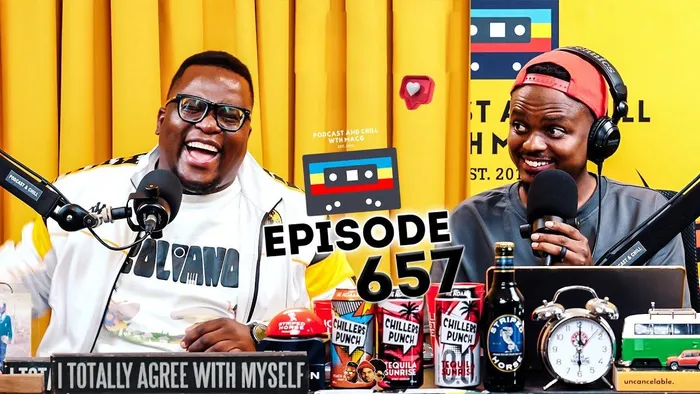
Podcasting represents one of the most accessible and decentralised forms of communication for South Africans.
Image: YouTube
CIVIL rights organisation Free SA strongly condemns Parliament’s exploration of regulatory measures targeting South Africa’s rapidly growing podcasting sector, warning that such intervention would pose a direct threat to freedom of expression and democratic discourse.
Recent developments indicate that legislators are considering extending regulatory oversight to digital audio platforms, including podcasts. While framed as a means to ensure accountability, Free SA argues that this move carries the obvious risks of imposing unnecessary and unconstitutional restrictions on one of the last truly open spaces for public debate.
“Podcasting represents one of the most accessible and decentralised forms of communication for South Africans,” said Gideon Joubert, spokesperson for Free SA. “Any attempt to regulate this space must be viewed with extreme caution, as it opens the door to censorship, political interference, and the silencing of dissenting voices.”
Unlike traditional broadcasting, podcasts operate in a diverse, voluntary marketplace of ideas where audiences choose what to consume.
Free SA warned that introducing regulatory controls, particularly those that resemble licensing, content restrictions, or compliance burdens, could stifle innovation, discourage independent creators, and concentrate power over public discourse in the hands of the state.
Free SA emphasises that South Africa’s Constitution guarantees freedom of expression, including the right to receive and impart information without interference. Extending state control into digital content creation risks undermining these protections.
“History has shown that once governments begin regulating speech under the guise of ‘oversight’, the scope of control tends to expand,” Joubert said. “Today it may be podcasts, tomorrow it could be social media, online publications, or private communication platforms.”
The organisation further warned that vague or broadly defined regulatory frameworks could be weaponised against critics of government, journalists, and ordinary citizens engaging in political or social commentary.
Free SA argued that existing legal frameworks already provided adequate recourse against unlawful content such as defamation, incitement to violence, or hate speech. Creating additional layers of regulation for podcasts is therefore redundant and disproportionate.
Instead of expanding state control, Free SA calls on policymakers to:
Free SA has launched a public campaign urging South Africans to oppose podcast regulation and defend their right to speak freely in the digital age.
“This is not just about podcasts,” Joubert said. “It is about protecting the principle that individuals, not the state, should decide what ideas may be shared, debated, or challenged. A free society depends on open dialogue, not controlled narratives.”
Free SA called on Parliament to abandon any proposals that would impose regulatory controls on podcasting and to reaffirm its commitment to constitutional freedoms.