

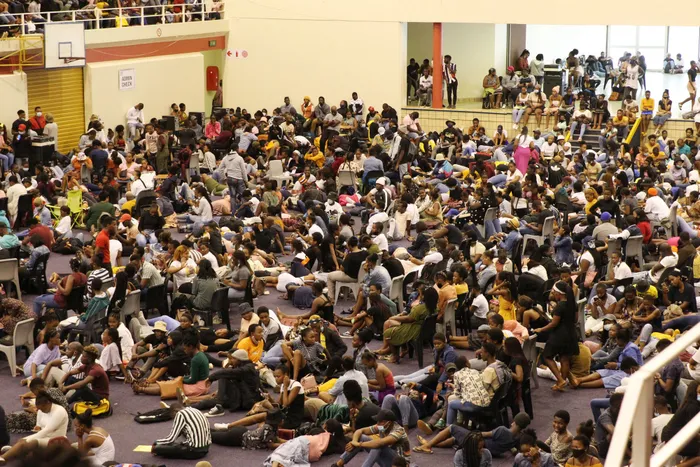
For many students, the beginning of the academic year remains a critical pressure point for a number of reasons, including structural challenges.
Image: Doctor Ngcobo /Independent Newspapers Archives
As Human Rights Day is commemorated under the theme “Making Human Dignity Real”, renewed attention is being drawn to the conditions faced by students in Technical and Vocational Education and Training (TVET) colleges, where the constitutional right to further education is increasingly under strain.
Advocacy groups, including Youth Capital and Equal Education, say the lived realities of students reveal a widening gap between policy commitments and actual learning conditions.
Recent protests at Ehlanzeni TVET College’s Mapulaneng Campus in Acornhoek have brought these issues into sharp focus.
Students have raised concerns about shortages of study materials, unreliable water supply, and rising registration fees for 2026. These challenges reflect deeper systemic problems, including long-standing infrastructure deficits and uneven resource allocation across the TVET sector.
Despite the Constitution guaranteeing access to further education, outcomes across the sector remain alarming.
Senior Researcher for Education Funding and System Efficiency at Equal Education, Sam Beynon, described the scale of the crisis.
"The situation is multi-layered. Approximately 60% of TVET students drop out in their first year, and among NSFAS-funded students, 69% did not meet academic progression in 2025."
She added that "chronic underfunding has placed significant pressure on the system, affecting both institutional capacity and student outcomes".
Beynon further unpacked the structural issues driving these trends.
"Approximately 60% of students drop out of TVET colleges in their first year," she said, while "69% of TVET college students did not meet academic progression".
She pointed to broader funding disparities, noting that "when we look at funding for post-school education and training in general, we see real declines to budget allocations… historically, the budget allocations to the university education programme… has always received much higher allocations than the programme for TVET colleges."
Beyond funding, capacity constraints continue to limit access.
"We have got a capacity constraint challenge… our 26 universities and our 50 TVETs cannot accommodate that growing number… our institutions just cannot absorb all of these learners who qualify," Beynon explained, highlighting persistent difficulties with placement and registration that leave many prospective students without viable options.
While the government has introduced measures such as the National Student Financial Aid Scheme (NSFAS) War Room, established in September 2025 to improve coordination and resolve funding-related issues, questions remain about whether these interventions are making a tangible difference on the ground.
Youth Capital Project Lead Buhlebethu Magwaza emphasised that administrative inefficiencies often translate into deeper rights concerns.
"The right to further education is not just about access. It's about whether young people can stay in the system, learn, and succeed with dignity," she said.
"Learners still experience delays in funding, uncertainty around allowances, and slow appeal processes… when that happens, it stops being just about an administrative issue, it becomes a question of rights."
Magwaza acknowledged that the War Room signals progress, noting that it "meets weekly, monitors risks across institutions, and has deployed officials… to respond to issues around funding, accommodation and disruptions."
However, she cautioned that "the real question is whether students are experiencing that improvement… we are still seeing high dropout rates, particularly among first-year students".
Advocates argue that urgent, practical steps are needed to restore dignity within the TVET system.
These include ensuring timely and predictable NSFAS payments, faster processing of appeals, improved infrastructure, and access to basic services, and greater transparency through public reporting on progress.
lilita.gcwabe@inl.co.za