

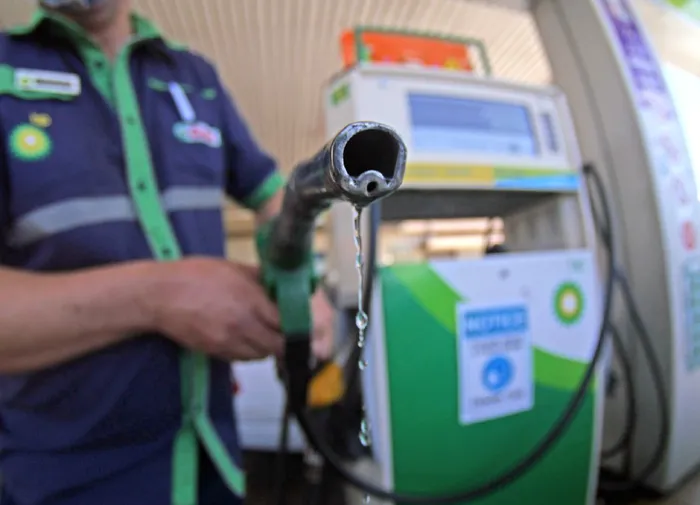
Experts say while reports may indicate that certain refineries or major industry players hold stock, this supply is not filtering through to the wholesale market in a meaningful or accessible way.
Image: Supplied
SOUTH Africa’s fuel supply system is facing a critical disconnect. While the government and industry insist reserves are stable and urge the public not to panic-buy, wholesale fuel suppliers warn that diesel is not reaching essential services, creating operational crises across defence, healthcare, water infrastructure, mining and agriculture.
Wholesale fuel supplier Lily Piroddi-Bessick said: “At present, there is effectively no supply of diesel being released to wholesale suppliers through normal distribution channels. This has resulted in an inability for wholesalers to meet contractual obligations to both government entities and private sector clients.”
While authorities maintain that fuel stocks are adequate, Piroddi-Bessick claims the bottleneck lies in distribution, not availability. “While reports may indicate that certain refineries or major industry players hold stock, this supply is not filtering through to the wholesale market in a meaningful or accessible way,” she said.
The South African National Defence Force exemplifies the stakes. “On the current National Treasury contract for the supply to all national departments, wholesalers are unable to deliver against the awarded contract,” Piroddi-Bessick revealed. “Key entity on this contract is the SA National Defence Force (SANDF), which is urgently requiring fuel; wholesale suppliers are unable to deliver. This is a huge concern as these entities are unable to operate.”
In direct response to growing concerns, the Department of Mineral and Petroleum Resources (DMPR) and the Fuels Industry Association of South Africa issued a joint media statement this week, urging calm.
“The Department and Fuels Industry Association wish to firmly reiterate that South Africa’s fuel supply remains stable in the immediate term, and there is no basis for panic-buying,” the statement read.
The joint statement acknowledged minor disruptions but downplays their significance: “While there may be isolated localised logistical challenges affecting the movement or availability of fuel in certain areas, these are operational in nature and do not constitute a national supply shortage. These issues are being actively managed through established industry and regulatory channels.”
It further warned against conflating domestic issues with international tensions: “It is therefore incorrect and misleading to link such isolated domestic logistical matters to broader geopolitical developments. Such claims risk creating unnecessary alarm and confusion among the public.”
The official reassurance stands in contrast to Piroddi-Bessick’s account of wholesale market collapse. While the DMPR/FIASA statement emphasises retail-level stability, Piroddi-Bessick says the crisis is structural and hidden from public view.
“The information reaching the public in South Africa does not fully reflect the on-the-ground reality experienced by the independent wholesalers and the essential sectors they support,” she said. “Current public messaging appears to be largely focused on forecourt (retail) supply, with reassurance aimed at preventing panic among the everyday consumer. While this is understandable and arguably necessary to maintain stability, it does not adequately address the challenges within the wholesale and bulk supply segment.”
The DMPR/FIASA statement condemns public calls to action: “Calls for the public to rush to the pumps are irresponsible. They place undue pressure on supply systems, congestion at service stations, and anxiety among consumers.”
Piroddi-Bessick argues the real pressure is not from consumers but from upstream withholding: “There is a perception within the wholesale market that available reserves or stock held upstream are not being released into broader circulation. Whether this is due to strategic stock management, logistical constraints, or other commercial considerations is not fully transparent.”
The crisis cascades far beyond defence. “Mining operations are under strain as they require fuel for operation,” Piroddi-Bessick said. “Water & Sanitation requires diesel to run generators, as there are various sites in Gauteng that are currently experiencing electricity supply shortages; EMS requires fuel to run their ambulances. The list is endless.”
Western Cape Premier Alan Winde acknowledged parallel pressures in his province, particularly on agriculture. “Isolated reports of shortages are due to suppliers not releasing fuel to customers, which is impacting the agricultural sector,” Winde said. “Agri WC reports that some farmers are only receiving about 20% of their usual monthly diesel allocations. These effects are most acute in the Garden Route and West Coast Districts.”
Winde emphasised the timing could not be worse: “Fuel is a critical resource for the agricultural sector, particularly as we head into the fruit picking and winter grain planting season. This is a sector already under pressure as a result of Foot-and-Mouth Disease (FMD), it is unacceptable that unnecessary fuel rationing now poses an additional stressor.”
Both Piroddi-Bessick and Premier Winde point to the conduct by suppliers that exacerbates the crisis. Piroddi-Bessick described opaque practices: “Yes, wholesale suppliers in South Africa are currently facing informal limitations in accessing available diesel stock. There is limited transparency around allocation decisions. In effect, although not officially declared, only verbally, these informal constraints are significantly restricting wholesalers’ ability to procure fuel, further exacerbating the supply challenges across the market.”
Winde issued a direct condemnation: “It is unethical for suppliers to delay the delivery of fuel while waiting for prices to increase. Any supplier found to be engaged in this conduct will be assessed for legal liability and recourse.”
He was unequivocal in his demand: “There is no cause for concern. There is more than enough fuel in reserve. All suppliers must immediately release full orders of fuel to all clients. We will not tolerate suppliers unethically holding onto fuel, while our agricultural sector is under pressure.”
Piroddi-Bessick traced the bottleneck to its source: “At the refinery level, product is not being released into the market in sufficient volumes. This lack of uplift from refineries has a direct cascading effect, limiting the movement of diesel into major storage and distribution depots.”
The blockage compounds downstream: “As a result, major depots are operating with constrained or minimal inflows, preventing them from maintaining normal stock levels or issuing consistent allocations. This, in return, impacts the allocation process to wholesale suppliers, where volumes are either significantly reduced or not allocated at all.
“In summary, the disruption spans the entire chain, starting with restricted refinery releases, leading to understocked depots, and ultimately resulting in little to no allocations to wholesalers,” she said.
The DMPR/FIASA statement calls for discipline in public discourse: “The Department calls all organisations, public representatives, commentators and social media users to act responsibly and to refrain from spreading unverified or speculative claims regarding fuel supply and fuel price developments.”
It encouraged public reliance on official channels: “Members of the public are encouraged to continue purchasing fuel in the normal course and to rely on official government communication for accurate and verified information.”
For those experiencing difficulties, the statement provides a recourse: “Consumers who experience fuel-related challenges or wish to lodge complaints are encouraged to report these to fuel.complaints@dmpr.gov.za, enabling the department’s inspectors to respond and intervene where necessary.”
Winde outlined proactive measures: “The Western Cape Government recognises the very real concerns raised about the impact of the Middle East conflict on fuel supply in the province. The Provincial Disaster Management Centre is monitoring the situation, in coordination with FIASA, Agri WC, Regional Disaster Management Centres, and the Department of Health and Wellness: EMS and Eskom.”
He noted collaborative action: “FIASA is working with Agri WC to identify fuel suppliers that are rationing supply.”
Piroddi-Bessick, meanwhile, called for structural interventions: “Enable fast-tracked contracting between majors and independent wholesalers under emergency supply frameworks.”
She also urged: “Strategic reserve release mechanisms: Implement a controlled release of strategic or buffer stocks into the wholesale market, specifically earmarked for critical sectors such as transport, municipalities, government entities and mining.”
Piroddi-Bessick cautioned: “If left unaddressed, the current constraints risk evolving into a systemic supply crisis, were retail stability masks deeper disruptions in essential services and economic activity. Proactive intervention now — focused on allocation fairness, transparency, and supply augmentation — is critical to safeguarding both national delivery systems and economic stability.”
Despite the severity of her claims, Piroddi-Bessick noted that the wholesale supply chain was “experiencing severe disruption, with availability limited to isolated or ad hoc opportunities rather than consistent, reliable supply. Until regular distribution resumes, wholesale suppliers remain unable to secure and deliver diesel at scale to entities such as SANDF, Mines, Transport etc.”
The DMPR and FIASA concluded their statement with a commitment to ongoing oversight: “The Department and the Fuels Industry Association will continue to monitor the situation closely and will communicate any confirmed developments through official channels.” Winde echoed this sentiment: “The Western Cape Government will continue monitoring the situation and will provide updates as necessary.”
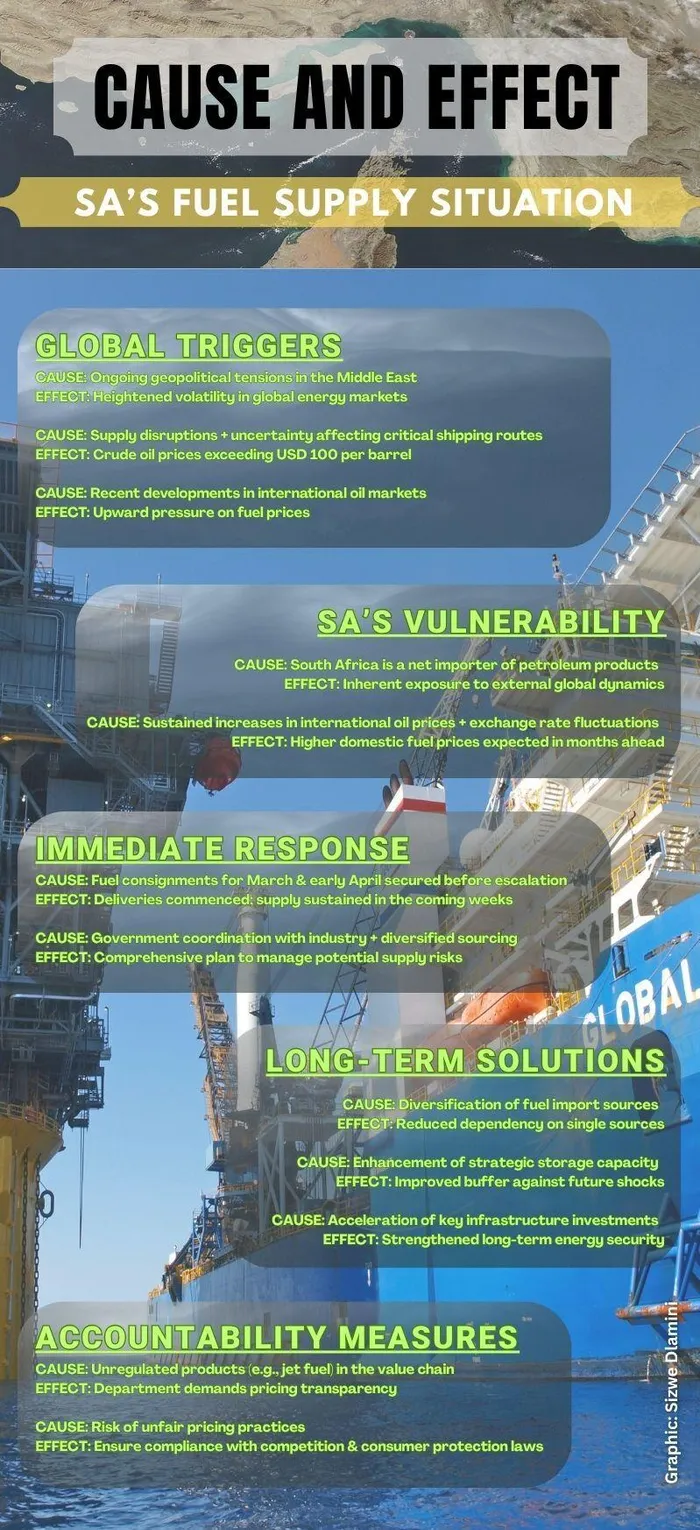
Cause and effect.
Image: Sizwe Dlamini