

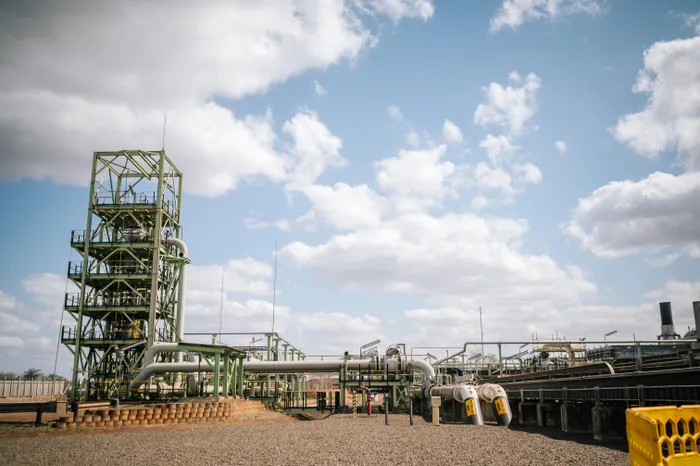
Rompco operates as a joint venture between iGas (representing the South African government), Companhia Moçambicana de Gasoduto (CMG), representing the government of Mozambique, and Sasol South Africa.
Image: Sage Lee Voges / ZCMC Media
THE Republic of Mozambique Pipeline Investments Company (Rompco) proudly celebrates 25 years of excellence, marking a significant milestone in advancing energy security, regional collaboration, and sustainable economic development across Southern Africa.
Established in 2000 through a bilateral agreement between the Governments of Mozambique and South Africa, Rompco was created to transport natural gas from the Pande and Temane gas fields in Mozambique to key markets in both countries via the 865km Mozambique-Secunda Pipeline (MSP).
Today, the company stands as a testament to the power of cross-border collaboration and public-private partnership. Rompco operates as a joint venture between iGas (representing the South African government), Companhia Moçambicana de Gasoduto (CMG), representing the government of Mozambique, and Sasol South Africa.
Together, these partners have built a resilient energy infrastructure that plays a critical role in supporting industry, powering homes, and strengthening regional economies.
“Rompco has built a reputation as one of the most well-maintained and reliable gas transmission systems in the world,” according to Mlandzeni Boyce, chief executive officer of Rompco.
“When we benchmark our operations, we do not measure ourselves only against local standards. We compare ourselves with the best globally, because we believe the region deserves world-class infrastructure,” he said.
For a quarter of a century, the Mozambique-Secunda Pipeline has been a vital component of the Southern African energy landscape, ensuring a secure and uninterrupted supply of natural gas to industries and communities. The pipeline currently transports about 215 petajoules of gas annually, supporting key sectors such as manufacturing, mining, and power generation.
As the region navigates a complex energy transition, natural gas is increasingly recognised as a critical component of the evolving energy mix. While coal has historically dominated Southern Africa's energy landscape, natural gas offers a cleaner and more flexible alternative that can help bridge the gap between traditional energy sources and future low-carbon solutions.
“In Africa, more than 600 million people still lack access to electricity. Natural gas provides an opportunity to expand access to reliable energy while supporting economic growth,” Boyce said. “Gas is not just a transition fuel; it is a practical solution for today’s energy needs while enabling a more sustainable future.”
Looking ahead, Rompco continues to explore opportunities to expand its infrastructure and strengthen regional energy integration. With existing capacity and future infrastructure development under consideration, the company is positioning itself to support gas-to-power initiatives and regional energy connectivity, potentially extending supply into neighbouring markets.
Through its operations, Rompco not only contributes to energy security but also to the economic and social development of the communities along the pipeline corridor in both Mozambique and South Africa.
“Beyond our infrastructure, our purpose is to contribute meaningfully to the communities we operate in and to support the development of the regional energy industry,” Boyce said. “Our journey over the past 25 years has been defined by partnership, innovation and a shared vision for a more secure and sustainable energy future.”
As Rompco celebrates this milestone, the company reaffirms its commitment to driving reliable gas supply, supporting regional industrial growth, and contributing to the energy transition in Southern Africa.
With strong partnerships, robust infrastructure, and a forward-looking strategy, Rompco remains well-positioned to play a leading role in shaping the region's energy future for decades to come.