

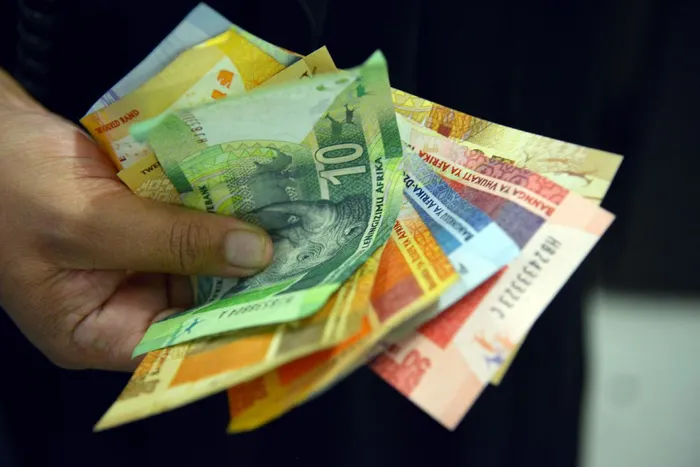
Thousands of municipal workers nationwide are in line for a 4.75% salary increase and similar improvement to their homeowners' allowances and employer medical aid contributions.
Image: Karen Sandison / Independent Newspapers.
The country’s 295,000 municipal workers are set to receive an increase of 4.75% in their salaries, homeowners’ allowance, and employer medical aid contributions, and the local government sector’s monthly minimum wage will rise to R11,100.
From July this year, the minimum wage across the 257 municipalities will increase from R10,600 to R11,100, the homeowners’ allowance from R1,170 to R1,225, and the employer’s medical aid contributions to improve from R5,971 to just below R6,100.
The increases are part of the wage agreement signed in September 2024 following protracted negotiations at the SA Local Government Bargaining Council (SALGBC).
SALGBC General Secretary Bill Govender informed municipal managers on Friday that the bargaining council requests that all municipalities adhere to and implement the increases.
The September 2024 agreement makes provision for any municipality to apply for an exemption from having to implement any provisions of the deal within 30 days of the approval of the budget of a municipality for the 2026/27 financial year or June 30, whichever is the sooner.
The 2026/27 leg of the agreement comes as unions representing City of Tshwane employees signed a deal, the 3.5% that was not implemented in July 2021 after the municipality secured an exemption, which was subsequently reviewed and referred back to the SALGBC.
At the bargaining council, the unions succeeded, and the exemption was dismissed, and the municipality was ordered to adjust workers’ wages and implement back pay within six months.
However, the City of Tshwane appealed to unions as the nearly R1.1 billion required to be paid within six months would place the municipality, currently on a path of financial recovery, under severe financial pressure.
According to the Independent Municipal and Allied Trade Union (Imatu) in Tshwane, organised labour and the municipality engaged to find a practical solution to ensure that the 3.5% adjustment on salaries and benefits could be implemented at the beginning of this month.
In terms of the settlement agreement, the back pay of 3.5% salary increases, which dates back to July 2021, will be paid from June this year until February 2029.
Payments will commence with employees on the lowest level and conclude with employees on the highest level, according to Imatu.
City of Tshwane employees are still engaged in another dispute over the 5.4% salary increase for the 2023/24 financial year.
Imatu indicated that the matter is currently before Labour and Labour Appeal Court Judge President Mogomotsi Edwin Molahlehi, after they challenged the Labour Court’s decision to exempt the city.
Parties to the SALGBC, including the SA Local Government Association and the SA Municipal Workers’ Union, are also embarking on negotiations to conclude a new wage curve collective agreement.
Should negotiations be concluded, there could be the establishment of uniform pay scales for all municipalities.
Rosebank, Johannesburg-based management consultancy 21st Century has been tasked with assisting the SALGBC in developing the pay scales through the collection and analysis of the existing ones, as well as current payroll data per employee from all municipalities.
“Failure to submit the required information compromises the accuracy of the sector analysis and delays the progress of the wage curve negotiations,” the bargaining council warned.
loyiso.sidimba@inl.co.za