

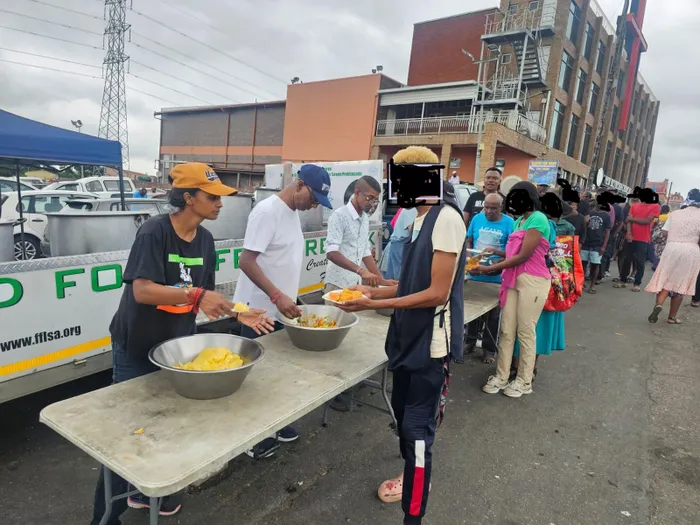
Soup kitchens and feeding schemes make a huge impact on addressing hunger and poverty in places all over the country.
Image: Food For Life
Grassroots movements, food justice advocates, and small-scale coastal producers are engaging with a long overdue inquiry into South Africa’s food system, highlighting how hunger and inequality affect millions.
The South African Human Rights Commission (SAHRC) opened its investigation this week, examining whether policies and corporate practices undermine the constitutional right to sufficient food. Friday marked the second day of hearings.
"Day 2 of the inquiry focused on oral and written submissions from civil society, advocacy groups, academics, and members of the public, highlighting structural drivers of hunger and inequality," the SAHRC said. "The commission is investigating whether South Africa’s food system is meeting constitutional rights to sufficient food."
In a statement released alongside the inquiry, the shack dwellers’ movement Abahlali baseMjondolo welcomed the process but warned that hunger is a crisis of political will.
"Many people in the country often go to sleep on an empty stomach … Not being able to feed your children is extremely painful," the movement said.
Abahlali noted that around 25–26% of South Africans are food insecure, while nearly 30% of children under five are stunted due to chronic malnutrition, and linked hunger to unemployment, inequality, and corporate control of food systems.
"The persistence of widespread hunger represents a profound failure to realise rights already guaranteed in the Constitution," the movement said.
Abahlali forms part of the Union Against Hunger, a national alliance of civil society, academic, and grassroots actors pushing for food sovereignty and urgent policy reforms.
The inquiry is also hearing from representatives of small-scale fishing and coastal communities, who argue that access to marine resources is central to local food security.
Groups such as Coastal Links South Africa and KwaZulu‑Natal Subsistence Fishers Forum have mobilised around food and livelihood issues, while Masifundise Development Trust supports advocacy for sustainable fisheries and coastal food systems.
"Access to marine resources is central to local food security," said a representative of Coastal Links South Africa. "Fisheries rights and market access are not just economic issues; they are matters of survival and food justice."
Small-scale cooperative models like Only Fishers and regional bodies, including the Western Cape Small Scale Fisheries Representative Forum, are emphasising that secure fishing rights and local market access are essential for food justice.
Beyond coastal voices, food security advocates such as Biowatch South Africa and SA Harvest argue that addressing food waste, promoting agroecological production, and tackling distribution inequalities must form part of the solutions presented to the commission.
"Hunger is a political crisis that will only be resolved if there is sufficient political will," said a Union Against Hunger representative.
"We must move from charity to food sovereignty, so communities can control their own food systems."
Abahlali added: "Hunger isn’t just a lack of food, it’s about access, rights, land, and power."
Hearings will continue this coming week as civil society, academics, and community representatives present evidence aimed at transforming South Africa’s food system to align with constitutional rights.
lilita.gcwabe@Inl.co.za