
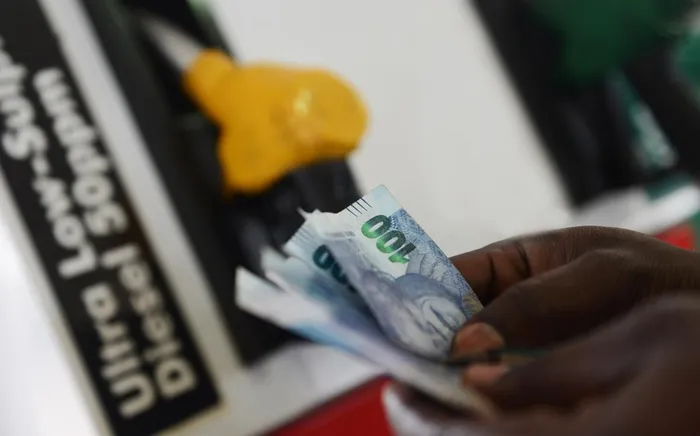
Amid rising geopolitical tensions, South Africa's fuel supply faces uncertainty, with the possibility of long queues at petrol stations signalling potential rationing and economic challenges ahead.
Image: File / Independent Media
South Africa's currently stable fuel supply is increasingly vulnerable due to escalating Middle East geopolitical tensions, with experts warning that reliance on imported crude and reduced local refining capacity exposes the country to supply chain disruptions, potentially leading to fuel rationing and long queues.
The Department of Mineral and Petroleum Resources (DMPR) has repeatedly reassured the public that there is “currently no immediate risk of fuel shortages in South Africa.
The Fuels Industry Association of South Africa (FIASA) echoed this sentiment, but stated that companies have already implemented “controlled allocation measures to ensure ratable and equitable supply to all customers”.
They are taking proactive steps, including banning ad hoc or unplanned demand “to prevent market speculation and stockpiling by opportunistic buyers”.
The country currently relies on only two operational crude oil refineries, NATREF and Astron Energy, in addition to the Sasol Secunda coal-to-liquids plant. This follows the permanent shutdown of two major local oil refineries in recent years.
Energy and power expert Professor Vally Padayachee cautions that this reduced capacity is a significant liability.
“South Africa's reliance on only two operational crude oil refineries, combined with the Sasol Secunda plant, still leaves us susceptible to the risk of disruptions in the supply chain, especially given our dependence on imported crude oil.”
“It would be prudent for South Africans to remain vigilant, as any sudden geopolitical escalation could lead to potentially fuel rationing and lengthy queues at petrol stations,” he said.
James Lorimer, the DA spokesperson on Mineral and Petroleum Resources, acknowledged that while a possible shortage is a potential concern, it is not an immediate one.
Lorimer stated that SA is “not too badly off” regarding crude oil, as only 18% comes from Saudi Arabia; most is sourced from West African nations like Nigeria, Angola, and Ghana.
He added that close to 40% of SA's fuel is coal-derived (Sasol), 10% comes from the NATREF refinery, and the operational Astron refinery in the Western Cape currently has adequate crude supplies.
Lorimer, however, voiced a greater concern regarding the importation of already processed petrol.
“A lot of our fuel, now that our other refineries are down, comes in as already processed petrol. For that, we depend on refineries overseas,” he said, noting his understanding that much of this pre-processed fuel comes from India and the UAE.
The DMPR confirmed that the currently operational facilities rely on crude oil imports sourced primarily from West Africa and, increasingly, from other countries across the African continent.
Furthermore, oil companies that previously imported refined petroleum products from conflict-affected regions are “actively exploring alternative supply sources to ensure uninterrupted fuel availability in the domestic market”.
To manage the evolving situation, FIASA and industry stakeholders are increasing their monitoring efforts.
While they currently meet weekly with the DMPR, Transnet, LPG wholesalers, and oil companies, the frequency of these engagements will “increase to daily meetings from March 16, 2026, to enable real-time coordination and rapid decision-making,” FIASA stated.
Gavin Kelly, CEO of the Road Freight Association, warns that the consequences of higher fuel costs extend far beyond the consumer's pocket.
“For an economy like South Africa, which imports oil, the outcome is often inevitable: higher domestic energy prices. Once fuel prices increase, the cost of moving goods... finally to retailers is exposed to these input price increases.”
Kelly noted that transport companies must then choose between increasing rates, a cost ultimately passed to the consumer, or absorbing the cost, which places immense pressure on “cash flow and reserves”.
The widespread economic hardship was emphasised by Ernst van Biljon, head lecturer of Supply Chain Management at IMM Graduate School.
“As a net importer of crude oil, higher global prices feed directly into South Africa’s domestic fuel costs, as long as road transport remains the backbone of the country’s logistics system,” Van Biljon said.
He stressed the need for proactive planning, suggesting that companies must plan “to avoid production shutdowns and supply chains not operating at optimal levels”.
Lorimer also cautioned that even if supplies are maintained, higher prices are a certainty.
“The problem is that even if we do have enough, the price is going to go up,” he said. He suggested that a figure of “perhaps another R3 a litre... is probably more what we've got to worry about if this war goes on, if the Strait of Hormuz stays closed for a couple of months.”
The rising cost of logistics, as the National Automobile Dealers’ Association (NADA) pointed out, will place “additional strain on already constrained consumer budgets”, as the price increases filter through the value chain and contribute to higher prices across the entire basket of goods and services.
In addition, concerns are mounting over the potential scarcity of Liquefied Petroleum Gas (LPG) supply as the peak winter demand period approaches.
While FIASA states that LPG supply remains stable and is not currently impacted, Professor Padayachee views the potential for an LPG shortage as a “cause for concern”.
“It is critical for the government and industry to ensure adequate reserves of LPG and to secure reliable local production to meet seasonal demands, thereby preventing any shortages,” he urged.
Professor Padayachee acknowledged the government’s efforts to monitor the situation but stressed that a reprieve is not enough.
“While they have reassured the public about current conditions and planned fuel imports, a long-term, robust strategy is essential. This should include increasing local refining capacity, maintaining strategic reserves, and investing in renewable energy sources to reduce our overall dependency on imports,” he stated.
Lorimer’s advice to the public was: “I think the message that I would say to people is be aware of it. But there’s no reason to get hysterical at all at the moment.”
Padayachee stated that South Africa's fuel shortage strategy should incorporate lessons from the Eskom load shedding crisis, focusing on diversification and increased stakeholder collaboration.
He emphasised that the country needs a comprehensive approach prioritising energy security, sustainability, and resilience to address both domestic and international challenges, ensuring preparedness for all eventualities.
karen.singh@inl.co.za