

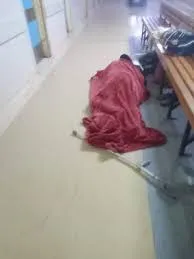
An example of a healthcare facility in the Eastern Cape province raised SAHRC's concern about poor healthcare service.
Image: Facebook
The appalling condition of health facilities in the whole of the Eastern Cape province has landed the provincial Department of Health in trouble with the South African Human Rights Commission (SAHRC), which has called for immediate action to correct the situation.
The SAHRC wants answers within 14 days from the provincial department as to why all clinics and hospitals are in a state of neglect and dilapidation.
The Commission had on Tuesday met health provincial head, Dr Rolene Wagner, on subpoena basis to establish why the facilities were without water, dilapidated, have shortages of healthcare professionals and have prolonged water shortages.
In its ongoing investigation, SAHRC had also found that clinics would be closed without adequate interim arrangements, which would leave the patients vulnerable.
“The department has now been directed to provide the Commission with a comprehensive written report within 14 days addressing the outstanding complaints, setting out remedial steps already taken and outlining measures to ensure improved responsiveness and compliance with constitutional obligations going forward,” said Dr Eileen Carter, the SAHRC provincial manager.
Ahead of the hearing, which took place at the SAHRC offices in KuGompo City, previously known as East London, the commission issued a press statement raising concern about the unsatisfactory provincial department’s uncooperative behavior toward it.
“Despite sustained engagement by the Commission with the department through written correspondence requesting information, explanations and remedial action, the Commission has not received adequate responses addressing the concerns raised,” read the statement.
This led to the commission issuing subpoenas for Wagner to attend the hearings to give oral and written explanations on the state of health facilities.
“The engagement related to more than twenty complaints received by the Commission concerning conditions at healthcare facilities across the province.
“These complaints raised concerns about dilapidated infrastructure, water shortages at certain facilities, staffing pressures, service delivery failures and delays in responding to correspondence from the Commission,” said Carter.
She said during the hearing, health officials acknowledged a number of systemic challenges affecting the provincial health system, including infrastructure backlogs, resource constraints and operational pressures faced by healthcare facilities.
“The Commission emphasised that while these challenges are noted, access to healthcare services remains a fundamental constitutional right and the State has a duty to ensure that facilities operate in a manner that protects the dignity and health of patients,” Carter said.
The issue of poor healthcare facilities was raised early this year, leading to the South African government declaring Ariel Seidman, the Chargé d’Affaires of the Israeli Embassy, persona non grata and sent him packing with immediate effect.
This was after Seidman had brought Israeli Foreign Affairs Ministry senior official David Saranga to visit AbaThembu nation King Buyelekhaya Dalindyebo in Mthatha.
The king led Saranga on a tour to Mthatha hospitals, which were said to be in a bad condition.
Saranga then promised to donate funds for the re-fabrication of the hospitals.
In reaction to Israeli pledging to help the hospitals, Nelson Mandela Academic Hospital CEO Nomkhitha Mthonjana and Mthamtha Regional Hospital CEO Ntovhedzeni Ligege appreciated the foreign intervention.
“We agreed in terms of collaboration and we have to write our needs in terms of various areas whether it is infrastructure or capacity building in our areas then we will be looking forward to working with the Israelis,” said Mthonjana.
Ligege said: “Israel happens to be a vital essential stakeholder to assist us in terms of resources.
“So we agreed that they are going to assist us in terms of machinery equipment and they are going to assist us in terms of building and establishing a state of the art hospital within Mthatha.”
However, provincial health spokesperson Siyanda Manana described most of the province's healthcare institutions as “very, very good”.
But he said it could not be denied that there was a shortage of staff.
“But we have now managed to have 248 emergency medical services persons since February 1.
“We have doctors that we have just recently appointed together with pharmacists and dietitians and so on.
“We have grants which are looking at the question of revitalisation of infrastructure,” he said.
He said Wagner and her team explained to the SAHRC the problem of the provincial healthcare infrastructure shortage of staff and medication and how it is being addressed.
“However, we apologised to them (SAHRC) for not responding to the complaints written by them, and pledged that we are going to respond to them within the next 14 days as they have directed.
“The SAHRC only called us to appeal Tuesday night and we gave them an update in terms of the things that we have done and things that we have initiated a long time back,” said Manana.
He said the All Saints Hospital in Ngcobo was among those facilities with inadequate water supply, which he attributed to infrastructure vandalism.
“In that hospital, the pump keeps on breaking, there was a question of vandalism of the pump and as the reservoir is situated downstream so to push that water up was a very, very big challenge.
“There was also mud that interfered with the pump.
“We are also addressing that issue of the water reticulation at the All Saints Hospital,” said Manana.
bongani.hans@inl.co.za