

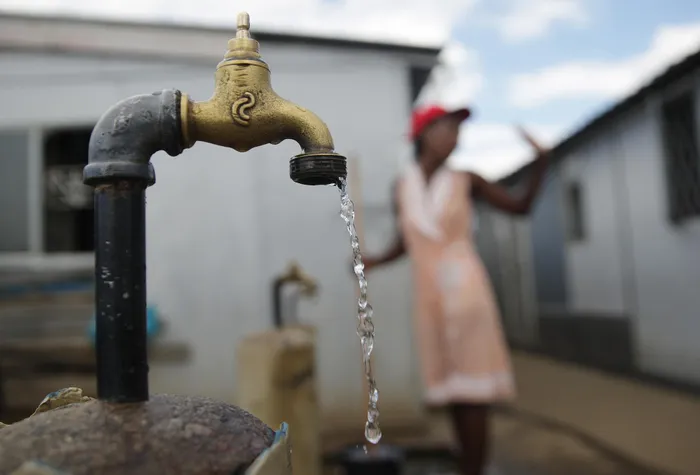
In a fully functional system, improvements in the performance of the water boards would lead to a tangible improvement in water access for the people.
Image: Independent Newspapers Archives
A DAMNING contradiction lies at the heart of South Africa’s water crisis. Two water boards are reporting improved performance while the communities they serve continue to experience dry taps.
The Portfolio Committee on Water and Sanitation has welcomed the improved performance of Lepelle Northern Water and Overberg Water, but issued a strong warning that misalignment within the water value chain is rendering these gains meaningless to ordinary citizens.
The chairperson of the Portfolio Committee on Water and Sanitation, Leon Basson, said in a statement that the committee was considering the annual reports of all water boards and had received briefings from both entities. While governance and operational performance are improving, the lived experiences of end users paint a contrary picture to the positive performance outcomes reported.
“The good performance by the water boards is a direct representation of a fractured system, where improvements in the performance of the water boards do not translate into direct positive outcomes for communities. In a fully functional system, improvements in the performance of the water boards would lead to a tangible improvement in water access for the people,” Basson said.
Basson’s statement identified municipalities as the critical bottleneck exerting downward pressure on the entire system through two devastating failures: High levels of non-revenue water within municipal reticulation systems and persistent non-payment for bulk water services supplied by the water boards.
He said these challenges posed a significant risk to the financial sustainability of water boards, with municipal debt owed to Lepelle Northern Water alone having increased to R1.36 billion — a figure the committee reiterated requires urgent attention to ensure the sustainability of both the water boards and the broader water supply system.
Regarding Lepelle Northern Water, the committee welcomed improvements in governance and operational performance, with the entity achieving an overall performance rate of 90% against its planned targets. Revenue collection has improved by 11%.
Yet despite these metrics, the municipal debt crisis continues to threaten the entity. Considering the governance and operational challenges experienced in previous financial years, the committee encouraged the board and senior management to continue prioritising liquidity and the overall financial health of the entity, according to Basson.
Overberg Water achieved a clean audit outcome, which the committee noted positively, maintaining that sound governance and strong financial management form a critical foundation for institutional effectiveness and service delivery.
However, the committee emphasised the need for the entity to develop a clear growth strategy to expand its revenue base and ensure long-term sustainability. The committee welcomed several initiatives aimed at improving revenue generation, including plans to secure additional industrial customers and farmers, as well as the management of wastewater treatment works on behalf of municipalities and commercial clients.
The committee urged a collaborative approach between the Department of Water and Sanitation and the Department of Cooperative Governance and Traditional Affairs to ensure comprehensive alignment across the water value chain and to safeguard access to water as a foundation for socio-economic development.
Meanwhile, the committee resolved, following legal advice, to give the National Economic Development and Labour Council (Nedlac) 14 days to make a submission on the Water Services Amendment Bill, following a request by Nedlac for the committee to allow the Department of Water and Sanitation and Nedlac sufficient time to engage on the Bill.
The committee was of the view that the three months requested by Nedlac was not practical and would unreasonably delay the consideration of the Bill.