

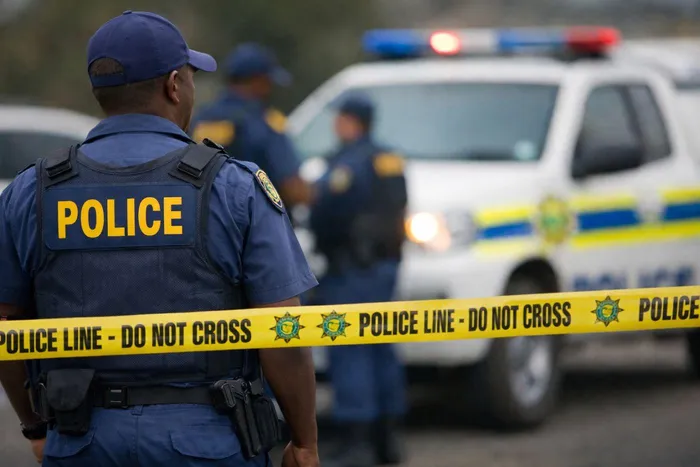
Recent crime statistics reveal a troubling rise in murder and carjacking rates, with Gauteng and the Western Cape identified as the most dangerous hotspots in South Africa.
Image: File
South Africa’s most recent crime statistics for the third quarter of 2025, covering October to December, paint a grim picture, with police precincts in the Western Cape and Gauteng provinces featuring repeatedly among the nation's worst-performing stations for murder, carjacking, and kidnapping.
The top five police stations for murder remain concentrated in the Western Cape’s City of Cape Town District, interrupted only by one station in KwaZulu-Natal.
Mfuleni in Cape Town retains its unenviable position as the national murder capital, recording 75 murders for the period — a slight increase of two from the previous quarter. Nyanga, also in Cape Town, followed closely behind, showing a worrying upward trend with 70 murders and a significant increase of 16.
The other two stations completing the top five, Delft (58 murders) and Gugulethu (52 murders), both showed decreases but remain major concerns.
Major General Tulare Sukune, SAPS Registrar, provided an analysis of causative factors from a sample of murders, revealing that arguments, misunderstandings, road rage, and provocation were responsible for 1,158 incidents, while gang-related murders were overwhelmingly concentrated in the Western Cape, accounting for 257 out of the 276 gang-related cases sampled nationally.
A shift in focus to organised, profit-driven crime reveals Gauteng’s districts grappling with alarming rates of vehicle hijacking and kidnapping.
The province’s dominance in carjacking is evident: 21 of the top 30 stations for the crime are situated in Gauteng. Mamelodi East in Tshwane recorded the highest number of carjackings nationally, soaring from 59 to 82. Alexandra in Johannesburg saw an even steeper rise, rocketing from 36 to 76. Kempton Park and Pretoria West were also identified as major hotspots.
Similarly, kidnapping figures show a worrying surge in Gauteng. Kempton Park led the national list, with recorded cases jumping from 38 to 64. Sophiatown in Johannesburg saw a drastic increase, reporting 62 cases after only nine in the previous period. Tembisa, JHB Central, and Jeppe also featured in the top five, all showing notable increases.
General Sukune confirmed the provincial spread of the carjacking challenge: “Twenty-one of the top 30 stations for carjacking are in the province of Gauteng, six are in the Western Cape, and one each in KwaZulu-Natal, Eastern Cape, and Mpumalanga.”
Despite the bleak figures, Acting Police Minister Firoz Cachalia, speaking at the release of the figures on Friday, vowed a unified response from government and society.
“What I promise is that as a part of this government, we will not give up by adopting a whole of government and a whole of society approach — all levels of government, all departments, working together with our communities, we can succeed in making South Africa a safer place,” Cachalia stated.
“This is a priority. It's achievable, and I've got no doubt that our people have the vision and the fortitude to change the picture for the better.”
DA spokesperson for Community Safety in Gauteng, Crezane Bosch, said the third quarter crime stats painted a grim picture for Gauteng residents.
“The province remains the epicentre for serious crimes such as murder, with 1,536 people murdered in the three months under review, which translates to approximately 17 murders per day,” she said.
Bosch said Gauteng was identified as the highest contributor to murder cases in the country, accounting for 24.2% of all murders nationally.
She said the report further indicates that 1,939 attempted murder cases were recorded during this period under review, compared to 1,820 cases reported in the same quarter of the 2024/25 financial year. This translates to 21 attempted murders per day during this period and signifies an increase of +6.5% (119 cases).
“These shocking crime statistics clearly indicate one thing: Gauteng residents are not safe,” stated Bosch.
karen.singh@inl.co.za