
while business development organisations cautiously welcomed structural reforms, Saou delivered a stinging rebuke.
Image: Ian Landsberg / Independent Newspapers
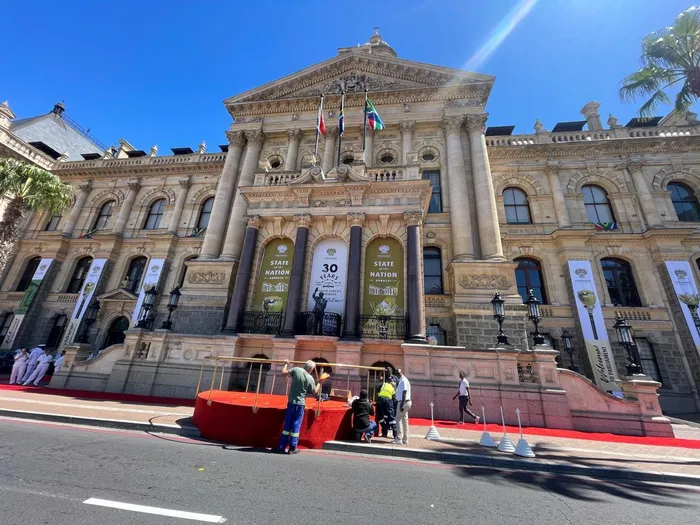
PRESIDENT Ramaphosa’s 2026 State of the Nation Address (Sona) painted an optimistic portrait of infrastructure expansion, green economy growth, and MSME-driven job creation.
But while business development organisations cautiously welcomed structural reforms, Saou delivered a stinging rebuke: The address ignored a ticking time bomb in basic education that threatens to unravel every economic promise made.
“When heard in isolation and taken at face value, one would be forgiven for being overly optimistic about the future of South Africa,” Saou declared in a media statement released after the address. “But unfortunately, ignorance of the past is a luxury the citizens of South Africa cannot afford.”
The union’s critique cuts to the heart of a fundamental contradiction in the government's narrative. While the President positioned a R1 trillion infrastructure expansion, the green economy, and growth in the digital economy as “key pathways to youth employment”, Saou highlighted a devastating omission: “A key issue conspicuously missing in the address is the austerity measures currently in place within basic education leaving many a qualified educator unemployed in a system buckling under a chronic teacher shortage.”
Property Point’s research unit acknowledged the government’s ambitious economic framing but warned implementation remains the decisive test. “This is a credible growth narrative”, according to Maphefo Sipula, head of research and impact at Property Point, “but it will only land if young people are absorbed through structured pipelines such as learnerships, apprenticeships and clear, procurement-linked employment targets.”
Yet without teachers to deliver foundational skills, those pipelines lead nowhere.
Saou welcomed Ramaphosa’s focus on “early childhood development, literacy, numeracy and mother tongue education” but issued a stark warning about the consequences of current policy: “With the increased spending on ECD learners and the expanded registration of ECD centres one must look to the not-so-distant future where those young learners will need to move into the later phases of their education.”
Then came the union’s most provocative indictment: “The backbone of our education system, teachers, cannot continue to shoulder more and more burdens with no respite in sight. The dire shortage of teacher posts will eventually reach a breaking point with far-reaching consequences.”
This warning echoes Property Point's own scepticism about the government’s implementation track record. On TVET college reforms — positioned by the President as “key centres for artisan development” — Sipula cautioned: “This is crucial for addressing skills shortages, but credibility will depend on funding, quality assurance and employer partnerships because TVET reform has been promised repeatedly without consistent delivery.”
Saou did acknowledge “encouraging successes of the past year”, noting: “The GNU is proof that through unity of purpose and unity of action, much can be achieved.” It expressed “cautious appreciation” for Ramaphosa’s “broad acknowledgement of government failures, especially at a local level”, calling an “honest evaluation of service delivery shortcomings without undue reliance on excuses… refreshing”.
But appreciation evaporated when confronting the human cost of austerity. While the President committed R2.5 billion in funding to over 180 000 SMEs and referenced export diversification to “protect jobs in vulnerable industries”, qualified educators sit unemployed as classrooms overflow.
Property Point's analysis reinforces the stakes. The President declared: “If every small and medium business in South Africa could employ one additional person, we would create 3 million new jobs.” Sipula said: “That line puts a clear jobs number on the table, and it is the right challenge for the country. The policy test now is whether the government creates the conditions that make hiring possible.”
Saou insists those conditions begin in the classroom. Without addressing the teacher shortage, the union suggests, all economic promises become footnotes to failure. Its closing statement channels the President’s own rhetoric back as a challenge: “The State of the Nation address, though designed to be inspiring, will have to be followed by tangible action, lest it serve as another footnote to empty promises.”
The union concluded with the President's final words — but stripped of their optimism: “We have indeed turned a corner. Now we must look ahead and move with speed.” For 180 000 unemployed educators watching empty promises accumulate, speed cannot come soon enough.