

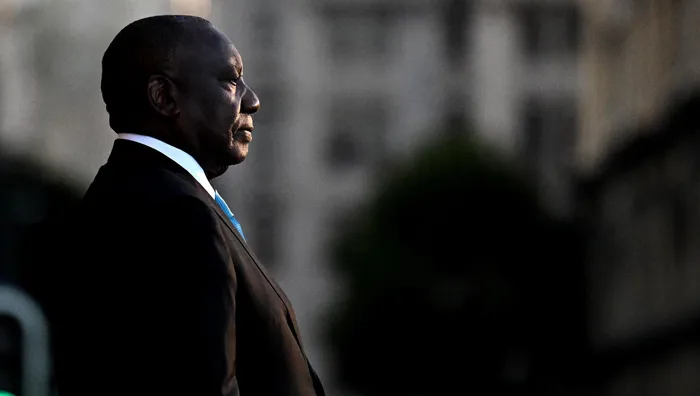
President Cyril Ramaphosa's transmission vision remains exactly what the document warns against: aspiration without bankability.
Image: Phando Jikelo / Parliament of SA
PRESIDENT Cyril Ramaphosa’s State of the Nation Address (Sona) commitment to an independent transmission company has been framed as reform, but institutional investors are demanding more than rhetoric.
According to a critical assessment published 13 February 2025, the pledge’s value hinges on a single, unforgiving metric: bankability.
“President Cyril Ramaphosa’s Sona commitment to an independent transmission company that owns its assets marks a critical evolution in South Africa’s electricity reform agenda,” according to Jason Lightfoot, senior portfolio manager.
But Lightfoot immediately injects sobering realism into the political fanfare, drawing a sharp line between substance and theatre: “After years of discussing separation within Eskom’s structure, the President’s comments point to an explicit commitment to independence, backed by asset ownership, rather than a structural change in name only.”
For investors watching closely, this distinction isn’t academic — it’s existential. As Lightfoot states plainly: “For institutional investors, this distinction matters because transmission infrastructure can be highly bankable when it sits in a ringfenced entity with its own balance sheet, transparent governance, and predictable cash flows.”
The commentary confirms appetite exists: “There is already evidence of investor appetite for grid-related investment through the Independent Transmission Projects (ITP) programme” — but appetite alone won’t rebuild South Africa’s grid.
The real test arrives now, in the legislative fine print that Sona deliberately avoided: “The key question now is implementation. Converting policy intent into investable reality will depend on the details: asset transfer mechanisms, debt allocation, tariff certainty under the National Energy Regulator of South Africa regulation, and how revenue certainty is established. These operational details will determine whether independence translates into bankability."
Lightfoot invokes South Africa’s own successful precedent to underscore what genuine reform requires — not speeches, but enforceable architecture: “South Africa’s Renewable Energy Independent Power Producer Procurement Programme demonstrated how structural details drive bankability. Clear obligations, enforceable contracts, and predictable payment mechanisms were critical to the programme’s success.”
Lightfoot’s verdict delivers the provocation South Africa’s political class needs to hear: “Independence without implementation detail remains policy aspiration. Bankability requires contractual architecture that makes obligations enforceable, and cash flows predictable.”
The transmission company pledge may represent “important progress”, as Lightfoot concedes. But investors aren’t measuring progress in parliamentary applause — they’re measuring it in balance sheets. And until asset transfer mechanisms, debt allocation, and revenue certainty move from talking points to legislation, Ramaphosa's transmission vision remains exactly what the document warns against: aspiration without bankability.
In a nation where load-shedding has become a national trauma, aspiration is a currency that has long since been devalued.