

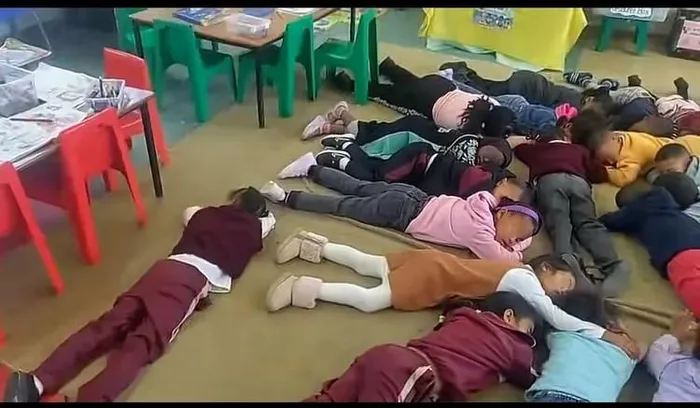
Systemic change is created when education comes full circle.
Image: Screenshot
EARLY intervention is a term often used when seeking solutions to rectify a potential shortfall in a learner's life. This is usually used in reference to auxiliary services like Occupational and Speech therapies, but what if we flipped the narrative and looked at early intervention not as just an added benefit, but the entire solution?
Non-profit organisation The Love Trust built its vision around the belief that intervening in the lives of disadvantaged pre-primary learners could effectively uplift entire communities. When the organisation’s Nokuphila School opened its doors to Grade 000 learners in 2010, its laser focus was on Early Childhood Development (ECD).
Year on year, the organisation has scaled up, making impressive strides with a tightly run ship that now caters for Grades 000–9, including nutrition, transport, sport, and social-emotional learning (SEL) programmes, setting their learners up for success beyond the classroom.
Fundraiser at The Love Trust, Mmatsie Motimele explains that its current Close The Gap campaign refers to multiple gaps, including the income gap and education gaps. “The children we serve come from the most vulnerable households, where access to quality education, food and basic resources is not guaranteed.
“By making private-quality education accessible to these learners, we are closing the income, education and opportunity gaps that would otherwise define their futures.”
Guided by the belief that lasting change begins with education, Motimele says they work closely with welfare organisations to identify and support beneficiary learners and their families.
As an entirely donor-funded institution, Nokuphila School offers a high-quality curriculum comparable to that of a privately funded school. With a strong focus on STEM (Science, Technology, Engineering and Maths), including coding and robotics, as well as enriching cultural programmes such as recorder lessons, the school helps bridge the digital and opportunity divide.
The Love Trust has the difficult task of selecting learners in Thembisa and surrounding areas, with enrolment prioritised for families earning under R4,000 per month, many of whom rely on social grants as their primary income.
Nokuphila School currently has 405 learners enrolled and provides them with more than just academic instruction. Each learner receives all-inclusive care, ensuring they can thrive. This includes their education, learning resources, daily nutritious meals, a transport programme, extracurricular activities, and social welfare support.
Annual cost per learner:
Annual cost breakdown:
As a commitment to their child’s education, parents contribute between R150 and R300 per month, with the balance of the costs being made possible through donor funding.
Systemic change is created when education comes full circle. “One of our current teaching interns started at Nokuphila as a Grade 000 learner at just three years old, from a vulnerable household. Today, he is back in the classroom, giving back, because he experienced firsthand how access to quality education can change the course of a life.
This is what sustainable change looks like.”
This former learner has chosen to give back by shaping the next generation, having an intimate knowledge of the long-term impact of access to excellent faith-based education. This serves as a powerful example of how investing in one child can strengthen an entire community.