

Chinese firms are helping to train local workers and develop supply chains—creating lasting value beyond mining itself.
Image: Supplied
The 2025 G20 Summit, recently hosted in Africa for the first time, alongside China’s push for green mineral cooperation, signals a deepening partnership.
Over the last 25 years, Chinese mining companies in Africa have shifted focus from extracting resources to building local industrial capacity, turning minerals into catalysts for shared, sustainable growth.
The Johannesburg Summit will highlight the Green Mineral International Economic and Trade Cooperation Initiative, underscoring that mining can offer more than raw materials; it can build a future based on unity, equality, and sustainability.
From Export to Local Industrialisation
Africa holds 30% of the world’s mineral reserves, but has long struggled to convert them into long-term development. Now, as global supply chains shift and green energy transitions accelerate, the continent has a historic opportunity, and Chinese mining firms are adapting their role.
China’s G20 action plan emphasised supporting “Made in Africa” manufacturing. Chinese mining companies are increasingly investing in local processing, moving beyond digging and shipping raw ore to refining it within Africa.
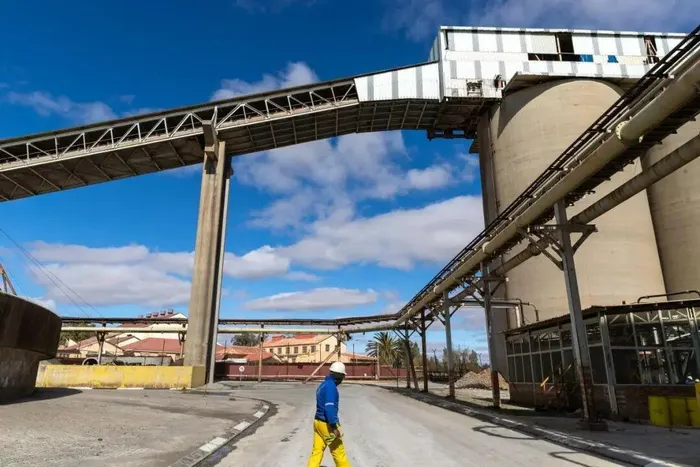
In Johannesburg, Pengxin Resources refurbished a processing plant to turn gold ore into refined bars. In the DRC, more companies are setting up smelters to keep more value on the continent. This aligns with African policies that prioritise local beneficiation and resource sovereignty.
“Resources will run out, but skills and industry will last,” said Wesley Kgang, Member of Mayoral Committee (MMC) at Matlosana Local Municipality and former ANCYL spokesperson. He noted that Chinese firms were helping to train local workers and develop supply chains, creating lasting value beyond mining itself.
According to Wang Hetao, Director of Changjiang Securities Research, Chinese miners were shifting from “scale expansion” to “quality upgrading.” This aligns with G20 sustainability goals and reflects a broader trend: Chinese companies are becoming partners in industrialisation, not just extractors of resources.
Win-Win Through Partnership
Mining is capital-intensive and complex, involving everything from infrastructure to community relations. Increasingly, Chinese companies are adopting a cooperative approach, sometimes even working with Western mining giants on environmental standards and ESG practices. For example, the ESG benchmarks of China Molybdenum’s KFM project were set against the highest ones in the globe.
The Green Mineral Initiative also encourages tripartite projects involving Chinese players, international agencies, and African partners, making investments more stable and creating a technology-sharing mode.
“Companies operating abroad must balance global standards with local adaptation,” Wang Hetao said. “The goal is to turn local advantages into global competitiveness.”
This people-centered approach aims to build sustainable livelihoods alongside mining operations.
A New Chapter in Cooperation
Today, in mines deep down the African soil, Chinese and local engineers work side-by-side. In nearby towns, communities and companies collaborate on water access and infrastructure. These everyday interactions sketch a new model of cooperation—one based not on extraction, but on empowerment and mutual benefit.
“True globalisation means building deep local roots,” an industry expert noted. “The most resilient supply chains are those that benefit everyone.”
As the G20’s vision meets African realities, Chinese mining companies are showing how minerals can connect Africa not only to global markets, but to a more sustainable, inclusive future.