

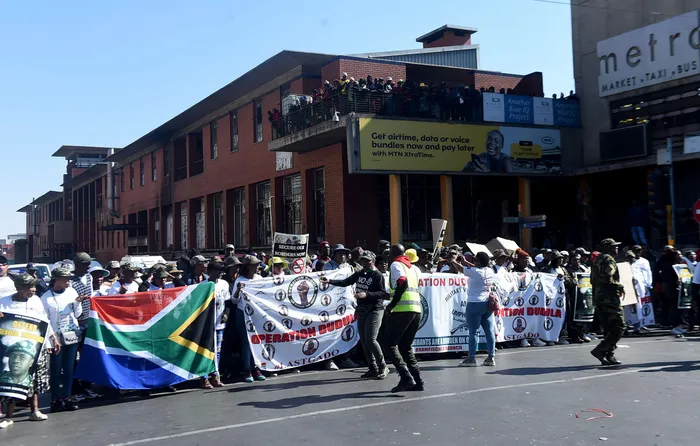
THE national debate on illegal immigration is being dangerously distorted by vastly inflated figures and the rise of unlawful vigilantism.
Image: Itumeleng English / Independent Newspapers
THE national debate on illegal immigration is being dangerously distorted by vastly inflated figures and the rise of unlawful vigilantism, the head of a prominent think tank warned this week, calling for a return to evidence-based policymaking and a firm defence of state authority.
This sentiment was echoed by a Parliamentary committee chairperson who issued a specific rebuke of Operation Dudula’s threats to target schools.
Daryl Swanepoel, chief executive of the Inclusive Society Institute (ISI), issued his warning during a Parliamentary Social Services Cluster briefing. He argued that the widespread circulation of unsubstantiated statistics was fueling social tension and undermining rational discourse.
“What we urgently need to determine is the actual quantum of the illegal immigration problem in the country,” Swanepoel said. “Figures of between 8 million and 13 million are bandied around as fact, even by senior politicians. But empirical studies from both Stats SA and the HSRC suggest the real figure is somewhere between 2 million and 4 million illegal immigrants. There is a huge difference between a 2 million problem and a 13 million problem.”
Swanepoel warned that this inflation of numbers in an already emotionally charged environment “fuels unnecessary fear, stokes resentment and risks inciting hostility towards foreign nationals”. He cautioned that such rhetoric “distracts from evidence-based policymaking and undermines social cohesion at a time when calm and rational debate is most needed”.
The statements come amid heightened tensions and increased activity by civic groups such as Operation Dudula, which have taken to enforcing immigration laws through confrontational means, targeting undocumented individuals at schools and healthcare facilities.
On this point, Swanepoel was unequivocal, drawing a line on the roles of civil society and the state. “Let me be clear,” he stated, “civil society organisations and, for that matter, politicians have no business in enforcing the laws of this country. That is the function of government officials.”
He insisted that civil society must push its issues “through the correct channels, whether by raising concerns with government and Parliament or through protest action. But they must under no circumstances interfere with the functioning of our healthcare facilities, schools or any other functions of the state.”
In a pointed message to the government itself, Swanepoel argued that its response to such unlawful actions set a critical precedent. “The authorities should not entertain discussions with organisations that are acting illegally. Firstly, because it legitimises illegal activity, and secondly, because it encourages future illegal activity,” he said. “It suggests that if one wants to get the attention of the government, the best way is to break the law, which is an unacceptable message to send.”
This warning was in line with the stinging rebuke from Makhi Feni, the chairperson of Parliament’s Select Committee on Education, Sciences and the Creative Industries, regarding Operation Dudula’s stated plans to target schools. He described the group’s tactics as “illegal, objectionable and utterly contemptible”, and warned that any disruption of teaching and learning “will not be tolerated”.
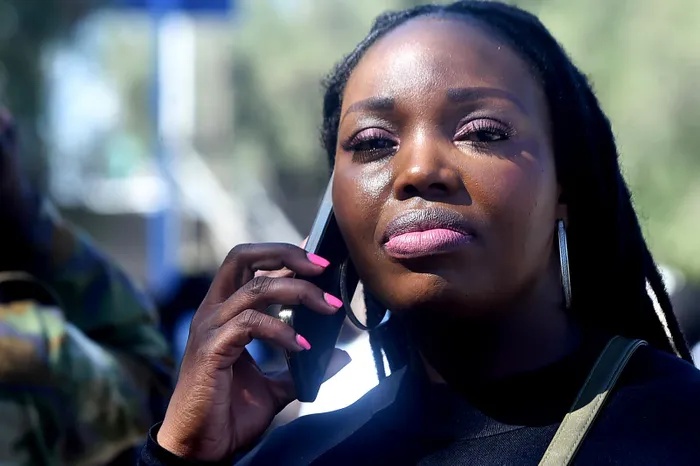
The leader of the Operation Dudula Movement, Zandile Dabula, has vowed to continue the movement's anti-foreigner healthcare campaign across the country.
Image: Itumeleng English / Independent Newspapers
“I’m sure I speak on behalf of the committee when I say we condemn with the utmost contempt the actions of Operation Dudula,” Feni said, urging the movement to abandon vigilante tactics and to “find other means to resolve their issues without resorting to deliberately challenging schools”.
Feni accused Operation Dudula of escalating a campaign that had already harmed essential services. “Operation Dudula had been on a crusade over the last couple of months to disrupt health services in the country … It would be unacceptable to have our learners subjected to what we have seen happen around healthcare centres,” he said.
Swanepoel’s intervention was prompted by discussions at the parliamentary briefing, where the provision of social services to undocumented foreign nationals was a key topic.
Dr Sibongiseni Dhlomo, chairperson of the Portfolio Committee on Health, addressed concerns raised by groups such as Operation Dudula, reaffirming the constitutional right to healthcare for all. He noted that while the strain on public resources was recognised, Health Minister Dr Aaron Motsoaledi was already in dialogue with Operation Dudula’s leadership.
On education, Feni emphasised that South Africa’s legal framework was clear and binding. “South Africa is a country of laws. Enrolment of foreign children into schools is legislatively required,” he said, noting that the Bela Act required “that foreign children be placed in schools without being frustrated by requirements of documents they may not readily have”.
He further said: “In South Africa, foreign nationals, including those who are undocumented, have the right to access basic education. The law mandates that public schools admit learners and provide education without unfair discrimination, regardless of their documentation status or nationality.”
Feni confirmed his committee’s focus on three urgent areas in response to the threats: addressing the threats to disrupt schools; improving engagement with civil society on issues relating to foreign nationals; and considering legislative interventions linked to the enrolment of foreign learners.
Both officials emphasised that the government was actively addressing migration-related pressures. Dhlomo highlighted the urgent need for the Department of Home Affairs to accelerate reforms to immigration and refugee laws. Feni noted: “Various legislative interventions are being proposed across sectors: Labour Migration Policy, Higher Education, and Border Management Agency establishment. This is over and above deportations that are ongoing.”
While acknowledging the pressures communities face, both speakers urged restraint and lawful engagement. “This is by no means ridiculing the challenges brought about by foreigners in our country. But when illegality creeps up, the committee has a right to point this out,” Feni said.
He appealed to national values and regional relations: “South Africa’s image is important. How we relate to our neighbours, within the prescript of ubuntu, remains important too.”
Rejecting simplistic claims about motive, Feni said: “I will not say Operation Dudula is driven by xenophobia … We are sitting with a different kind of a challenge, where foreigners are here because they are hungry; and South Africans are hungry too.” But he insisted on accountability: “Operation Dudula must take full responsibility for its actions.”
The ISI’s position concludes that addressing illegal immigration requires “sober, evidence-based policy decisions and stronger institutional capacity, not populist interventions that undermine service delivery or the rule of law”. Reiterating Parliament’s red line, Feni said: “We call on Operation Dudula activists to refrain from adopting vigilante tactics around schools... And we are therefore saying not in our schools.”