

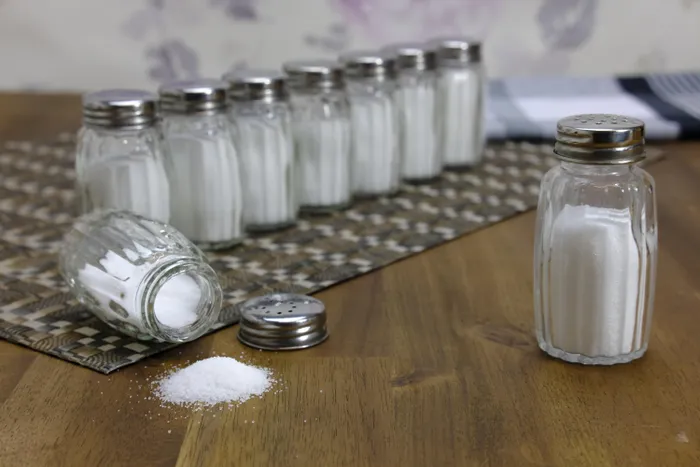
Most people think salt only counts when you aggressively shake it over your food like a reality show chef.
Image: Pixabay
Salt has officially entered its villain era.
Not dramatically, of course. It is not kicking down doors or sending threatening voice notes. Instead, it is quietly hiding in your two-minute noodles, your favourite takeaway chips, that “healthy” sandwich sauce, and even the bread sitting on your kitchen counter right now.
Health experts say that South Africans are consuming far more salt than they should.
While adults are only supposed to consume about one teaspoon of salt a day — roughly 5 grams — South Africans are averaging between 7 and 8 grams daily. Which means that somewhere between breakfast and late-night slap chips, many people are unknowingly overdoing it.
The scary part? Your body is keeping score, even when you are not.
Salt is sneaky like that.
Most people think salt only counts when you aggressively shake it over your food like a reality show chef. But experts say up to 70% of the salt people consume is already hidden inside processed foods.
Yes, hidden.
Meaning your favourite loaf of bread, instant noodles, frozen meals, sauces, and processed meats could basically be working overtime behind the scenes.
It is called a “silent contributor”.
“People believe they are eating relatively well, but a large portion of their salt intake is hidden in processed foods,” said Denelle Morais, Marketing and Communications Manager at Bestmed Medical Scheme.
High blood pressure, also known as hypertension, is often called the “silent killer” because it usually arrives without warning signs.
No dramatic entrance. No flashing lights.
One day you are living your life, double-salting your fries and saying “YOLO”, and the next your doctor is asking questions about your sodium intake.
When there is too much salt in the bloodstream, the body holds onto extra water to dilute it. That extra fluid increases blood volume, which then puts pressure on blood vessels and the heart.
Over time, that pressure can lead to serious health complications, including strokes, heart disease, and kidney failure.
Basically, your body turns into an overworked plumbing system.
The truth is, many people have trained their taste buds to expect maximum flavour at all times. If food does not taste like it survived a seasoning war, people immediately assume it is bland.
But health experts say reducing salt intake does not mean eating sad meals with no personality. Herbs, spices, garlic, lemon, and fresh ingredients can still bring flavour without turning your blood pressure into a side quest.
Dr Lee Moses, Medical Advisor at Bestmed Medical Scheme, said reducing salt intake remains one of the easiest and most affordable ways to improve cardiovascular health.
The good news is that nobody is asking South Africans to suddenly become boiled broccoli enthusiasts overnight.
Health experts say small lifestyle changes can make a huge difference:
Because hypertension often develops quietly, many people do not even realise they have it until complications appear later.
And honestly? Your future self deserves better than finding out through a hospital scare.
South Africa has already introduced regulations to reduce salt levels in certain processed foods, but experts say awareness still matters just as much as policy.
Because at the end of the day, salt is not the enemy — the excess is.
And maybe it is time people stopped treating seasoning like a competitive sport.
IOL