

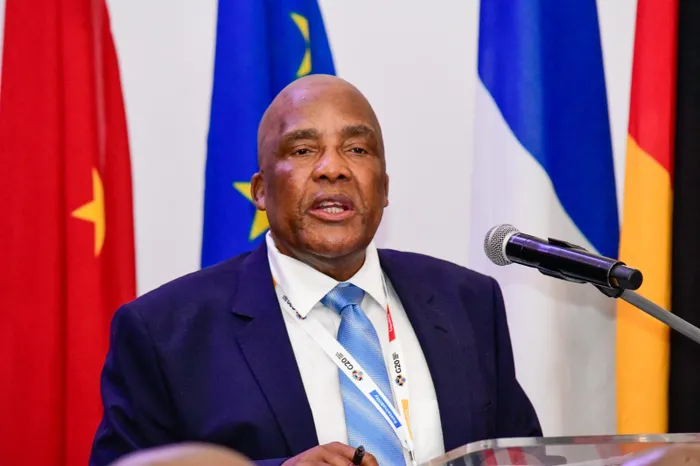
Health Minister Dr Aaron Motsoaledi addresses the G20 Health Ministers, advocating for Universal Health Coverage.
Image: Supplied
In a world grappling with stark health inequalities, Health Minister, Dr Aaron Motsoaledi, has called for a renewed commitment to Universal Health Coverage (UHC) at the recent G20 Health Ministers’ meeting. Emphasising the principles of solidarity, equality, and sustainability, Motsoaledi's address highlighted the urgent need for a global health architecture that prioritises the well-being of all individuals, regardless of their socio-economic status.
The G20 Health Ministers’ Meeting, the final session of the G20 Health Working Group, was held in Polokwane, Limpopo. The meeting will assess prior discussions and recommendations to forge concrete commitments for lasting health improvements.
Motsoaledi said that they cannot rest while gross inequality in health access, including medicine, persists, and injustice prevails in the face of preventable disease.
He said South Africa is committed to multilateralism and diplomatic solidarity, working to build a resilient, equitable Global Health Architecture. The country aims to create a lasting covenant for global health, recognising it as a fundamental human right and economic necessity.
“Our shared narrative must begin with an urgent reckoning: that the progress towards Universal Health Coverage (UHC) has stalled, leaving billions exposed to financial ruin. This stagnation is a global failure we must now redeem,” Motsoaledi said.
He explained that unlocking UHC’s promise requires embracing the Primary Health Care (PHC) Approach as the singular, uncompromising cornerstone of equity.
PHC should be recognised as a smart, effective delivery model, not an impoverished option, ensuring health systems are people-centred, provide integrated care, and respond to various epidemics, he said.
“No grand vision survives without sustainable financing. We must protect and enhance investment in health. This G20 must discuss and devise collaborative strategies to enhance Domestic Resource Mobilisation and, critically, alleviate the crushing debt vulnerabilities of Low- and Middle-Income Countries (LMICs), creating the fiscal space required for health spending. We must set collective targets to dismantle the unacceptable burden of out-of-pocket (OOP) expenditures by 2030,” Motsoaledi said.
The Minister emphasised the need to be vigilant against the threat of the financialisation of health, where healthcare is commodified and profit supersedes public health goals.
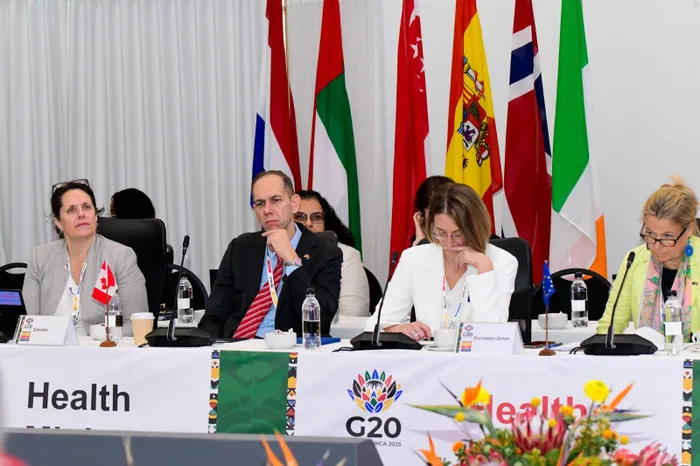
Global leaders gather in Polokwane to forge commitments for lasting health improvements.
Image: Supplied
“We need robust regulatory guardrails, learning from global examples, to ensure public financing remains central. Health cannot be a question of income; it is a fundamental human right, and we must defend it from forces that prioritise financial returns over human dignity,” Motsoaledi said.
He said UHC hinges entirely on the dedication of the health and care workforce. The global deficit of these essential workers represents a worldwide crisis.
“The lessons of the last pandemic compel us to build resilience now. Our immediate diplomatic task is to ensure the swift, equitable conclusion and operationalisation of the Pandemic Agreement and the amended IHR (International Health Regulations). The world can no longer tolerate ‘vaccine nationalism’,” Motsoaledi said.
He said health security and economic growth are driven by science and innovation.
Health Deputy Minister Dr Joe Phaahla said Motsoaledi framed the agenda with compelling clarity.
“His address was a powerful invitation to action, grounding our work firmly within the G20’s commitment to Solidarity, Equality, and Sustainability. He correctly highlighted that achieving UHC is our shared ethical and strategic imperative,” Phaahla said.
“We must heed his call to address the structural challenges that hinder progress—particularly the need to strengthen public financing and build robust PHC systems. His observations on the financial stresses facing the health sector in many nations serve as a crucial reminder that health is fundamentally an investment in global stability and economic prosperity.”
thobeka.ngema@inl.co.za