

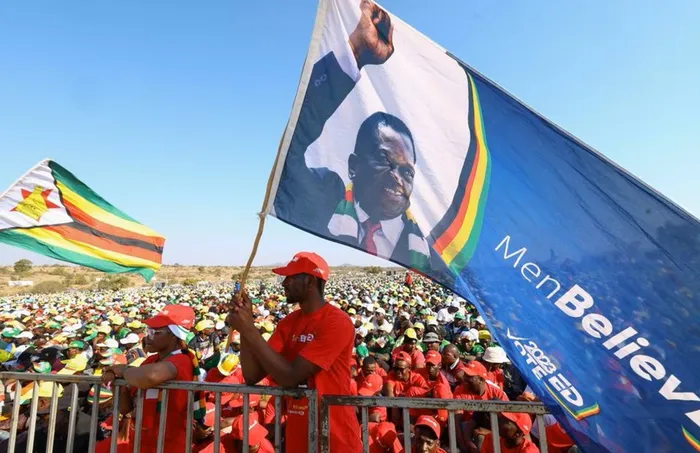
Constitutional law routinely distinguishes between rights and systems. A voting right can exist under multiple electoral models, whether direct presidential elections or parliamentary selection.
Image: Siphiwe Sibeko | Reuters
ZIMBABWE'S latest debate on the constitution has quickly taken on familiar contours. On one hand, opposition voices are demanding a national referendum on the proposed Constitution of Zimbabwe Amendment (No 3) Bill, 2026 (CA3).
On the other hand, proponents argue that Parliament is well within its rights to proceed without one. Strip away the rhetoric, and what remains is a technical but important legal question: Does the Constitution actually require a referendum for the changes being proposed?
A careful reading of the Constitution of Zimbabwe (2013) suggests the answer is no.
Section 328 is not a vague guideline. It is the Constitution’s procedural backbone for amendments. It sets out a two-track system.
First, there are standard amendments. These can be passed by Parliament, provided there is a two-thirds majority in both houses and a 90-day period of public notice. This is not a loophole or a shortcut. It is the default mechanism deliberately built into the Constitution.
Second, there are protected provisions. These trigger a mandatory referendum. They are narrowly defined and include Chapter 4, which contains the Declaration of Rights; Chapter 16, which governs agricultural land; and Section 328 itself, which outlines amendment procedures.
Anything outside these categories does not require a referendum. That distinction is central to the current debate.
The proposed CA3 reforms focus on institutional design. Among them is a shift toward a parliamentary model for selecting the president, along with adjustments aimed at streamlining governance structures.
Critics argue that altering how the president is chosen infringes on political rights, particularly those in Section 67. However, this conflates two distinct legal concepts. The right to vote remains intact. What changes is the mechanism through which executive authority is constituted.
That difference matters. Constitutional law routinely distinguishes between rights and systems. A voting right can exist under multiple electoral models, whether direct presidential elections or parliamentary selection.
In other words, changing the system does not automatically amount to changing the right itself.
Much of the opposition’s case hinges on the claim that CA3 effectively alters presidential term limits and therefore triggers Section 328(7), which places restrictions on such changes.
This argument does not hold up under close scrutiny.
The Constitution separates two concepts that are often blurred in public debate:
That distinction between “time in office” and “eligibility to remain in office” is not semantic. It is foundational.
Section 328(7) is triggered only when an amendment extends the tenure of an individual beyond existing limits. It does not apply to changes in how a president is selected or how long a single term lasts, unless those changes directly extend the number of terms a person can serve.
Judicial precedent reinforces this interpretation. In Marx Mupungu v Minister of Justice, the Constitutional Court made a clear distinction between age limits and term limits. The ruling confirmed that not every change affecting office conditions qualifies as a “term limit” amendment requiring a referendum.
That reasoning is directly relevant here.
There is also a broader constitutional principle at play. Legislative authority in Zimbabwe is explicitly vested in Parliament, derived from the people themselves. That authority includes the power to amend the Constitution, provided the procedures in Section 328 are followed.
To insist on a referendum where the Constitution does not require one is not a defence of democracy. It risks undermining the very framework that governs constitutional change.
Referendums are not symbolic exercises. They are reserved for specific, high-threshold issues clearly identified in the Constitution. Expanding that requirement through political pressure rather than legal necessity sets a dangerous precedent.
None of this means CA3 should escape scrutiny. Far from it. Constitutional amendments, especially those that reshape executive power, deserve rigorous public debate.
But that debate must be honest about what is being contested.
The legal position is relatively clear. CA3 does not amend the Declaration of Rights, does not touch agricultural land provisions, and does not alter Section 328 itself. It therefore does not meet the constitutional threshold for a mandatory referendum.
What remains is a political argument about legitimacy, trust, and the direction of governance. Those are valid concerns. But they should be argued on their own terms, not dressed up as constitutional imperatives that do not exist.
Zimbabwe’s 2013 Constitution was designed to balance flexibility with protection. It allows for reform through Parliament while safeguarding core rights and structural principles through referendums.
That balance only works if it is respected.
If every significant amendment is forced into a referendum regardless of constitutional requirements, the system becomes rigid and politicised. If, on the other hand, Parliament abuses its amendment powers, public trust erodes.
The current moment is a test of whether Zimbabwe can navigate that balance with legal clarity and political honesty.
The Constitution provides the rules. The challenge now is whether the country is willing to follow them, even when the politics become uncomfortable.
* Karabo Ngoepe is a journalist with over 15 years of experience in political, investigative, and human interest journalism who specialises in pan-African politics with a particular interest in SADC and Global South news. He is a former CEO of Rubicon Media Group in Eswatini.
** The views expressed here do not reflect those of the Sunday Independent, Independent Media, or IOL.