

AS the Michael Jackson biopic nears its April 2026 release, it is worth remembering what Michael Jackson meant to Black youth in Soweto during the last decade of apartheid.
Image: Facebook
AS the Michael Jackson biopic nears its April 2026 release, it is worth remembering what Michael Jackson meant to Black youth in Soweto during the last decade of apartheid.
In the Soweto of the 1980s, style was never a trivial matter. It could be an argument, shelter, or prophecy. It could be the quiet declaration that the body belonged to itself, even when the state tried to number it, police it, reduce it, and send it back to its appointed place.
In those years, a way of standing could say something. A way of walking could say something. A pair of shoes, carefully kept, could carry a whole philosophy of survival.
The township lived under pressure then. The memory of June 1976 had settled into the walls of houses, into the lowered voices of parents, into the inward schooling of children. Young people understood, long before they had the language to explain it, that they were growing up inside a country determined to shrink them.
The schools carried that message, and the police carried it. The city carried it too, in the long journeys between where Black people lived and where power sat, as if distance itself were part of the sentence.
Despite this, the 1980s were also the years when the world began arriving in South African homes with a new brightness and a new seduction. Television, introduced nationally only in January 1976, had by then become part of ordinary aspiration and daily routine, even within a broadcasting order watched over by the state.
A screen in the corner of a room could bring America, Europe, sport, cinema, glamour, and music into a place the law had marked out for confinement. The room remained small, yet the imagination no longer did.
Then Michael Jackson appeared.
He did not arrive in Soweto as a theorist or sociologist. He arrived as a shock of recognition. First the songs, then the image, then the movement. Thriller, released in late 1982, became the defining album of the decade and later the best-selling album in history.
*Billie Jean moved with the tension of a whispered secret. *Beat It had steel in it, but also grace. The Thriller short film enlarged the music video into something closer to myth. Michael Jackson was never simply popular; he altered the scale by which popularity itself was measured.
For a Black teenager in Soweto, that mattered in a way that still deserves careful attention. Here was a Black man at the centre of the world’s gaze. Here was Black brilliance made global, commercially supreme, aesthetically complete.
At a time when apartheid worked each day to provincialise Black life, to keep it close to labour and far from majesty, Michael Jackson appeared as a contradiction vast enough for even children to feel.
He was elegant with voltage behind it. He was disciplined without dryness, and he was proof that a Black body could command attention, fascination, and wonder.
That is why it is too small to say that Soweto’s youth admired him. Admiration is polite. This was something hungrier, fiercer, more intimate. Boys studied the clothes, the stance, the timing, the sudden stillness before the body slipped into another law of motion.
School shoes became instruments. Pavements became rehearsal rooms. A glove could be improvised out of almost anything. A fedora, when one could be found, carried the aura of treasure.
The Moonwalk was attempted in corridors, in yards, in school halls, on concrete that knew hardship better than softness.
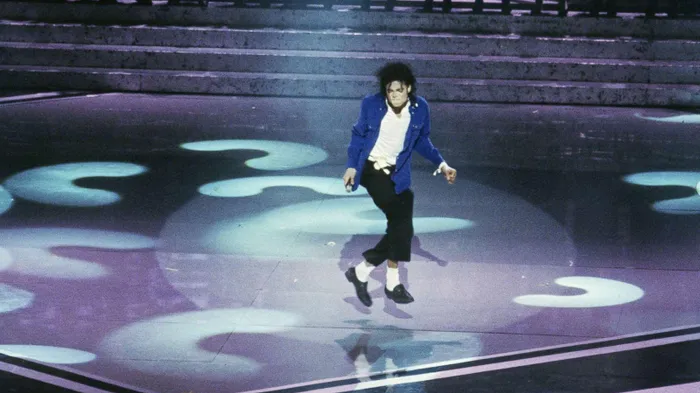
When Michael Jackson unveiled the Moonwalk during Motown 25 in 1983, the step entered global folklore almost at once. In places like Soweto, it entered something deeper: township memory.
Young people were doing more than copying an American star. They were discovering what the body could say under conditions of restriction. They were learning that grace could have an edge. That control could look like freedom.
That style could stake a claim on the future. For a child taught to move cautiously through the world, the Moonwalk carried a strange and thrilling lesson: even gravity, for a second, could be persuaded to loosen its grip.
There was, too, a specifically Black intimacy to Michael Jackson’s presence. Apartheid depended on a hierarchy of visibility. It placed whiteness at the centre of legitimacy and pushed Black life outward, into labour, overcrowding, discipline, and perpetual explanation.
Michael Jackson reversed that visual order without ever needing to mention South Africa. The world leaned towards him. Cameras loved him. Crowds screamed before he had fully stepped into the light. Even his silences had authority.
For Black youth in Soweto, that spectacle never existed outside politics. It enlarged the imagination. It told a child in a township that Blackness could be desired by the world without surrendering its force, its mystery, or its style.
This did not mean that Soweto stopped being Soweto when Michael Jackson came on the scene. Local music still mattered and mattered in other ways. Jazz remained a language of inheritance and seriousness. Struggle songs carried history, sorrow, and resolve.
Township sound belonged to the daily life of the people in a way no imported pop ever could. Still, this is precisely why Michael Jackson’s arrival remains so important. He did not replace those worlds; he entered them.
He joined a larger emotional economy in which young Black South Africans drew strength from politics, from church, from football, from friendship, from fashion, from humour, from local music and global music alike. His genius lay in the fact that he could be folded into township life without ever feeling foreign to it.
Those who grew up then will remember the texture of anticipation. Waiting for a song to come on. Hearing a track through a neighbour’s window before locating its source.
Seeing a performance discussed at school the next day as though it had taken place down the road rather than on another continent. The memory is never only auditory; it is social. It belongs to boys correcting one another’s steps.
To laughter after failure. To another attempt. To the stubborn joy of trying again. A generation learned Michael Jackson together.
And what did that learning amount to? Something larger than nostalgia, though nostalgia lives within it. It amounted to an early education in contradiction. Young people in Soweto were taught by the state that they were marginal, and taught by culture that they were central.
They were told by official South Africa to trim their ambitions, and shown by a Black man on a screen that the magnitude was possible. They were expected to move through the world with caution, then watched somebody move through it as though the body itself could refuse the terms it had been given. That is why the memory endures. It belongs to a deeper archive than entertainment.
As the film Michael approaches its April 2026 release, many will speak of Michael Jackson in the language of celebrity, scandal, genius, and decline. Those arguments will come, as they always do.
But South Africans, and especially those who came of age in Black townships during the 1980s, possess another story. It is a story about what happens when a child living inside a diminished political world encounters an image of Black magnificence too large to be contained by that world.
It is a story about the uses of style in a brutal society. A story about how a song, a silhouette, a tilted hat, a turn of the body can enter a people’s inner archive and remain there for decades.
So, the image remains. A boy in Soweto standing on a patch of concrete. Around him, the ordinary machinery of apartheid. Inside him, the ordinary tremors of youth. Then the bassline begins. He leans back. A heel lifts. The body attempts a movement it has seen but does not yet fully possess. For a second, the impossible draws near.
That may be Michael Jackson’s deepest Soweto legacy. He gave Black youth a vision of mastery at a time when mastery was being denied to them in almost every official language of the country. He gave them glamour without permission slips.
He gave them a way of imagining movement beyond the map they had inherited. And in a township built to contain Black life, that mattered more than many adults understood. It still does.
* Dr Ashok Damarupurshad is a South African writer and researcher whose work explores culture, memory, and the ways technology and media shape identity in everyday life.
** The views expressed here do not reflect those of the Sunday Independent, IOL, or Independent Media.