

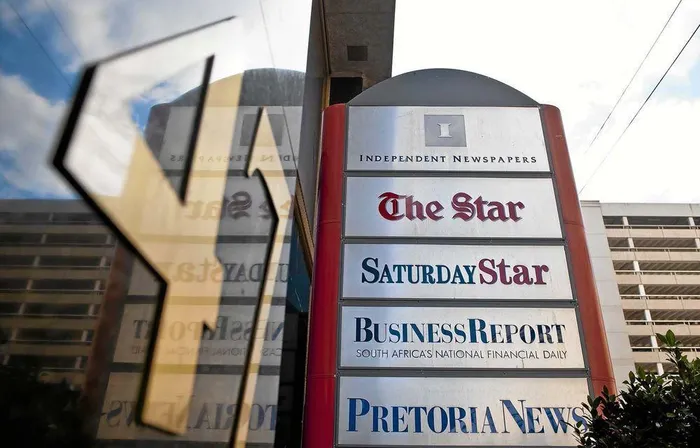
Independent Media says the recent Supreme Court of Appeal (SCA) judgment involving the Independent Media Consortium and the Southern African Clothing and Textile Workers’ Union (SACTWU), has no impact on its operations and does not involve the business.
Image: File image
There comes a point where silence is no longer an option. Where allowing distortion to circulate unchallenged becomes, in itself, a disservice to the truth. This is one of those moments. In 2013, the South African media landscape was largely dominated by white-owned media interests, led by figures such as Ton Vosloo and Koos Bekker of Naspers.
It was within this context that Dr Iqbal Survé and the Sekunjalo Group made a decision that would shift the industry's trajectory. Recent reporting by certain media houses has once again sought to cast aspersions on Dr Survé and the Sekunjalo Group. These are not mere differences in interpretation or robust journalistic debate. They form part of a sustained narrative that drifts further away from fact and closer to something far more deliberate: A campaign that seeks to erode credibility, not test it.
And yet, the truth remains stubborn. In 2013, when many had turned their backs on South Africa’s print media industry, Sekunjalo stepped forward. The acquisition of Independent Media was not just a commercial transaction; it was an act grounded in belief, belief in local ownership, in preserving jobs, and in ensuring that a critical pillar of our democracy did not disappear into foreign hands. At the time, the Sekunjalo Consortium committed R1.3 billion to this vision, with support from the Public Investment Corporation, which invested R850 million. That history matters. Because it speaks to intent.
There have been attempts to rewrite the Southern African Clothing and Textile Workers’ Union's role in that transaction. The facts are far less dramatic than the fiction. The union’s participation was not as a core investor driving the deal, but rather as a stakeholder invited into the consortium, in part to broaden participation and reflect the socio-political realities of the time. The transaction itself was facilitated through government processes and executed by multiple parties, a matter of public record.
More importantly, the persistent allegation that Sekunjalo improperly received funds from Sactwu is simply not true. The union’s R150 million investment was directed into a Special Purpose Vehicle and paid to a law firm, which then transferred the funds onward to the PIC. At no stage did those funds flow into Sekunjalo. Not directly. Not indirectly. This is not a matter of interpretation. It is a fact. What is equally concerning is how the nature of that investment has been retrospectively reframed. What was structured as equity appears to have been altered, raising serious questions around conflicts of interest that have now been formally reported. These are issues that deserve proper scrutiny, not selective reporting.
There is also a broader silence around other material realities. Since 2013, Sekunjalo has effectively carried Independent Media, investing R1.3 billion to sustain operations, protect jobs, and ensure continuity in an industry under immense pressure. This is not a footnote; it is central to the story. At the same time, there are outstanding matters that cannot be ignored. Legal processes are underway to recover significant funds from past transactions, including investments in union-linked entities. These are complex issues, and they belong where they can be properly ventilated, before a court of law.
Which brings me to a principle that should guide us all. In a constitutional democracy, truth is not determined in headlines. It is tested through evidence. It is weighed, carefully and impartially, by the judiciary. That is the standard we must all be willing to submit to, without fear, and without favour. The role of the courts in South Africa is not symbolic. It is foundational. Time and again, judicial processes have shaped the course of our country, from holding power to account to navigating the complexities of economic and social justice.
Institutions such as the Truth and Reconciliation Commission remind us that even in our most fragile moments, the pursuit of truth through structured, principled processes ultimately prevails. This is why the decision by Sekunjalo and Dr Survé to pursue legal action is not simply about reputation. It is about accountability. It is about drawing a line between journalism and narrative, between fact and fabrication. There are those who will continue to speak loudly. But volume is not a substitute for evidence. Sekunjalo will present its case where it matters most: In a court of law. Where facts are interrogated. Where claims are tested. Where judgments are made not on assumption, but on proof. Let the judge be the judge. And let the truth, as it always does, find its way to the surface.
*Senekal de Wet is Editor-in-Chief of Independent Media